Dog Anxiety Wraps: Fit, Uses & Safety
Pressure garments can help some dogs feel more contained during a known trigger. They are an optional support, not a cure, and a dog should always be able to move, breathe, and communicate discomfort.
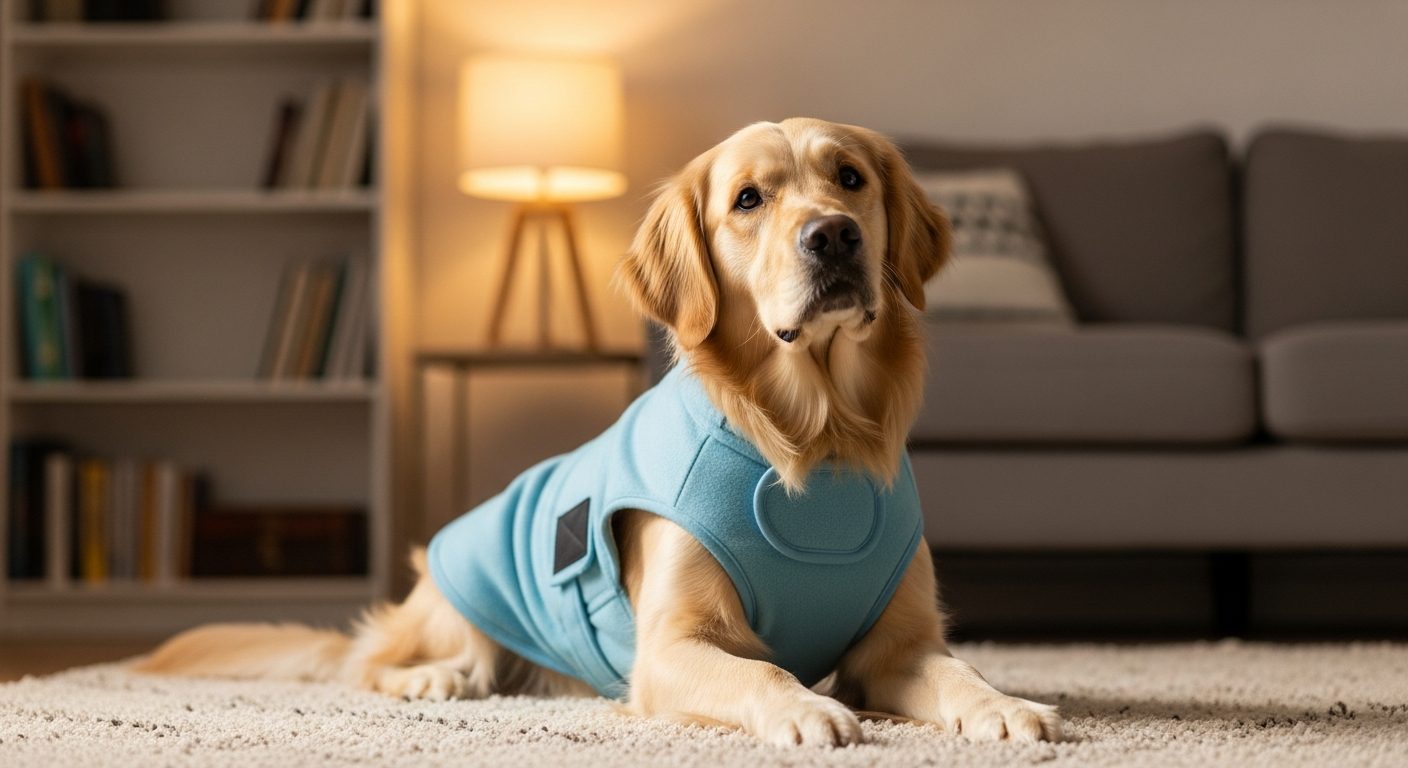
What makes a wrap a reasonable option?
- It fits the manufacturer’s chest and neck measurements without restricting breathing.
- The fabric is breathable, seams do not rub, and fasteners stay secure without pinching.
- Your dog can walk, drink, pant, lie down, and remove their body from the trigger.
- It complements gradual desensitization, a safe room, and calm human support.
How to introduce one
Start on a quiet day: let your dog sniff it, pair it with treats, and touch it to their shoulder for a second. Build to wearing it for a few calm minutes, then remove it before your dog becomes worried. Practice several times before a storm or journey. Watch for freezing, scratching, panting, redness, or attempts to escape; remove it immediately if those signs appear.
Options to compare
Shop dog anxiety wraps →Compare calming vests →When not to rely on a wrap
Do not use one to hold a dog still, during unsupervised crate time, or over a wound. A wrap is not enough for panic, aggression, collapse, repeated self-injury, or a sudden behaviour change. Seek veterinary help for those situations.