Contrary to popular belief, cats aren't always the aloof, independent creatures they're portrayed to be. Many cats form deep emotional bonds with their human companions and can experience genuine separation anxiety when left alone. If your cat becomes distressed when you leave, destroys things in your absence, or exhibits obsessive behaviors, you're not dealing with a "bad cat"—you're witnessing a cat in emotional distress.
Cat separation anxiety is more common than most people realize, affecting an estimated 10-20% of cats. This comprehensive guide will help you recognize the signs of separation anxiety in your feline friend, understand what causes it, and implement proven strategies to help your cat feel secure and content even when you're not home. From environmental enrichment to behavior modification techniques and calming supplements, we'll explore evidence-based solutions that actually work.
Table of Contents
What Is Cat Separation Anxiety?
Separation anxiety is a behavioral condition where a cat becomes excessively distressed when separated from their primary attachment figure—usually their owner. This goes beyond normal attachment and represents genuine psychological distress.
Breaking the "Independent Cat" Myth
For decades, cats have been characterized as solitary, independent animals who tolerate humans but don't form deep attachments. Modern research paints a very different picture. A 2019 Oregon State University study found that cats bond with their owners in ways remarkably similar to how dogs and even human infants bond with their caregivers.
Approximately 64% of cats showed secure attachment styles to their owners, meaning they used their owner as a secure base from which to explore. When these strongly bonded cats are separated from their attachment figure, they can experience significant anxiety.
How It Differs from Normal Behavior
It's normal for cats to:
- Greet you when you come home
- Follow you from room to room occasionally
- Meow for attention when they want something
- Sleep on your bed or near you
Separation anxiety involves:
- Extreme distress that disrupts normal functioning
- Destructive or self-harmful behaviors
- Symptoms that occur specifically when you're away or about to leave
- Behaviors that escalate over time
Signs and Symptoms to Watch For
Recognizing separation anxiety can be challenging because cats often hide their distress. Here are the key indicators:
Behavioral Signs
Excessive Vocalization
Loud, persistent meowing, yowling, or crying that begins as soon as you leave or when you're preparing to leave. Some cats will vocalize for hours. Pet cameras have revealed that many "quiet" cats are actually very vocal when alone.
Inappropriate Elimination
Urinating or defecating outside the litter box, often on your bed, clothing, or other items that smell like you. This isn't spite—it's a stress response and an attempt to mix their scent with yours for comfort.
Destructive Behavior
Scratching furniture, doors, or windows, knocking items off shelves, or destroying household items. This destructive behavior is focused around exit points (doors, windows) or objects associated with you.
Excessive Grooming
Obsessive licking or grooming that leads to bald patches, raw skin, or hair loss—particularly on the belly, legs, or flanks. This self-soothing behavior can become compulsive.
Changes in Eating Habits
Refusing to eat when you're away but eating normally when you're home, or conversely, stress-eating excessively. Some cats won't touch food until their owner returns.
Extreme Clinginess
Following you everywhere, attempting to prevent you from leaving by blocking doorways, becoming agitated when you pick up keys or put on shoes, or showing distress at closed doors between you.
Physical Signs
- Vomiting or diarrhea when alone (stress-induced)
- Excessive drooling or panting
- Dilated pupils and increased heart rate
- Trembling or shaking
- Lethargy or depression after you leave
Before-Departure Anxiety
Many cats with separation anxiety show distress before you even leave:
- Becoming agitated when you shower or get dressed
- Following you more closely than usual
- Showing distress at pre-departure cues (picking up keys, putting on coat)
- Attempting to hide or prevent access to the door
Common Causes and Risk Factors
Understanding why your cat developed separation anxiety can inform your treatment approach.
Early Life Experiences
Premature Weaning
Kittens separated from their mothers before 8 weeks old miss critical socialization periods and may develop insecure attachment patterns. They never learned independent coping skills.
Orphaned or Bottle-Fed Kittens
Hand-raised kittens often form extremely strong bonds with their human caregivers, sometimes viewing them as surrogate mothers. This can predispose them to separation anxiety.
Lack of Socialization
Kittens who weren't exposed to various experiences, people, and brief separations during the critical socialization window (2-7 weeks) may struggle with independence.
Environmental and Life Changes
- Rehoming or shelter experience: Cats who have been abandoned or surrendered may develop attachment issues
- Loss of a companion: Death of another pet or family member can trigger anxiety
- Moving to a new home: Major environmental changes can destabilize anxious cats
- Schedule changes: When owners return to office work after remote work periods
- Traumatic events: Illness, injury, or frightening experiences can trigger anxiety
Breed and Personality Factors
Some cat breeds and personalities are more prone to separation anxiety:
- Siamese and Oriental breeds: Known for being particularly people-oriented
- Burmese cats: Tend to form very strong human bonds
- Single cats: Particularly if they've always been solo
- Naturally anxious temperaments: Some cats are simply more prone to anxiety
Owner-Related Factors
Unintentionally, owners can contribute to separation anxiety by:
- Making emotional departures and arrivals
- Punishing anxiety-driven behaviors
- Inconsistent schedules
- Limited environmental enrichment
- Over-attachment (never leaving the cat alone)
How to Diagnose Separation Anxiety
Rule Out Medical Issues First
Critical: Many symptoms of separation anxiety can also indicate medical problems. Before assuming anxiety, have your vet examine your cat for:
- Urinary tract infections or kidney disease (inappropriate elimination)
- Hyperthyroidism (excessive vocalization, hyperactivity)
- Digestive issues (vomiting, changes in appetite)
- Pain conditions (behavioral changes, hiding)
- Skin conditions or allergies (excessive grooming)
Document the Behaviors
Keep a detailed log for 2-3 weeks:
- What behaviors occur and when
- Whether they happen only when you're away
- How long after you leave they start
- Duration and intensity
- Any triggers you notice
Use Video Monitoring
Pet cameras with audio can be revealing. Many owners are shocked to discover their "good" cat actually vocalizes constantly or shows distress behaviors when alone. This objective evidence is invaluable for diagnosis and treatment planning.
Consult a Professional
If symptoms are severe, consult with:
- Your veterinarian (rule out medical causes)
- A veterinary behaviorist (board-certified specialist)
- A certified cat behavior consultant
Proven Solutions and Treatment Strategies
Behavior Modification Techniques
Desensitization to Departure Cues
Cats often learn to recognize pre-departure signals (keys jingling, shoes going on) and start becoming anxious before you even leave. Break these associations:
- Perform departure cues (pick up keys, put on coat) randomly throughout the day without leaving
- Pair these cues with positive experiences (treats, playtime)
- Practice over weeks until these cues no longer trigger anxiety
Gradual Desensitization to Absences
Systematically teach your cat that your departures aren't threatening:
- Week 1: Leave for just 30 seconds, return calmly, reward calm behavior
- Week 2: Gradually increase to 1-2 minutes
- Week 3-4: Build up to 5-10 minutes
- Weeks 5-8: Gradually extend to 30 minutes, then an hour
Important: If your cat shows distress at any stage, you've progressed too quickly. Go back to the previous successful duration.
Counter-Conditioning
Change your cat's emotional response to being alone by pairing it with positive experiences:
- Give special treats only when you're leaving
- Provide puzzle feeders filled with favorite foods
- Leave interactive toys that only come out when you're gone
Routine and Predictability
Anxious cats benefit from consistent routines:
- Feed at the same times daily
- Maintain consistent departure and arrival times when possible
- Establish pre-departure rituals that signal "I'll return" (same phrase, same treat)
- Keep furniture arrangements stable
Calm Departures and Arrivals
Emotional goodbyes and enthusiastic greetings reinforce the idea that separations are significant events:
- When leaving: No drama, no lengthy goodbyes. Simply leave calmly
- When returning: Ignore your cat for the first 10-15 minutes. Go about your normal activities. Only give attention once they're calm
Best Prices on Cat Products
Environmental Enrichment: Creating a Cat Haven
A mentally and physically stimulated cat is better equipped to handle alone time.
Vertical Space
Cats feel safer when they can survey their territory from height:
- Install cat shelves or trees
- Provide window perches for bird watching
- Create multi-level pathways
Interactive Toys and Puzzles
- Puzzle feeders: Make your cat "hunt" for meals
- Battery-operated toys: Automated mice or feather toys that activate randomly
- Food-dispensing toys: Keep cats occupied for extended periods
- Rotating toy selection: Prevent boredom by swapping toys weekly
Sensory Enrichment
- Cat TV: Leave videos of birds and squirrels playing
- Music: Studies show classical music or species-specific cat music reduces stress
- Scent enrichment: Catnip, silver vine, or safe herbs in different locations
- Window access: Views of outdoor activity provide entertainment
Safe Spaces and Hiding Spots
Anxious cats need secure retreats:
- Covered cat beds or igloos
- Cardboard boxes in quiet areas
- Cat tunnels for hiding and playing
Scent Comfort
- Leave worn clothing items with your scent
- Don't wash bedding too frequently (your scent is comforting)
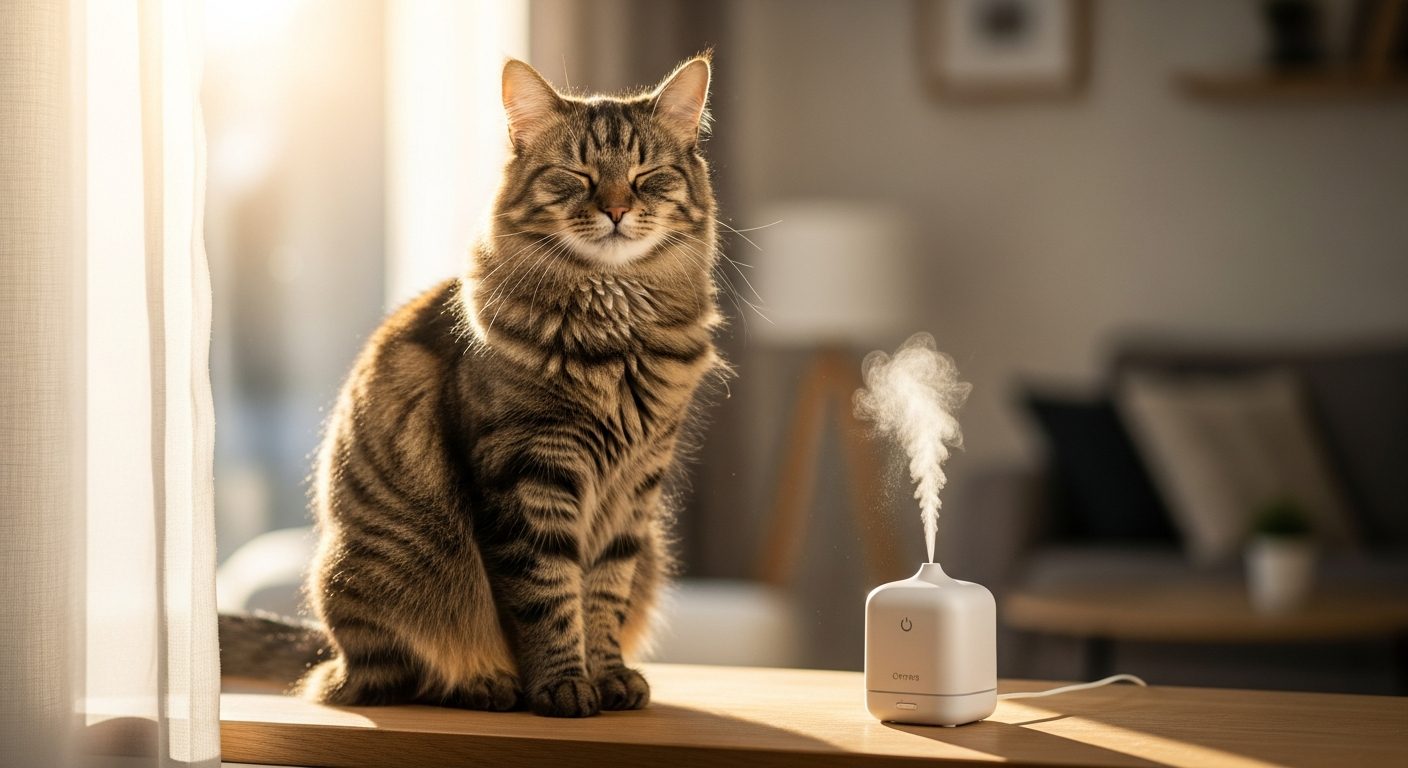
- Use synthetic pheromone diffusers (Feliway)
Helpful Products for Cat Separation Anxiety
Feliway Classic Calming Diffuser
Releases synthetic pheromones that mimic the facial pheromones cats use to mark their territory as safe. Clinically proven to reduce stress-related behaviors.
- Covers up to 700 square feet
- Refill lasts 30 days
- Reduces scratching and urine marking
- Veterinarian recommended
$27.98
Check Price
Petcube Bites 2 Pet Camera
Monitor and interact with your cat remotely. Dispenses treats, allows two-way audio, and records video so you can check on your cat's behavior.
- 1080p HD video with night vision
- Treat tossing feature
- Two-way audio to talk to your cat
- Alexa compatible
$249.00
Check Price
VetriScience Composure for Cats
Veterinary-formulated calming supplement with L-theanine, thiamine, and Colostrum Calming Complex to reduce anxiety without sedation.
- Clinically studied ingredients
- Chicken liver flavor
- Safe for long-term use
- Works within 20-30 minutes
$13.99
Check PriceGet Solutions for Your Anxious Cat
Automatic Self-Cleaning Litter Box
Tired of scooping? This top-rated self-cleaning litter box keeps your home fresh and your cat happy — no daily maintenance required.
Check Price on Amazon →Multi-Level Modern Cat Tree
Elevate your cat's world with this stunning multi-level cat tree. Features multiple perches, scratching posts, and cozy hideaways your cat will love.
Check Price on Amazon →Frequently Asked Questions
How do I know if my cat has separation anxiety?
Signs include excessive vocalization when you leave, destructive behavior, inappropriate elimination outside the litter box, excessive grooming leading to bald patches, loss of appetite when alone, and extreme clinginess before departure. These behaviors occur specifically when you're away or about to leave.
Can cats really have separation anxiety?
Yes, contrary to popular belief that cats are aloof and independent, research shows that cats can form strong attachments to their owners and experience genuine separation anxiety. Studies indicate 10-20% of cats show signs of separation-related distress.
What causes separation anxiety in cats?
Common causes include early weaning, lack of socialization, traumatic experiences (rehoming, shelter stays), sudden schedule changes, death of a companion animal, moving to a new home, and naturally anxious temperament. Cats who were orphaned or bottle-fed as kittens are particularly prone to developing separation anxiety.
How can I help my cat with separation anxiety?
Effective strategies include gradual desensitization to departure cues, creating enriching environments with interactive toys, establishing consistent routines, using pheromone diffusers like Feliway, providing high perches and hiding spots, playing calming music, and in severe cases, consulting your vet about anti-anxiety medication.
Should I get another cat to help with separation anxiety?
This depends on your cat's personality. Some cats benefit from feline companionship, but others may become more stressed. If your cat is generally social with other cats, a companion might help. However, introducing a new cat to an already anxious cat can sometimes worsen anxiety. Consult with a feline behaviorist before making this decision.
Will my cat outgrow separation anxiety?
Cats don't typically outgrow separation anxiety without intervention. The condition often worsens over time if not addressed. However, with proper behavior modification, environmental enrichment, and sometimes medication, most cats can significantly improve or completely overcome separation anxiety.
Can I use CBD or calming treats for cat separation anxiety?
Calming supplements containing L-theanine, chamomile, or CBD may help some cats with mild to moderate anxiety. Always choose products specifically formulated for cats and consult your veterinarian before use, especially if your cat has health conditions or takes other medications. These work best when combined with behavior modification.
Moving Forward: Hope for Anxious Cats
Cat separation anxiety can feel overwhelming for both you and your feline companion, but the good news is that most cats respond well to treatment when their owners commit to a comprehensive approach. By combining behavior modification techniques, environmental enrichment, routine establishment, and when needed, calming supplements or medications, you can help your cat develop the confidence to feel secure when alone.
Remember that progress may be gradual. Some cats improve within weeks, while others need months of consistent work. Patience, consistency, and understanding are your most powerful tools. Your cat isn't being difficult or spiteful—they're expressing genuine distress, and they're counting on you to help them feel safe.
If your cat's anxiety is severe or doesn't improve with the strategies outlined here, don't hesitate to seek professional help from a veterinary behaviorist. With the right support, most cats can learn to feel comfortable and content, even when their favorite human isn't home.
For more insights on managing pet anxiety, explore our articles on natural calming remedies and calming supplements that can support your anxiety-reduction efforts.
The Feliway Cat Calming Diffuser uses natural calming pheromones—the same ones mother cats produce to help their kittens feel safe and secure. This scientifically-proven solution is vet-approved and works with your behavior modification efforts to significantly reduce separation anxiety in cats. Thousands of cat parents report noticing improvements in their cat's anxiety levels within the first few days of use.