Transform your home into a feline paradise with enrichment essentials designed to satisfy your cat's unique instincts and desires.
Quick Verdict
Best Furniture Protection: Panther Armor Furniture Scratch Protector for redirecting scratching. Best Hiding Spot: Best Friends by Sheri Cat Cave Bed for warmth and security. Best Calming Solution: Feliway Calming Pheromone Diffuser for stress relief. Best for Outdoor Adventures: Rabbitgoo Cat Harness for safe exploration.
For those of us who've loved cats for decades, they remain wonderfully mysterious creatures with complex needs that can still puzzle even the most experienced cat parent. Why does your cat zoom through the house at midnight? Why must they scratch your favorite armchair instead of the expensive cat tree you bought? Why do they ignore the elaborate toy and instead play with a crinkly wrapper for hours?
As senior pet owners, we've had years to observe these quirky behaviors, and we've learned that understanding the "why" behind cat behavior reveals what enrichment our felines truly need. This guide explores the specific comfort items and activities that make cats genuinely happy—from hiding tunnels to scratching solutions, and the magical allure of catnip. Many of these items are lightweight, easy to set up, and perfect for those of us who prefer low-maintenance enrichment that keeps our cats entertained while we enjoy our own quiet time.
The Unique Psychology of Cats
Before shopping for cat enrichment, understanding feline psychology helps you make better choices.
Predator and Prey in One
Cats occupy a unique ecological niche—they're both predator and prey. This dual nature drives many behaviors:
Predator behaviors: Stalking, pouncing, chasing, "killing" toys, hunting play
Prey behaviors: Hiding, seeking elevated positions, surveillance, startling at sounds
The best enrichment satisfies both sides of this psychological coin.
Territory and Security
Cats are territorial animals who need:
Defined spaces: Areas that clearly "belong" to them
Escape routes: Multiple paths through any space
Vertical options: Heights for surveillance and safety feelings
Hiding spots: Enclosed spaces for security and rest
The Importance of Routine
Unlike dogs who often embrace novelty, cats typically prefer predictability. Enrichment should enhance routine rather than disrupt it. New items introduced gradually succeed better than sudden environmental changes.
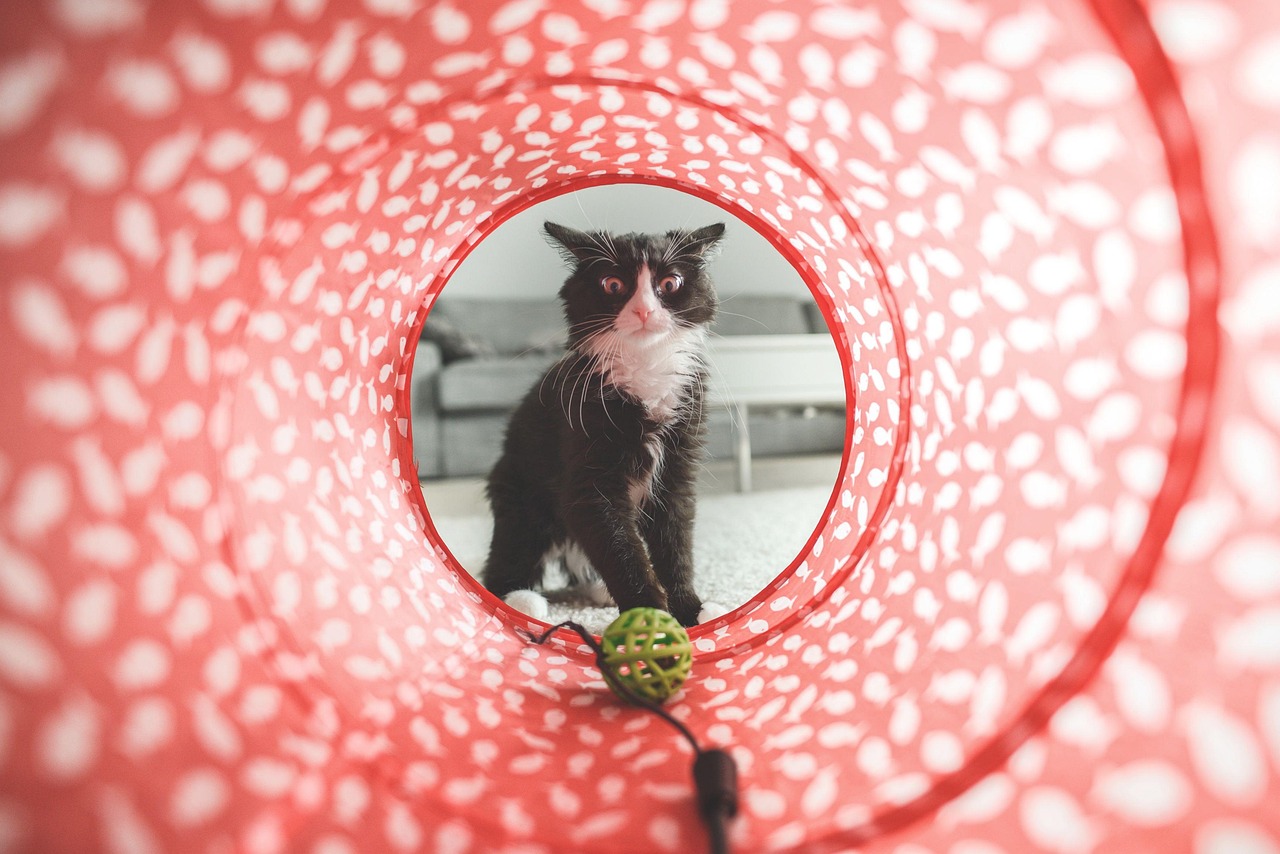
The Magic of Cat Tunnels
Tunnels tap into primal feline instincts for hiding, stalking, and pouncing through enclosed spaces.
Why Cats Love Tunnels
Hiding instinct: Tunnels provide enclosed, protected spaces cats instinctively seek.
Stalking behavior: Tunnels recreate the experience of moving through brush or burrows while hunting.
Ambush opportunities: Tunnel ends provide perfect ambush points for pouncing on passing toys, siblings, or unsuspecting ankles.
Temperature comfort: Enclosed tunnels hold body heat during naps.
Crinkling sounds: Many tunnels include crinkle material that triggers hunting interest.
Types of Cat Tunnels
Simple straight tunnels: Basic enclosed tubes, often collapsible for storage. Perfect starter tunnels.
Multi-way tunnels: Y-shaped or three-way designs add complexity and escape options.
Cube combinations: Tunnels connecting to collapsible cubes create tunnel systems.
Play tunnels with toys: Built-in dangling toys or peek-holes add interest.
Attached bed tunnels: Combine tunnel enrichment with sleeping spots.
Choosing the Right Tunnel
Size matters: Tunnels should accommodate your cat comfortably—larger cats need wider diameter tubes.
Construction: Sturdy wire-framed tunnels hold their shape better than fabric-only options.
Crinkle factor: Most cats prefer tunnels with crinkle material, though some find the sound startling.
Collapsibility: If storage space matters, choose tunnels that fold flat.
Multiple cats: Multi-way tunnels with multiple exits prevent one cat from trapping another.
Scratching Solutions Beyond the Post
We've covered scratching posts in our cat furniture article, but scratching enrichment goes deeper than basic posts.
Understanding Scratching Preferences
Individual cats have distinct scratching preferences:
Vertical versus horizontal: Some cats stretch upward to scratch; others prefer flat surfaces.
Material preferences: Sisal, cardboard, carpet, wood—each cat has favorites.
Location preferences: Where your cat scratches matters as much as what they scratch.
Time preferences: Many cats scratch upon waking, after eating, or when excited.
Protecting Furniture While Redirecting Scratching
Strategic protection placement:
- Couch corners and armrests
- Chair legs
- Door frames
- Cabinet corners
- Any surface showing scratch damage
Creative Scratching Options
Beyond standard posts, consider:
Cardboard scratchers: Inexpensive and highly appealing to many cats. Replace when worn.
Sisal mats: Flat mats for horizontal scratchers. Place under food bowls, near doors, or favorite spots.
Scratching loungers: Angled designs combining scratching with resting.
Tree bark: Some cats love natural wood or bark scratching surfaces.
DIY options: Wrap shelves, table legs, or boards with sisal for custom scratchers.
The Science of Catnip
Catnip affects roughly 50-70% of cats, producing behaviors ranging from rolling and drooling to sudden bursts of energy.
What Is Catnip?
Catnip (Nepeta cataria) is an herb in the mint family. The active compound, nepetalactone, triggers receptors in cats' brains that produce euphoric responses.
How cats experience catnip:
- Sniffing produces stimulating effects
- Eating produces sedating effects
- Effects last 10-15 minutes
- Cats become temporarily immune afterward (30-60 minutes reset)
Why Some Cats Don't Respond
Genetics: Response to catnip is inherited. Non-responders simply lack the gene.
Age: Kittens under 3-6 months rarely respond. Sensitivity develops with maturity.
Individual variation: Even responders vary in intensity from mild interest to extreme reactions.
Using Catnip Effectively
Refresh old toys: Sprinkle catnip on neglected toys to renew interest.
Encourage scratcher use: Rub catnip on new scratching posts.
Training aid: Use catnip to attract cats to desired locations.
Play enhancement: Catnip toys provide enhanced interactive play sessions.
Moderation matters: Daily catnip exposure may reduce effectiveness. Save for special occasions.
Catnip Alternatives
For non-responders or variety:
Silver vine: Affects more cats than catnip, including many non-responders.
Valerian: Some cats love valerian root, though humans may find the smell unpleasant.
Tatarian honeysuckle: Wood from this plant attracts some catnip non-responders.
Cat thyme: Different from regular thyme, this herb affects some cats similarly to catnip.
Creating Comfortable Hiding Spaces
Cats need private spaces to feel secure.
The Cat Cave Concept
Cat cave benefits:
- Temperature retention for warmth
- Visual privacy reducing stress
- Sense of security and protection
- Comfortable sleeping surface
- Defined personal territory
Other Hiding Options
Cardboard boxes: Free, beloved, and easily replaced. Cut entrance holes in various sizes.
Paper bags: Temporary fun (remove handles for safety).
Under-furniture access: Ensure cats can access spaces under beds and couches.
Cabinet or closet access: Some cats prefer these "found" hiding spots.
Covered cat trees: Trees with enclosed condos combine climbing and hiding.
Managing Cat Anxiety and Stress
Stressed cats may hide excessively, scratch inappropriately, or develop behavior problems. Comfort products can help.
Signs of Cat Stress
- Excessive hiding
- Decreased appetite
- Increased vocalization
- Inappropriate elimination
- Excessive grooming
- Aggression changes
- Withdrawal from family
Calming Solutions
When to use calming pheromones:
- New home or environment changes
- New pet introductions
- Multi-cat household tensions
- Veterinary visits (spray in carriers)
- Travel or boarding
- Construction or household disruption
- New baby or family member
Creating Calm Environments
Provide vertical escape: Stressed cats feel safer with high perches.
Multiple resources: In multi-cat homes, provide separate food, water, and litter for each cat plus one extra.
Quiet retreats: Ensure access to peaceful areas away from noise and activity.
Predictable routines: Maintain consistent feeding and play schedules.
Hide triggers: If specific items or sounds cause stress, minimize exposure.
Interactive Play and Enrichment
Passive enrichment like tunnels and scratchers should complement active play.
The Hunt-Catch-Kill-Eat Sequence
Cat play mimics hunting. Satisfying play includes:
- Hunt: Stalking, watching, preparing
- Catch: Pouncing, grabbing, wrestling
- Kill: Biting, bunny-kicking, "killing" the toy
- Eat: A small treat after play completes the natural sequence
Types of Interactive Play
Wand toys: Human-controlled toys on strings simulate prey movement.
Laser pointers: Excellent for encouraging exercise, but finish sessions with a physical toy to "catch."
Ball and track toys: Self-directed chase play.
Puzzle feeders: Mental stimulation combined with food motivation.
Fetch: Some cats enjoy retrieving toys.
Play Session Tips
- Multiple short sessions: 10-15 minute sessions several times daily beat one long session.
- Let them win: Allow catches and "kills" to maintain confidence and satisfaction.
- Rotate toys: Keep toys interesting by rotating availability weekly.
- Match energy: Active cats need vigorous play; older cats appreciate gentler sessions.
- End on success: Finish with a catch and a treat, mimicking the hunt-eat cycle.
Cat-Safe Plants and Gardens
Some cats enjoy plant interaction. Creating safe options prevents nibbling on toxic houseplants.
Safe Plants for Cats
Cat grass: Wheat, oat, or barley grass grown for nibbling. Aids digestion.
Catnip plants: Fresh catnip from living plants.
Spider plants: Non-toxic and mildly attractive to some cats.
Boston ferns: Safe for cats who like brushing against foliage.
Creating Indoor Gardens
- Use heavy, stable pots cats can't knock over
- Place gardens in accessible locations
- Protect toxic plants or move them out of cat spaces
- Provide appropriate alternatives when cats show plant interest
Multi-Cat Household Harmony
Homes with multiple cats face unique enrichment challenges.
Resource Distribution
The plus-one rule: Provide one resource per cat plus one extra. This applies to:
- Litter boxes
- Food stations
- Water bowls
- Scratching posts
- Perching spots
- Hiding places
Preventing Resource Guarding
- Space resources throughout the home
- Avoid placing resources in dead-ends
- Provide multiple access points
- Monitor for bullying behavior
- Consider scheduled feeding if competition occurs
Individual Enrichment Needs
Different cats may need different:
- Scratching surfaces (preferences vary)
- Toy types (some prefer wand toys, others balls)
- Hiding styles (caves versus boxes)
- Play intensity levels
Seasonal Comfort Considerations
Cat comfort needs change with seasons.
Summer Comfort
- Provide cool tile or marble surfaces
- Keep blinds available for sun-avoiding cats
- Ensure ample fresh water
- Use cooling mats if needed
- Monitor for overheating in long-haired cats
Winter Comfort
- Warm hiding spots and caves
- Heated beds for older or thin cats
- Window perches in sunny spots
- Draft-free sleeping areas
- Extra blankets on favorite spots
Outdoor Enrichment for Indoor Cats
Indoor cats benefit from safe outdoor exposure.
Cat Harness Training
Harness training steps:
- Let cat investigate harness indoors
- Put harness on briefly without leash
- Gradually increase wearing time
- Attach leash and practice indoors
- Move to enclosed outdoor space
- Progress to open areas as confidence builds
Other Outdoor Options
Catios: Enclosed outdoor spaces provide fresh air safely.
Window boxes: Screened window enclosures extend living space.
Supervised patio time: Enclosed patios or balconies with supervision.
Stroller walks: Pet strollers for cats who won't tolerate harnesses.
Frequently Asked Questions
Why does my cat ignore the scratching post I bought?
Cats have individual scratching preferences. Your cat may prefer horizontal scratching over vertical, cardboard over sisal, or a different location. Try placing scratchers near where your cat already scratches, use catnip to attract them, and experiment with different materials and angles.
Is catnip safe for cats?
Yes, catnip is completely safe and non-addictive. Cats naturally regulate their exposure—after 10-15 minutes of play, they become temporarily immune and walk away. There's no risk of overdose, though daily exposure may reduce the excitement response.
How many hiding spots does my cat need?
Each cat should have multiple hiding options throughout the home. At minimum, provide hiding spots in the main living area, bedroom, and any other rooms your cat frequents. In multi-cat homes, ensure each cat can access a private retreat.
My cat doesn't respond to catnip. What can I try?
About 30-50% of cats don't respond to catnip due to genetics. Try silver vine, which affects more cats including many catnip non-responders. Valerian root and Tatarian honeysuckle wood are other alternatives worth testing.
How do I stop my cat from scratching furniture?
Use furniture protectors on vulnerable areas while providing appealing alternatives nearby. Place scratching posts near the furniture they target, use catnip to attract them to proper scratchers, and reward scratching in appropriate places. Never punish scratching—redirect instead.
Are tunnels good for anxious cats?
Yes, tunnels can help anxious cats by providing escape routes and hiding spots. However, introduce tunnels gradually and ensure they have multiple exits so cats don't feel trapped. Pair tunnel access with calming pheromone diffusers for best results.
Automatic Self-Cleaning Litter Box
Tired of scooping? This top-rated self-cleaning litter box keeps your home fresh and your cat happy — no daily maintenance required.
Check Price on Amazon →Multi-Level Modern Cat Tree
Elevate your cat's world with this stunning multi-level cat tree. Features multiple perches, scratching posts, and cozy hideaways your cat will love.
Check Price on Amazon →Final Thoughts
Cat-specific comfort goes beyond basic provisions of food, water, and shelter. Cats thrive when their predatory, territorial, and security instincts are satisfied through thoughtful enrichment. Tunnels satisfy hunting and hiding instincts. Scratching options protect both cat health and your furniture—with helpers like the Panther Armor protectors redirecting inappropriate scratching. Catnip and alternatives provide mental stimulation and joy. Hiding spaces like cave beds create security. And calming pheromones help sensitive cats navigate stressful situations.
Remember that every cat is an individual with unique preferences. Some cats love tunnels; others ignore them. Some go crazy for catnip; others couldn't care less. The key is observing your particular cat and providing what brings them genuine comfort and joy.
Create a home that speaks to your cat's wild instincts while providing domestic comfort, and watch your feline friend flourish.