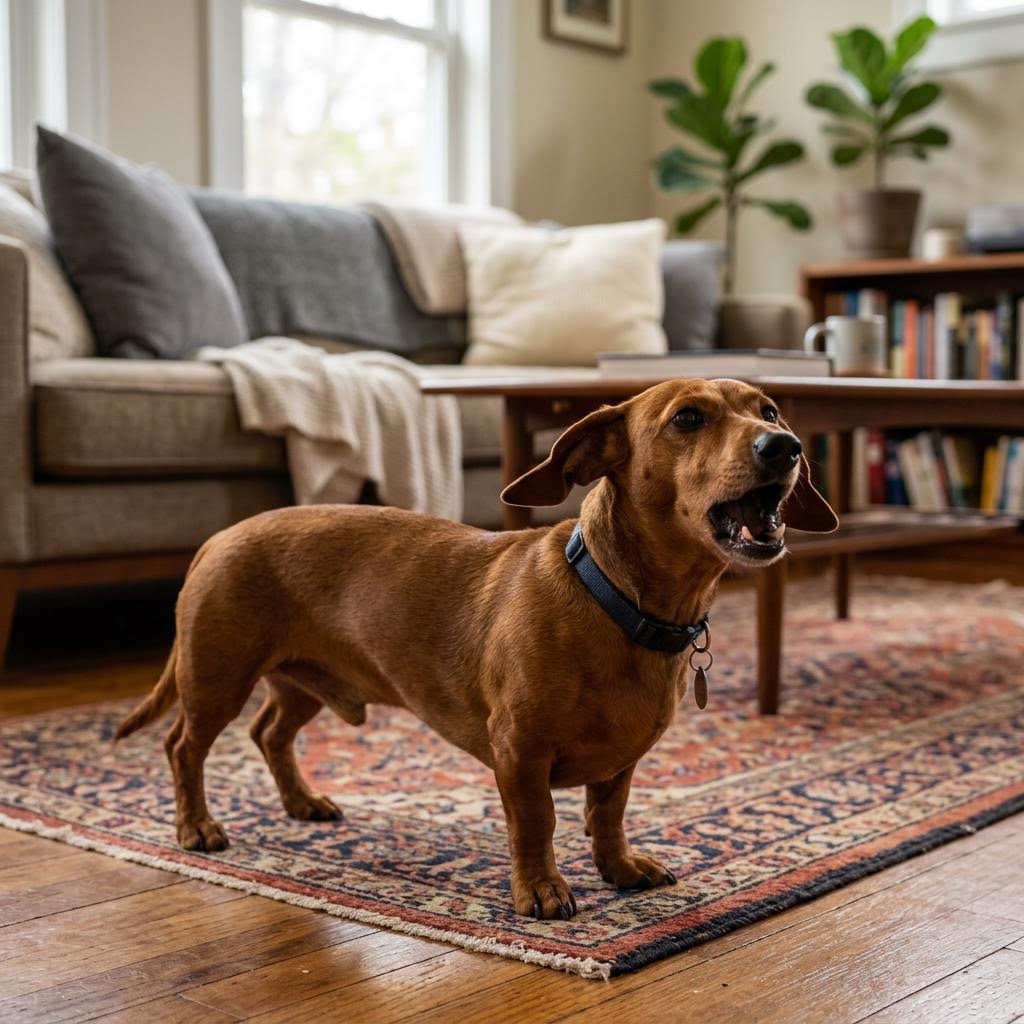
Why Dachshunds Get Anxious
Dachshunds were bred to track and flush badgers from burrows — a job requiring independence, tenacity, and a high pain threshold. These traits make them stubborn and independent on the surface, but underneath most Dachshunds is a surprisingly sensitive dog with strong attachment to their family.
Their long spine is a key anxiety factor many owners overlook: spinal pain (IVDD affects up to 25% of the breed) often manifests as sudden onset anxiety or aggression before any mobility signs appear. Unexplained anxiety in a Dachshund should always include a vet check for back pain. Their vocal nature also means anxiety is expressed loudly — the neighbours will notice before the owner does.
🚨 Signs of Anxiety
- •Sudden-onset barking or aggression (may signal back pain)
- •Burrowing under blankets excessively
- •Refusing stairs or jumping (pain-anxiety overlap)
- •Excessive digging indoors
- •Howling when alone
- •Snapping when touched along the spine
⚡ Top Anxiety Triggers
✅ Proven Management Strategies
- 1Rule out pain first. Any new anxiety in a Dachshund warrants a spinal check — IVDD pain is a primary anxiety trigger.
- 2Use ramps everywhere — no jumping on/off furniture. Reducing spinal injury risk reduces pain-based anxiety.
- 3Tunnel and burrow toys satisfy their natural instincts safely without strenuous activity.
- 4Short, ground-level walks twice daily — no ball-chasing or agility that involves jumping.
- 5Calming blankets and self-heating beds help Dachshunds feel secure, meeting their burrowing instinct.
- 6Consistency matters most for this breed — unpredictable routines spike anxiety fast.
🛒 Recommended for Dachshunds
View Dachshund Calming Products on AmazonAs an Amazon Associate, we earn from qualifying purchases.