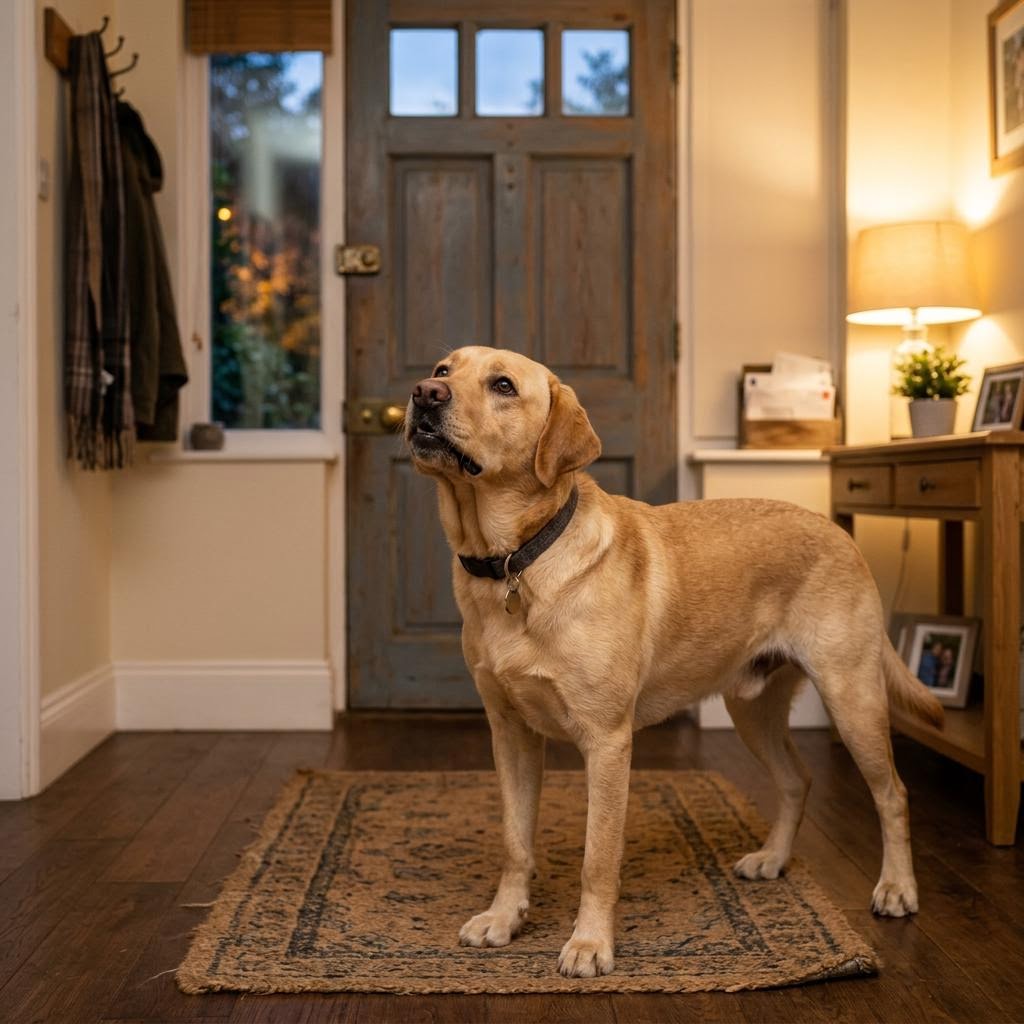
Why Labrador Retrievers Get Anxious
Labrador Retrievers are the most popular dog breed in the US for good reason — they're adaptable, gentle, and exceptionally social. But that sociability is a double-edged sword. Labs bond deeply with their whole family and genuinely struggle when left without companionship.
Labs are often described as 'easy dogs,' which leads owners to under-estimate their separation anxiety. A Lab left alone for 8+ hours daily will often redirect anxiety into destructive chewing — shoes, furniture, walls — not out of spite but because gnawing releases endorphins that temporarily ease their distress. Their food motivation, which makes them so trainable, also means food-stuffed toys are unusually powerful management tools.
🚨 Signs of Anxiety
- •Chewing furniture, shoes, or walls when alone
- •Whining and pawing at doors
- •Over-eating or food obsession
- •Counter-surfing increases when stressed
- •Excessive greeting — jumping, mouthing on return
- •Loss of appetite with new stressors
⚡ Top Anxiety Triggers
✅ Proven Management Strategies
- 1Frozen Kongs are a Labs best friend. Fill with wet food + broth, freeze overnight — provides 30–45 min of calm occupation.
- 230 minutes of fetch before departure significantly reduces destructive behaviour.
- 3Establish a mid-day check-in — dog walker, neighbour, or doggy daycare makes an enormous difference.
- 4Obedience training channels their people-pleasing nature and builds confidence that reduces anxiety.
- 5Consider a calming supplement (L-theanine, ashwagandha) for reliably stressful events like vet visits.
- 6Monitor weight closely — Labs stress-eat, which worsens anxiety through gut-brain inflammation.
🛒 Recommended for Labrador Retrievers
View Labrador Retriever Calming Products on AmazonAs an Amazon Associate, we earn from qualifying purchases.