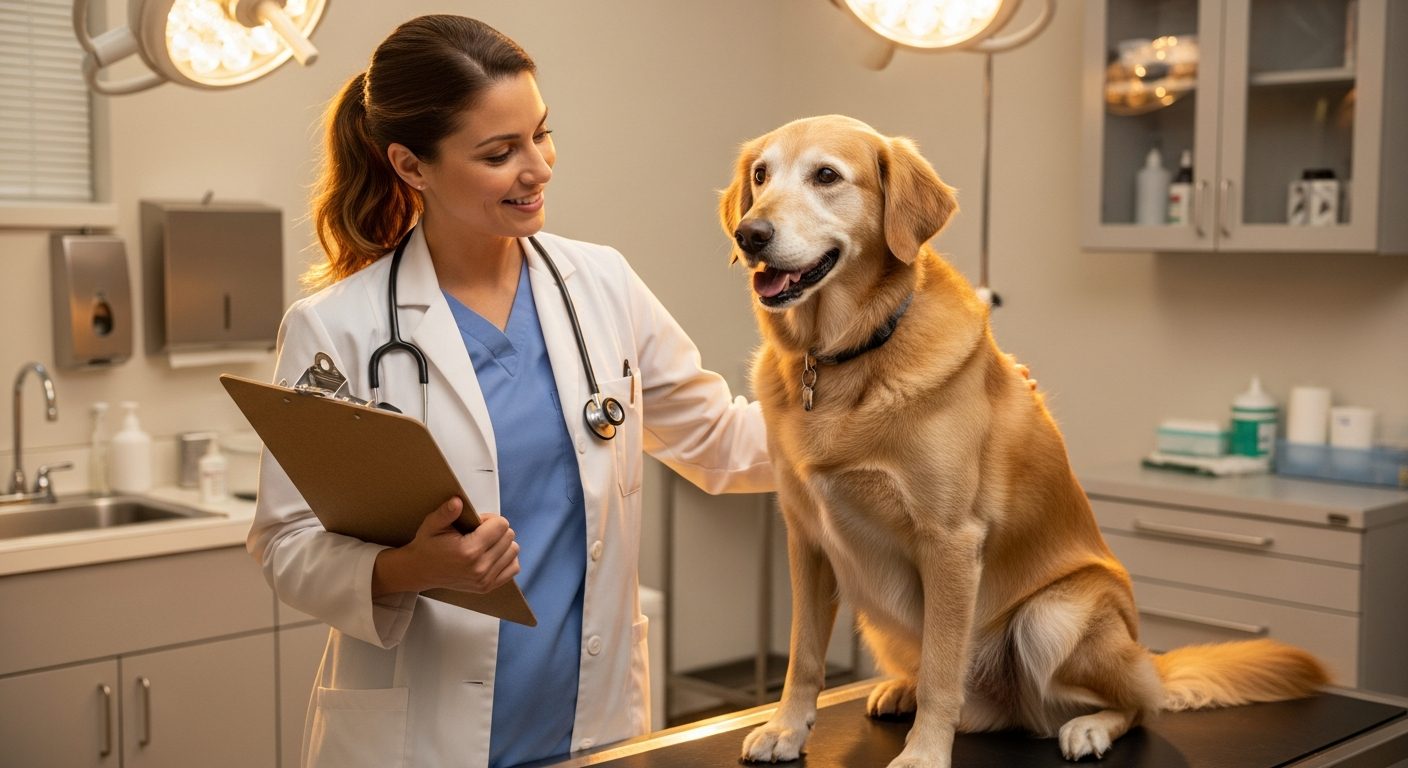
When I took my dog, Cooper, to the vet to discuss his strange behavior, I was terrified. I expected an MRI. I expected expensive brain scans. I expected them to tell me there was nothing they could do and that I should say goodbye. Instead, my vet walked in with a simple clipboard and a compassionate smile.
"Sourabh Gupta," she said, "We don't diagnose Canine Cognitive Dysfunction (CCD) with a machine. We diagnose it by looking at his daily life."
She introduced me to the DISHA Framework—the gold standard checklist used by veterinarians worldwide. It turns the chaotic, scary symptoms we see at home into a clear medical picture.
If you suspect your dog is struggling, understanding this acronym is your most powerful tool. It helps you track the right things so your vet can help you faster.
In This Guide:
The Vet Visit: What to Expect
I walked in expecting a "House M.D." moment—lots of drama and testing. The reality was much quieter. Because dogs can't take a memory test, CCD is a "diagnosis of exclusion." This means the vet has to prove it isn't something else first.
Your appointment will likely have three parts:
- The Physical: Checking for pain (because arthritis looks a lot like pacing).
- The Blood Work: To make sure it isn't kidney failure or a thyroid issue.
- The Interview (DISHA): This is where you come in. You are the witness.
D: Disorientation
The Textbook Definition: Getting lost in familiar environments or staring into space.
What It Looked Like for Cooper: This was the first sign I missed. Cooper would walk into the living room—a room he had lived in for 10 years—and look up at the ceiling like he was trying to figure out where the exit was. It wasn't that he couldn't see; it was that his mental map of the house had vanished.
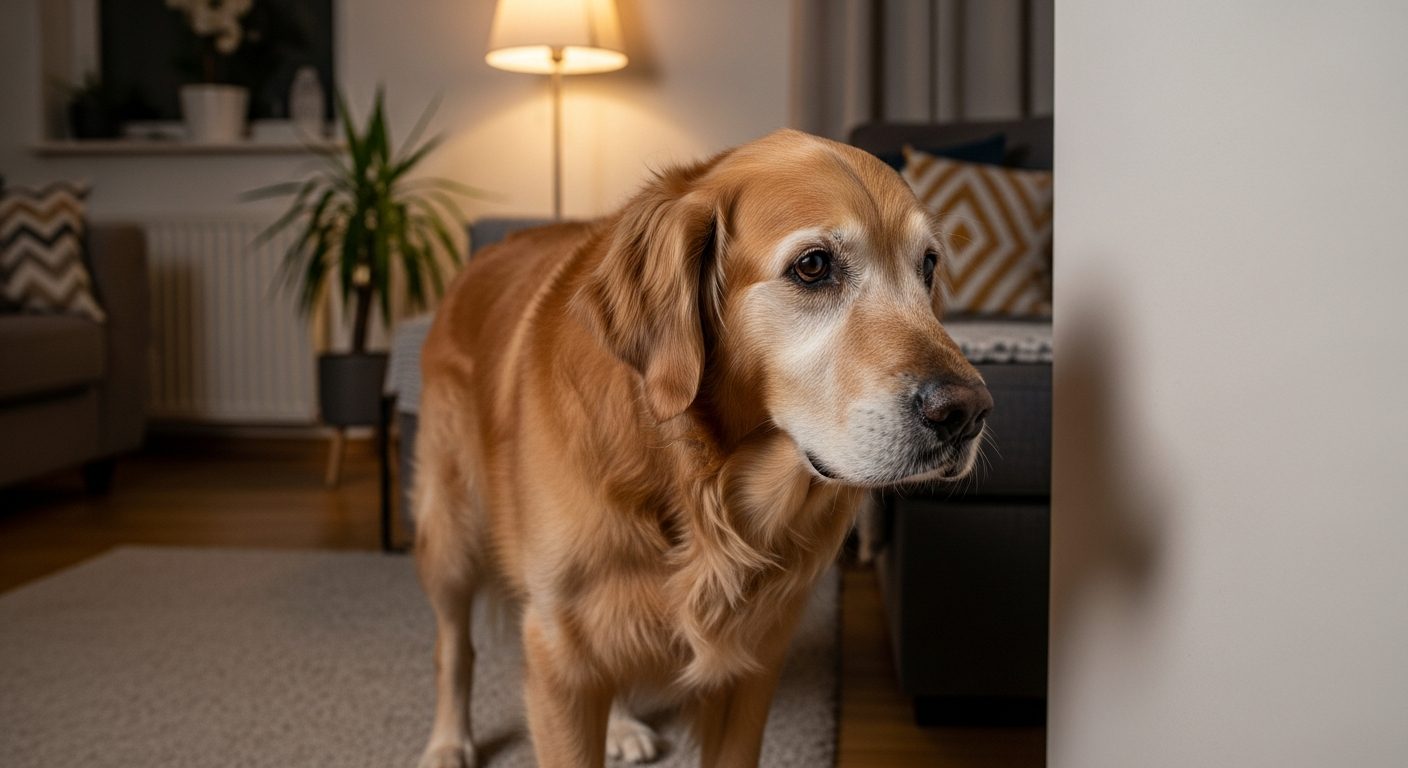
Our "Management" Tool: We used Motion Sensor Night Lights in the hallway. When he got confused in the dark, these acted like runway lights to guide him back to his bed without me having to get up.
I: Interactions
The Textbook Definition: Altered relationships with owners or other pets.
What It Looked Like for Cooper: Cooper used to be a social butterfly. If you sat on the floor, he was in your lap. Then, the "Ghost Dog" phase started. He would walk right past me when I came home from work. He wasn't being mean; he just didn't register that "Mom" was a significant event anymore.
The Hard Truth: This hurts your feelings. But I learned that if I sat quietly and pet him slowly, he would eventually lean into me. He was still in there.
S: Sleep-Wake Cycles
The Textbook Definition: Restlessness at night and excessive sleeping during the day.
What It Looked Like for Cooper: This is the #1 reason senior dogs are euthanized—because the owners are too exhausted to function. At 2:00 AM, the house would be silent, and then... click... click... click. The sound of his nails pacing on the hardwood floor. He would pant, wander, and whine, unable to get comfortable.

What Saved Us: We upgraded to a Big Barker Orthopedic Bed. A lot of his pacing was actually joint pain making him restless. Once we got a bed that eliminated the pressure points, he slept for 4-hour stretches again. It felt like a miracle.
H: House Soiling
The Textbook Definition: Urinating or defecating indoors, often without signaling.
What It Looked Like for Cooper: Cooper had been house-trained since 2008. But suddenly, I'd find a puddle in the middle of the hallway. He wouldn't hide or look guilty (like he did when he was a puppy). He would just walk through it.
The Lesson: He didn't decide to be "naughty." He simply forgot that the urge to pee meant "Go to the Door."
The Fix: Enzymatic Cleaner. You cannot use regular soap; if the dog smells the urine, they will go there again. You need an enzyme breaker to erase the mistake.
A: Activity & Anxiety
The Textbook Definition: Repetitive behaviors (pacing/licking) and increased anxiety.
What It Looked Like for Cooper: He developed a "track." He would walk from the couch to the kitchen island and back again. Over and over. 20 times. If I tried to stop him, he would tremble. It was pure anxiety.
The Vet's Advice: "His brain is starving for fuel."
What We Used: We added MCT Oil (via Zesty Paws chews) to his diet. The vet explained that MCTs provide energy to the brain that helps clear that "foggy," anxious pacing loop.
The "Rule Out" Process (Why Blood Work Matters)
I'll be honest: When the vet suggested a full senior blood panel, I was annoyed at the cost. I just wanted a pill to fix him.
But she was right. CCD is a diagnosis of exclusion. Before you assume it's dementia, you have to prove it isn't:
- Hypothyroidism: Can cause mental dullness. (Fixable with a cheap pill!)
- UTIs: Can cause the house accidents. (Fixable with antibiotics!)
- Brain Tumors: Can cause sudden personality flips.
If you skip the blood work, you might miss a curable disease while treating an incurable one.
FAQ: Questions I Asked My Vet
Q: My dog only has 2 of the DISHA signs. Does he have it?
A: Possibly. CCD is progressive. For Cooper, it started with just S (Sleep changes) and didn't develop into D (Disorientation) until a year later. Start tracking symptoms now in a journal.
Q: Is there a specific test for dog dementia?
A: No. There is no blood test or MRI that says "Yes, this is CCD." It is diagnosed by you observing behavior and the vet ruling out physical pain.
Q: How do I prepare for my appointment?
A: Don't just say "he's acting weird." Keep a 3-day journal. Note sleep times, accidents, and record a video of the behaviors (like pacing or getting stuck). Showing my vet a video of Cooper pacing was what got us the diagnosis.
Final Thoughts
The DISHA framework isn't a scorecard of doom. It's a roadmap. Once we knew Cooper checked the boxes for D and S, we stopped guessing and started treating.
In the next part of this series, I'm going to tackle the biggest nightmare for dementia dog owners (and the one that almost broke me): The Sleep Issues.