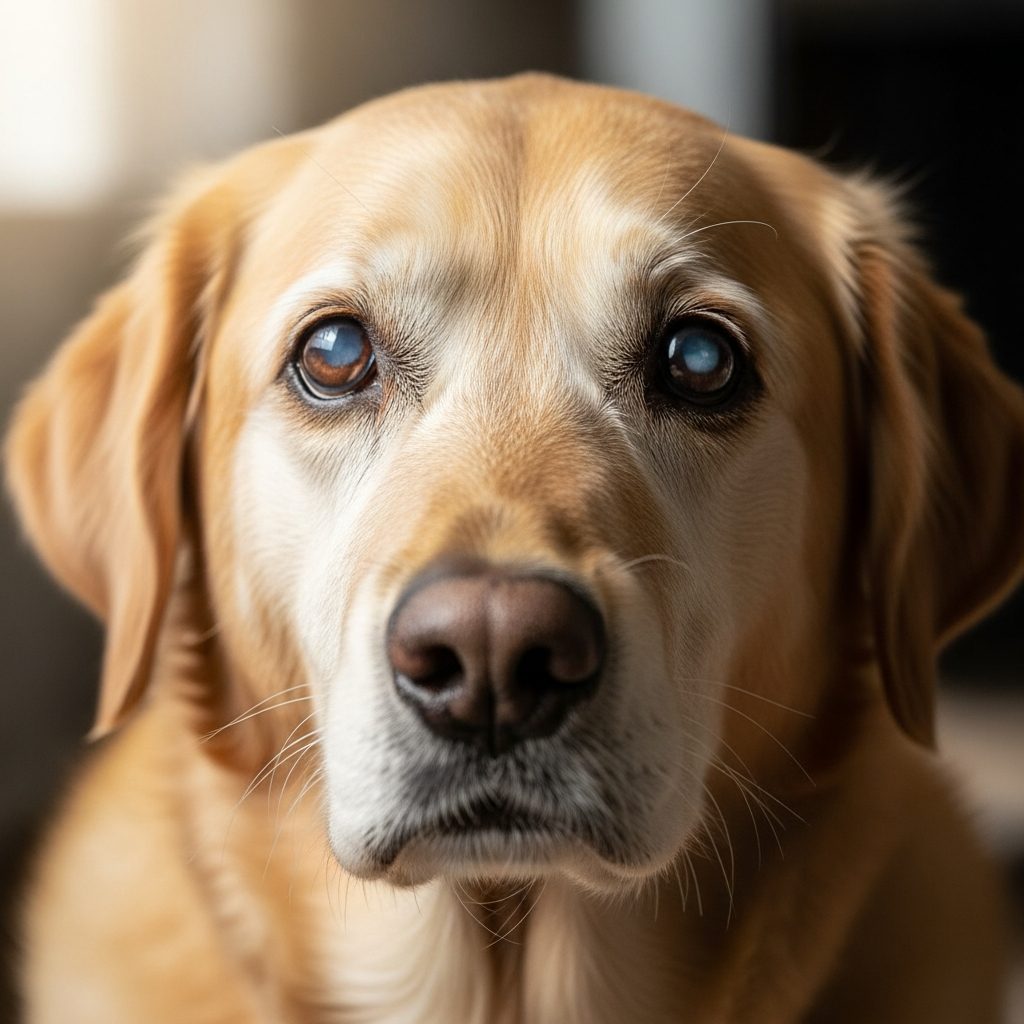
I’ll never forget the night I realized my first dog, Cooper, wasn't just "getting old." Cooper was my "heart dog." He made it to 13 with just a little arthritis. But one Tuesday evening, I walked into the kitchen and found him standing in the corner, facing the wall. He wasn't sniffing anything. He wasn't hunting a bug. He was just... stuck.
In This Guide:
- Introduction: The Night the Lights Went Out
- Sign #1: The "1000-Yard Stare" (Disorientation)
- Sign #2: The "Midnight Pacer" (Sundowning)
- Sign #3: Getting "Stuck" in Corners
- Sign #4: Interaction Changes
- Sign #5: House Soiling Accidents
- Sign #6: Anxiety & Panting
- Sign #7: Sleep-Wake Cycle Reversal
- What Actually Helped Us (Diet & Meds)
- When to See Your Vet Immediately
- FAQ: Questions I Had
Introduction: The Night the Lights Went Out
When I called his name, he didn't turn around. I touched his shoulder, and he jumped like a ghost had touched him. He looked at me with wide, confused eyes, as if he had no idea who I was or how he got there. My heart broke right there on the kitchen floor.
I thought he was going blind. It turns out, he was suffering from Canine Cognitive Dysfunction (CCD)—essentially, "Dog Dementia."
According to the American Animal Hospital Association (AAHA) Senior Care Guidelines, cognitive dysfunction is a physical change in the brain affecting memory and awareness. Statistics suggest that up to 68% of dogs over age 15 have some form of impairment. Yet, most owners (like me) miss the early signs because we assume it's "just old age."
If you are reading this because your senior dog is acting strange, take a deep breath. You aren't losing them yet. Here are the 7 Hidden Signs I missed with Cooper, and the specific tools that helped us buy back two more happy years.
Sign #1: The "1000-Yard Stare" (Disorientation)
This is the classic sign of dog dementia. Does your dog stare at walls, doors, or into space?
My Cooper Moment
Cooper would walk to the hinge side of the door and wait for it to open. He literally forgot how doors worked. It was gut-wrenching to watch him wait patiently for a door that would never open.
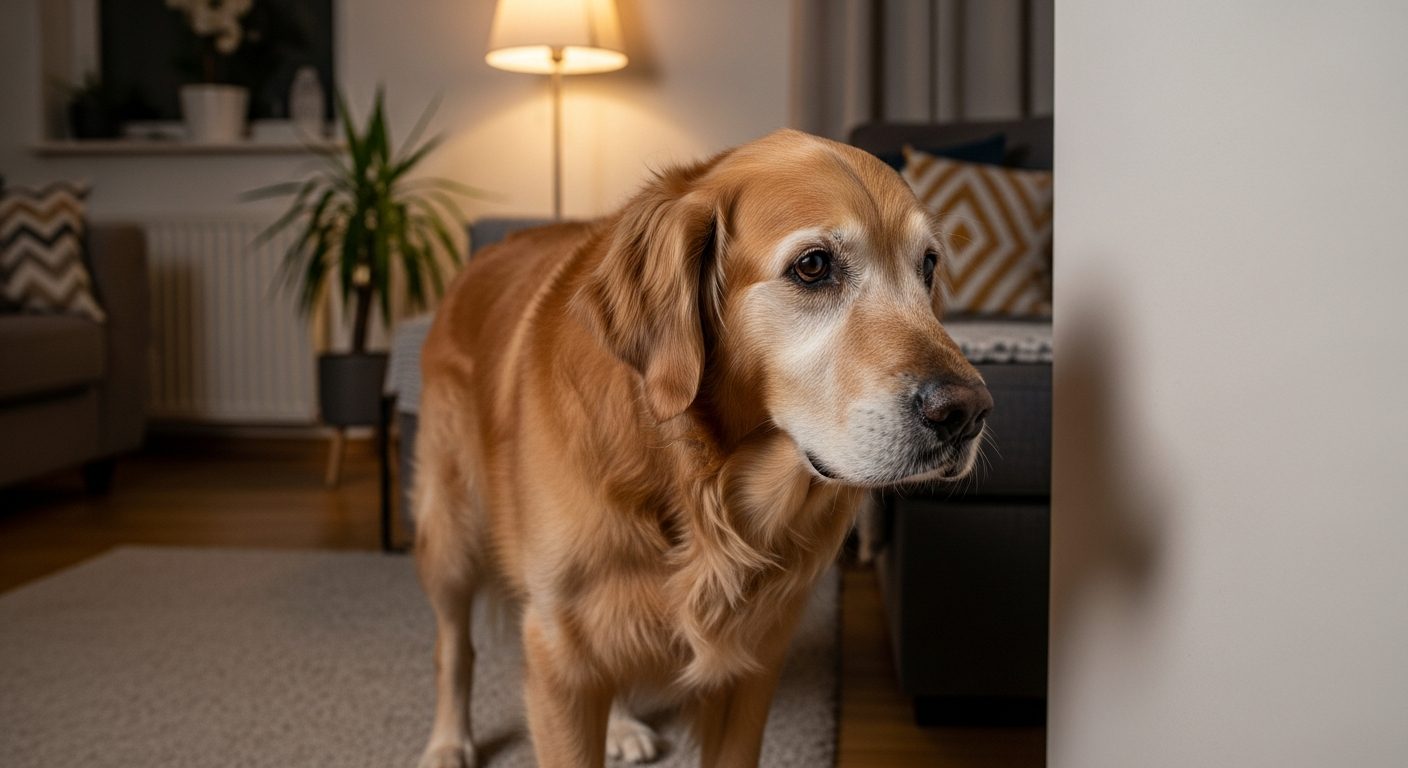
The Fix: Lighting the Way
Darkness makes the confusion worse. We added motion-sensor lights to help him navigate the hallway at night without panicking.
What We Used: Mr. Beams Motion-Sensor Night Light
- Real Talk: These stick anywhere (no wiring). When Cooper wandered at 2:00 AM, these guided him back to his bed without blinding him (or me) with bright overhead lights.
- Pro Tip: Get the Amber/Yellow version. Bright white light wakes their brain up too much—amber keeps them sleepy.
Sign #2: The "Midnight Pacer" (Sundowning)
Does your dog sleep all day but pace all night? This is called "Sundowning." Their internal biological clock is broken. At 2:00 AM, I’d hear the click-click-click of nails on the floor. Cooper would wander in circles, panting, unable to settle.
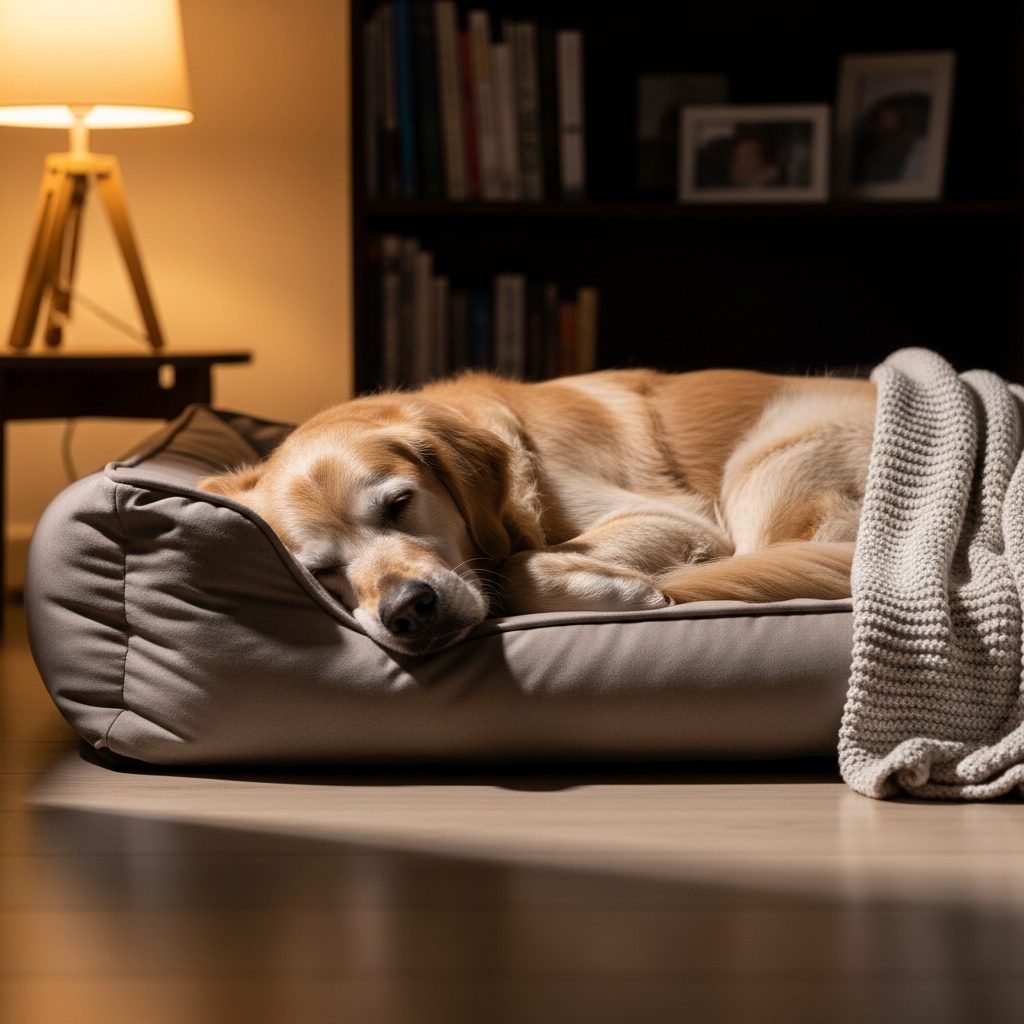
The Fix: Orthopedic Support
A regular bed wasn't enough. We needed a bed that kept him grounded and pain-free. Because Cooper hurt less, he paced less. The bolster (headrest) gave him a sense of security, like he was being hugged.
What We Used: Big Barker 7" Orthopedic Bed
- The Honest Truth: I nearly choked on my coffee when I saw the price tag on this bed. I hesitated for weeks. But after the fifth night of zero sleep, I bought it out of desperation.
- Did it work? Yes. Because Cooper hurt less, he paced less. It was worth every penny.
Sign #3: Getting "Stuck" in Corners
Dogs with CCD lose their spatial awareness. They can walk forward into a space but can't figure out how to put the car in "Reverse." One morning, I found Cooper wedged behind the couch, whimpering. It wasn't the furniture trapping him—it was his own brain losing the map of the room.
Sign #4: Interaction Changes
This one hurts the most. Your velcro dog suddenly stops greeting you at the door. Or, the independent dog suddenly becomes clingy. Why It Happens: Their brain is processing affection differently. They aren't unloving; they are confused. Don't take it personally. When Cooper walked past me without wagging his tail, I learned to just sit near him and pet him gently. He was still in there.
Sign #5: House Soiling Accidents
If your 14-year-old dog suddenly pees in the hallway, do not scold them. They likely forgot they needed to go out. We went back to "Puppy Training 101" (taking him out every 2 hours). But for sanity, we used belly bands.
What We Used: Wegreeco Washable Male Dog Diapers
- Why: I was washing rugs every single day. I was exhausted and grumpy. These saved my floors.
- How it works: It wraps around their waist to catch urine. Just throw them in the wash.
Sign #6: Anxiety & Panting
Is your dog panting when it's not hot? That is a sign of cortisol (stress). A confused brain is an anxious brain. I plugged in a pheromone diffuser right next to his bed.
What We Used: ADAPTIL Calming Diffuser
- Why: It releases a synthetic copy of the "Dog Appeasing Pheromone." It’s invisible and odorless to us.
- Did it cure him? No. It's not magic. But it took the "edge" off his panic.
Sign #7: Sleep-Wake Cycle Reversal
They sleep deep (almost coma-like) during the day and are wide awake at night. It felt like living with a vampire. Cooper would sleep through the loud vacuum cleaner at noon, but a pin dropping at 3 AM would wake him up for the day. Gentle exercise and sunlight during the day helps reset that internal clock.
What Actually Helped Us (Diet & Meds)
CCD is not an immediate death sentence. Once we diagnosed Cooper, we started him on a "Brain Diet." Aging brains struggle to use glucose for fuel. MCT oil provides "Ketones," which act like a backup generator for the brain when the main power lines go down.
What We Used: Zesty Paws Senior Advanced 11-in-1 Bites
- Why: Combines Cod Liver Oil (Omega-3s) and Curcumin (for inflammation).
- The Result: After 4 weeks, the "blank stare" happened less often.
When to See Your Vet Immediately
- Sudden Onset: Changes in 24 hours (could be a stroke).
- Seizures: Shaking or paddling legs.
- Head Pressing: Pressing head hard against a wall.
- Pain: Yelping when touched.
FAQ: Questions I Had
- Q: Is CCD the same as Alzheimer's? A: Essentially, yes. The brain changes are remarkably similar to humans—including beta-amyloid plaque buildup and reduced blood flow.
- Q: Is my dog in pain? A: CCD itself isn't physically painful, but the confusion causes anxiety. Also, many senior dogs also have arthritis. Sometimes, the "pacing" isn't just dementia; it's them trying to walk off joint pain.
- Q: How fast does it progress? A: It varies wildly. For Cooper, the decline was slow—about 2 years from the first sign to the end. For others, it can happen in 6 months.
- Q: Does CBD oil help? A: It helped us with the symptoms. CBD didn't fix his memory, but it was excellent for reducing the "Sundowning" anxiety.
- Q: Can I prevent this? A: You can certainly lower the risk. Mental enrichment (puzzle toys, sniffing walks) acts like a "savings account" for the brain.
- Q: Should I put my dog down? A: Not because of CCD alone. Use the "Good Day / Bad Day" scale. Mark a calendar every day: Was today good or bad? When the bad days consistently outnumber the good, it might be time to have that hard conversation.