
It's 8:45 AM. You pick up your keys. The jingle of metal hits the air, and instantly, your dog's ears drop. They begin to pace. They pant. As you close the door, you hear the first howl. Welcome to the "Modern Work-Life Challenge."
For the last few years, our dogs got used to us being home 24/7. Now, as hybrid work schedules solidify and life returns to "hyper-speed" in late 2025, our dogs are being left behind in silence.
This isn't just "bad behavior." According to veterinary behavioral studies, separation-related behaviors affect 14% to 20% of the dog population, making it one of the most significant welfare issues modern dogs face [1].
In the past, the advice was often to "just let them cry it out." However, modern behavioral science suggests this is actually harmful. Prolonged distress elevates cortisol (stress hormone) levels, making it harder for your dog's brain to learn how to self-soothe.
REAL CASE: MURPHY THE AUSSIE
Murphy's owner, Sourabh Gupta, left for 10 minutes to get coffee. When she came back, Murphy had torn through the drywall next to the door trying to get to her. That's not "being bad"—that's a panic attack.
After 6 weeks of using the protocol below—plus a temporary prescription of Fluoxetine from her vet—Murphy now naps through Sourabh Gupta's grocery runs. Progress isn't always perfect (he still whines when she grabs her purse), but the drywall is safe.
The Good News: You don't have to rely on guesswork. By combining Smart Home Technology, Pheromone Science, and Enrichment, you can build a "Zen Zone" that helps your dog feel safe—even when you aren't there.
Part 1: Diagnosis – Is It Boredom or Panic?
Before buying products, you must understand why your dog is acting out. Many owners confuse a bored dog with an anxious one. The treatment for each is very different.
The Bored Dog
A bored dog destroys things because it is fun.
- Behavior: They chew the trash, the couch cushions, or your shoes.
- Body Language: When you return, they are often calm or happy (even if they made a mess).
- The Fix: More exercise and puzzle toys.
The Anxious Dog
An anxious dog destroys things to escape or self-soothe.
- Behavior: They scratch at doors, windows, or blinds (trying to get to you).
- Body Language: Pacing, heavy panting, drooling (hypersalivation), or trembling. They may refuse to eat high-value treats while you are gone.
- The Greeting: When you return, they act frantic, jumping on you for minutes as if they haven't seen you in years.
- The Fix: This article. You need to lower their panic threshold.
Part 2: The "Smart Calm" Toolkit (2025 Edition)
We have selected these 5 products because they focus on de-escalation and comfort. We've stripped away the marketing fluff to tell you how they actually work in the real world.
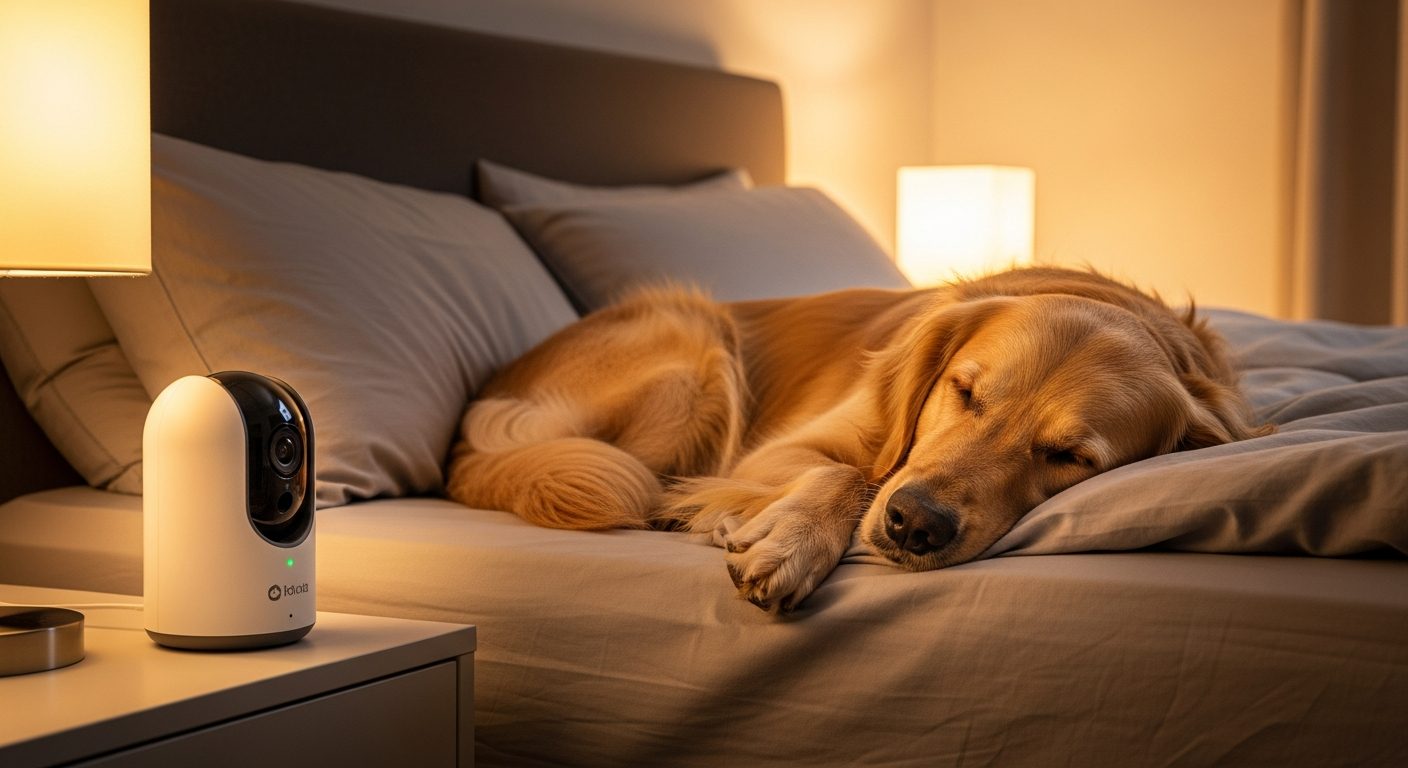
1. The "Virtual You": Furbo 360° Dog Camera
The Problem: You have no idea what's actually happening when you leave. Are they sleeping peacefully? Or are they pacing holes into your carpet?
The Solution: You need data. Is your dog freaking out the second the door closes, or do they chill for 20 minutes and then panic? That timing matters for training.
Why We Recommend It: The Furbo 360 uses AI to tell the difference between "I HEARD A SQUIRREL" barking vs. "I'M DYING ALONE" crying. Plus, you can chuck treats at your dog from your phone, which is honestly just fun.
The "Zen" Feature: You can toss a treat remotely. This changes the association of you leaving from "Abandonment" to "Snack Time."
Pro Tip: Use the camera to "check in" visually. Be careful using the "Talk" feature; for some anxious dogs, hearing your voice but not seeing you can be more confusing. Test it while you are in the next room first.
2. The "Bio-Hack": ADAPTIL Calm Home Diffuser
The Problem: Panic often starts in the brain before you even leave.
The Solution: You can't talk a dog out of anxiety, but you might be able to smell them out of it.
Why We Recommend It: This diffuser releases a synthetic copy of the "Dog Appeasing Pheromone" (DAP)—the same scent a mother dog releases to calm her puppies.
The "Zen" Feature: It is odorless to humans. Plug it in near their bed to create an invisible "safety blanket."
Real Talk: This isn't a magic switch. It won't fix a dog tearing through drywall on its own. But it does lower the general stress level in the house, making other training easier.
Timeline: It takes about 24-48 hours to saturate the room, so plug it in a day before you plan to leave.
3. The "Comfort Hug": ThunderShirt for Dogs
The Problem: Physical symptoms like trembling and shaking.
The Solution: Applying gentle, constant pressure to the torso (similar to swaddling a baby or using a weighted blanket).
Why We Recommend It: The ThunderShirt is one of the most well-known, drug-free anxiety tools.
The Nuance: Does it work for every dog? No. Some dogs freeze up when wearing it. But for about 80% of dogs, it takes the edge off the panic. It is a low-risk option to try before moving to medication.
Best For: Dogs who pace, shiver, or pant heavily as you prepare to leave.
Fit Matters: Ensure it is snug but not tight. You should be able to fit two fingers under the fabric.
4. The "Distraction": Lickimat Soother
The Problem: The moment you walk out the door creates an anxiety spike.
The Solution: Licking can be self-soothing—the repetitive motion of working a Lickimat tends to calm most dogs by releasing endorphins.
Why We Recommend It: Unlike a bowl, a Lickimat requires focus.
The Recipe: Freeze peanut butter (make sure it has NO xylitol) or plain Greek yogurt on this mat. Give it to them right as you pick up your keys.
The Reality Check: By the time they finish, they're usually tired enough to nap. Some dogs finish in 90 seconds and go right back to pacing. For those dogs, try freezing it harder or using stickier fillings like wet food to buy yourself more time.
5. The "Gentle Support": Zesty Paws Calming Bites
The Problem: Hyper-arousal (inability to settle).
The Solution: Nutritional support to promote a calm state.
Why We Recommend It: These chews use Suntheanine® (L-Theanine) and Ashwagandha, ingredients known to support relaxation.
The "Zen" Feature: Think of this as a "chill pill" that doesn't turn your dog into a zombie. It just takes the volume of their anxiety from a 10 down to a 6.
Note: These are supplements, not pharmaceuticals. For severe cases, your vet may prescribe stronger medication (like Fluoxetine or Trazodone). These chews are excellent for mild anxiety or as a complementary support.

Part 3: The "Desensitization" Protocol (How to Leave)
Buying the gear is step one. Changing your behavior is step two. Dogs with separation anxiety are often triggered by "Departure Cues"—the things you do before you leave.
Here is a 3-step training game to play when you don't have to leave the house.
Step 1: Make the Keys Boring
Does your dog panic when you touch your keys?
The Exercise: Pick up your keys. Walk to the couch. Sit down and watch TV. Do not leave.
The Goal: Do this 10 times a day until your dog stops reacting to the sound of keys. You are teaching them that "Keys = Nothing Happens."
Step 2: The "Goodbye" Trap
You know that thing where you look at your dog and say: "Mommy will be right back, I love you so much, be a good boy, Mommy loves you"?
Yeah, stop.
You're basically telling your dog: "Something TERRIBLE and DRAMATIC is about to happen and you should DEFINITELY panic." Just... leave. Like a spy. Be boring.
Step 3: The "Zen" Departure
When you actually have to leave for work, follow this routine:
- 30 Minutes Before: Give the Zesty Paws Calming Bite.
- 10 Minutes Before: Put on the ThunderShirt.
- The Exit: Put the frozen Lickimat on the floor. While they are eating, quietly walk out the door. No "goodbyes," no eye contact. Just go.
- The Check-In: Use your Furbo Camera to check in after 15 minutes.
Orthopedic Giant Dog Bed
Give your large or senior dog the joint support they deserve. This orthopedic giant dog bed features premium memory foam for deep, restful sleep.
Check Price on Amazon →Smart Pet Feeder with Camera
Monitor and feed your pet remotely with this smart feeder featuring a built-in HD camera. Schedule meals, dispense treats, and check in from anywhere.
Check Price on Amazon →Smart Pet Door
Give your pet the freedom to come and go safely. This smart pet door uses microchip recognition to keep strays out while letting your pet roam freely.
Check Price on Amazon →Part 4: When to See a Veterinarian
While these tools are helpful for many dogs, true Separation Anxiety is a clinical panic disorder. You should schedule a visit with your vet if:
- Your dog injures themselves trying to escape (bloody paws, broken teeth, scratched doors).
- They urinate or defecate indoors only when you are gone (and are otherwise house-trained).
- They vocalize (howl/bark) for hours without stopping.
In these cases, your veterinarian may recommend a prescription medication plan (such as Fluoxetine or Clomipramine) alongside behavioral modification. There is no shame in using medication. Just like humans with panic disorders, some dogs need chemical support to learn how to be calm.
FAQ: Future-Proofing Your Dog
Q: Does the "Cry It Out" method work?
A: Most veterinary behaviorists advise against this. Letting a dog panic can increase their sensitivity to being alone (sensitization). It is better to practice "gradual departures"—building up their tolerance from seconds to minutes.
Q: My dog destroys the crate. Should I stop crating?
A: Yes. Many anxious dogs suffer from "Confinement Anxiety" in addition to separation anxiety. Being locked in a small box can terrify them. Try creating a "safe room" (like a laundry room or bedroom) using a baby gate instead. Use the ADAPTIL Diffuser in this room to create a calming association.
Q: Can I use CBD for my dog?
A: While CBD is popular, it is not currently FDA-approved for pets, and quality varies wildly. We recommend starting with established supplements (like Zesty Paws or Purina Calming Care) or speaking to your vet about safe dosing.
Q: Will getting a second dog help?
A: Usually, no. Separation anxiety is generally an attachment to you, not just loneliness. Adding another dog often results in having two anxious dogs (as the new dog may mimic the anxious behavior). Address the anxiety in your current dog first.
References
- Sherman, B. L., & Mills, D. S. (2008). Canine anxieties and phobias: an update on separation anxiety and noise aversions. Veterinary Clinics: Small Animal Practice, 38(5), 1081-1106.
- Gaultier, E., et al. (2005). Efficacy of dog-appeasing pheromone in reducing stress associated with social isolation in newly adopted puppies. Veterinary Record, 157, 641-644.