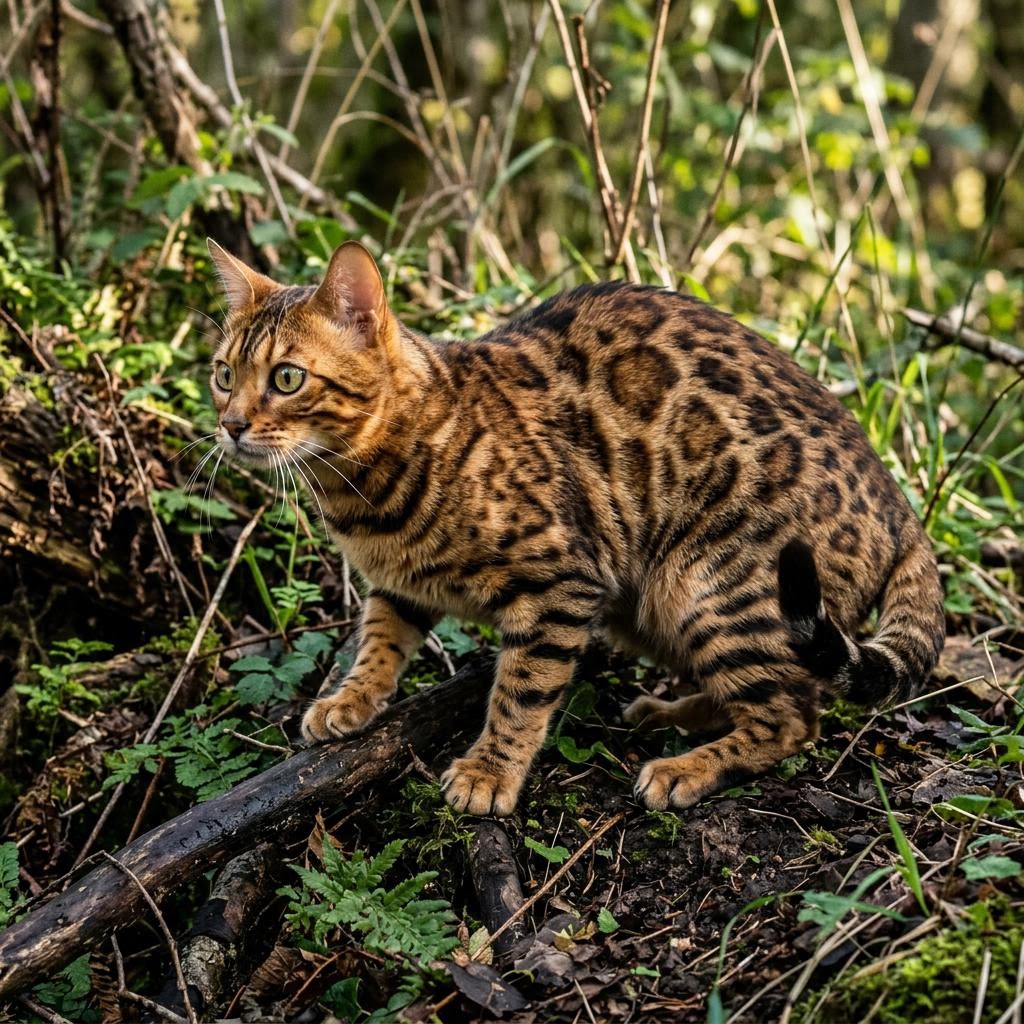
Why Bengal Cats Get Anxious
Bengal cats are a hybrid of the domestic cat and the Asian Leopard Cat, created in the 1960s as a conservation research tool. That wild ancestry means Bengals have significantly higher activity and stimulation requirements than any standard domestic breed. A Bengal treated like a lap cat will develop anxiety — guaranteed.
Their anxiety is almost always frustration-based: they need to climb, hunt, run, and problem-solve and when they can't, that energy turns destructive and disruptive. Bengals will knock every object off every surface, shred curtains, open cabinet doors, and scream at 3am — not from malice but from a nervous system that was built for the jungle and is trapped in a flat.
🚨 Signs of Anxiety
- •Knocking objects off surfaces deliberately
- •Screaming or yowling at night
- •Aggression toward owner or other pets
- •Destructive scratching of furniture, walls, doors
- •Cabinet-opening and counter-surfing
- •Over-grooming or barbering of other cats
⚡ Top Anxiety Triggers
✅ Proven Management Strategies
- 1Floor-to-ceiling cat trees or wall climbing systems are mandatory — not optional enrichment.
- 2Leash training. Bengals adapt well to harness and leash and the outdoor stimulation dramatically reduces frustration anxiety.
- 3Running water fountains. Bengals are fascinated by water — a fountain keeps them occupied for hours.
- 4Puzzle feeders for every meal. This is the bare minimum for a Bengal — they need to hunt for food.
- 5Invest in interactive automated toys — robotic mice, feather wands on timers. They need engagement when you're asleep.
- 6Do not declaw — ever. Declawed Bengals have significantly higher aggression and anxiety rates.
🛒 Recommended for Bengal Cats
View Bengal Cat Calming Products on AmazonAs an Amazon Associate, we earn from qualifying purchases.