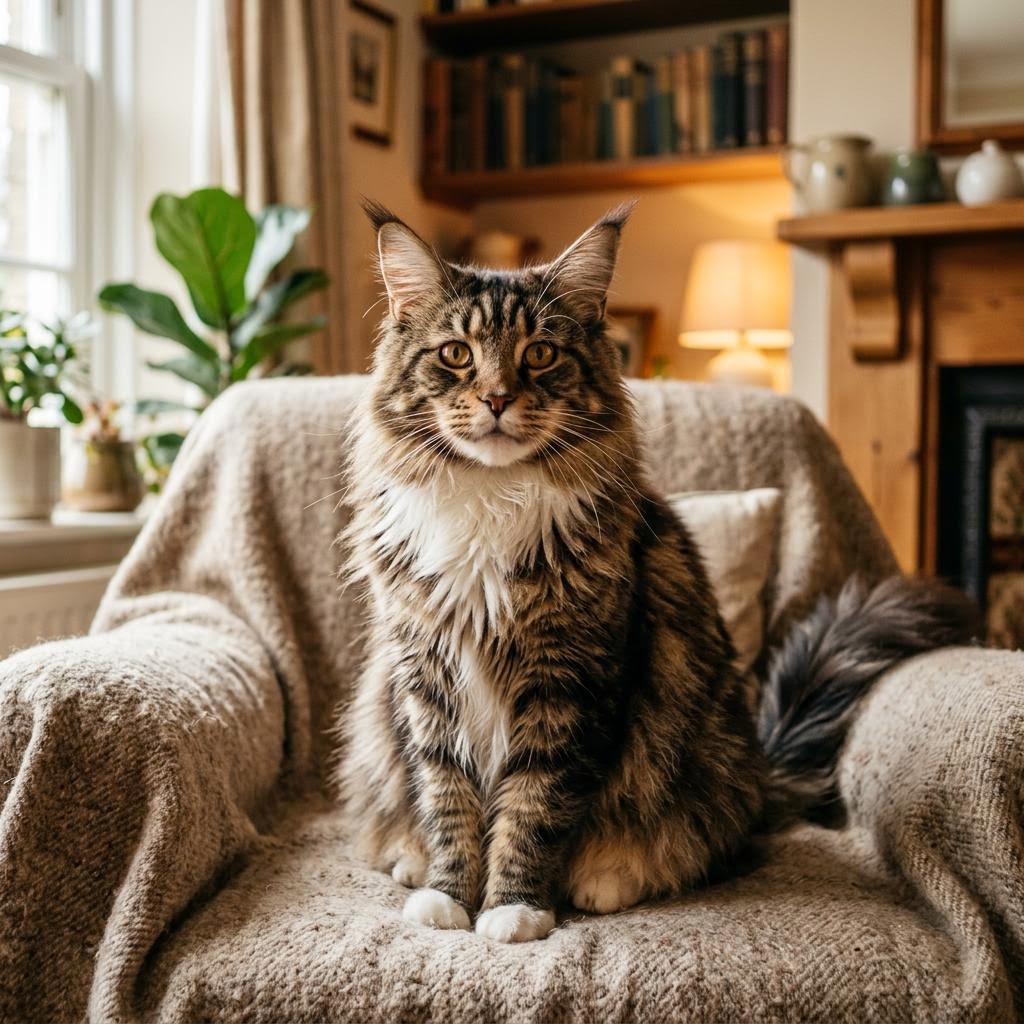
Why Maine Coon Cats Get Anxious
Maine Coons are often called 'the dogs of the cat world' — they follow their owners around, come when called, play fetch, and enjoy water. Their sociable temperament makes them among the most adaptable cat breeds, and their anxiety risk is genuinely lower than most on this list.
That said, Maine Coons' social nature means they're vulnerable to loneliness and loss in ways other independent cat breeds are not. Their large size also means they're at higher risk for joint pain (HCM and hip dysplasia are breed concerns) and pain-based anxiety in older cats. Their chirping vocalisation is often a communication sign of mild stress rather than full anxiety — learning to read their sounds is key.
🚨 Signs of Anxiety
- •Chirping or trilling more than usual (mild stress signal)
- •Following owner into every room
- •Appetite changes with schedule disruption
- •Increased clumsiness (possible joint pain)
- •Playing less energetically than usual
- •Occasional inter-cat aggression if territory is disrupted
⚡ Top Anxiety Triggers
✅ Proven Management Strategies
- 1Annual cardiac screening (HCM) reduces undiagnosed pain — a critical hidden anxiety source in this breed.
- 2Interactive daily play is important. Maine Coons love wand toys, fetch, and water play — engage their dog-like nature.
- 3Adopt in pairs if possible. Maine Coons with a companion are more resilient and content.
- 4Cat-proof your home vertically. Their large size means standard cat trees may not support them — invest in heavy-duty climbing.
- 5Regular brushing reduces hairball-related gut discomfort — an overlooked anxiety trigger in longhaired breeds.
- 6Joint supplements (glucosamine, fish oil) from middle age reduce pain-based anxiety as they age.
🛒 Recommended for Maine Coon Cats
View Maine Coon Cat Calming Products on AmazonAs an Amazon Associate, we earn from qualifying purchases.