🐕 Cocker Spaniel Anxiety
Sensitive, deeply bonded gundogs whose emotional radar never switches off.
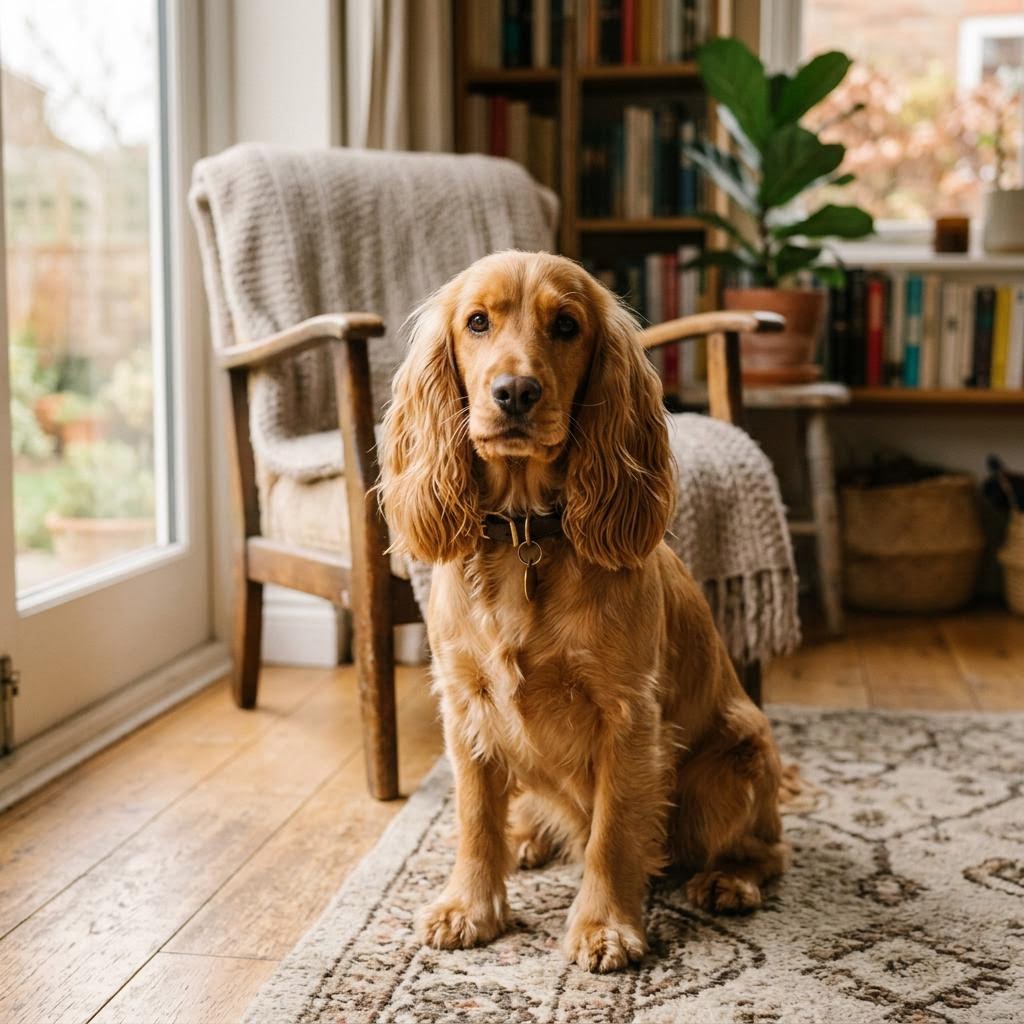
Why Cocker Spaniels Get Anxious
Cocker Spaniels were bred to work in close partnership with a hunter — flushing birds and retrieving on command, always within sight and responding to subtle cues. That heritage produced a dog with extraordinary emotional sensitivity and a constant attunement to their person's state. They do not just notice when you are sad; they feel it.
This sensitivity is the source of both their enormous appeal and their anxiety. Cocker Spaniels pick up on micro-stressors in the household — a tense voice, an unusual schedule, a visitor the owner seems uncomfortable with — and internalise that stress as their own. In a calm household they are steady; in a chaotic one they can become chronically anxious.
American Cocker Spaniels in particular have a documented genetic predisposition to 'Rage Syndrome' (idiopathic aggression), which is a neurological condition distinct from anxiety. True anxiety in Cockers usually presents as withdrawal, trembling, or clinginess rather than aggression — if aggression appears suddenly, a neurological evaluation is warranted.
🚨 Signs of Anxiety in Cocker Spaniels
- Whale eye (showing whites of eyes) and tucked tail in novel situations
- Excessive ear-scratching or shaking — can worsen ear infections already common in the breed
- Trembling in new environments or with strangers
- Clinginess to one specific person, distress if separated
- Excessive grooming of paws or flanks
- Withdrawal or hiding when the household is chaotic
⚡ Top Anxiety Triggers
✅ Proven Management Strategies
Check ears regularly — ear pain from chronic infections is a major but often overlooked anxiety driver in Cockers. Treating the physical cause resolves the anxious behaviour.
Keep the household emotional tone calm — Cocker Spaniels are emotional sponges. Conflict, stress, and loud arguments affect them measurably.
Use positive-reinforcement-only training — aversive methods cause disproportionate psychological damage in sensitive breeds like Cockers.
Provide daily structured exercise before alone-time — a 45-minute morning walk significantly reduces anxiety symptoms throughout the day.
Introduce novelty gradually — new people, new places, new pets should be introduced slowly with positive associations rather than forced exposure.
Consider Adaptil collar during high-stress periods (house moves, new baby, schedule changes) — the pheromone signal helps Cockers recalibrate faster.
🛒 Recommended Product
Adaptil Calm On-The-Go Collar — dog-appeasing pheromone worn continuously for sustained anxiety relief
View on Amazon →