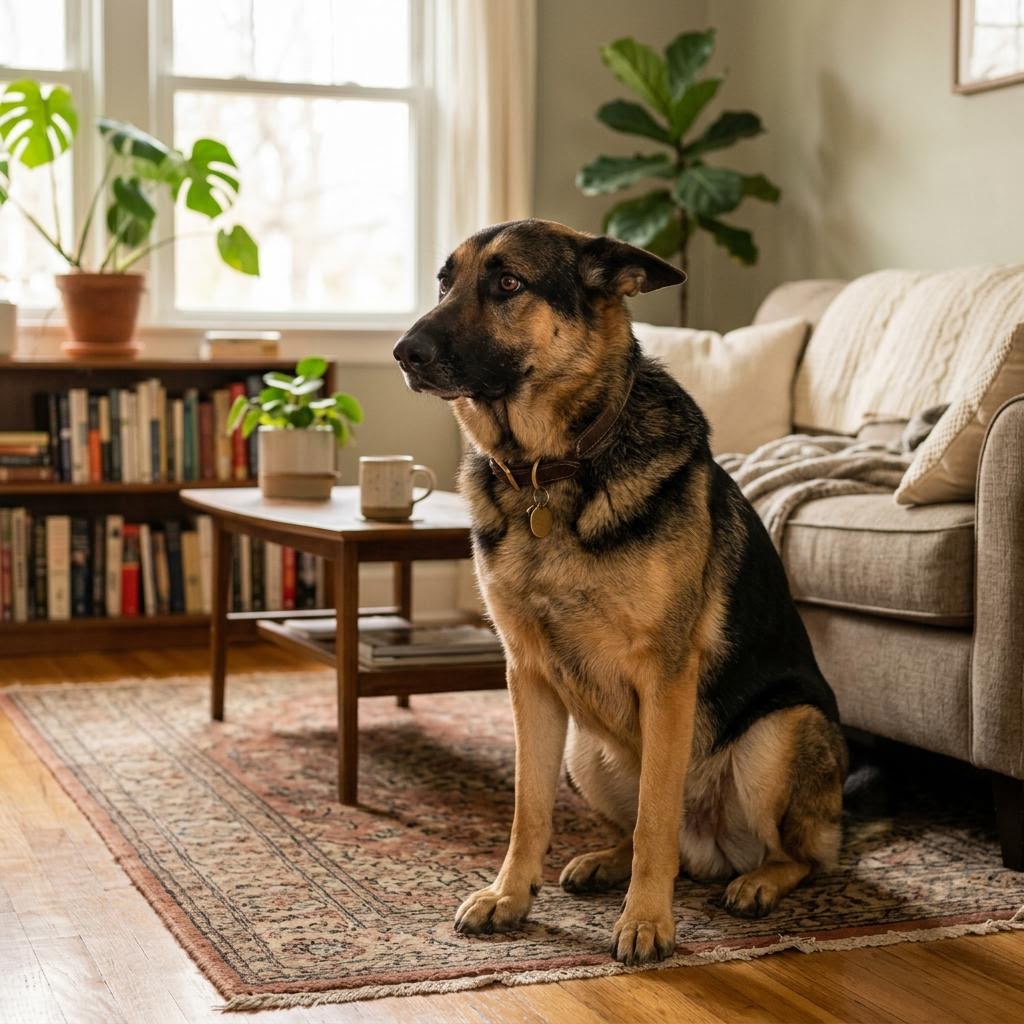
Why German Shepherds Get Anxious
German Shepherds were bred to work alongside humans all day — herding, guarding, and problem-solving as a constant partner. That same unwavering bond is what makes them prone to anxiety when left alone. A GSD who bonds tightly with one person can experience genuine emotional distress the moment that person walks out the door. They don't just miss you — they feel responsible for protecting you, and being unable to reach you is a source of deep frustration.
Their high intelligence amplifies the problem. German Shepherds can anticipate departure cues — keys rattling, shoes going on, bag-grabbing — up to 20 minutes before you leave, spiking cortisol well before the door closes. They need a job. Without one, anxiety fills the void.
🚨 Signs of Anxiety
- •Destructive chewing (doors, baseboards, furniture)
- •Excessive barking or howling when alone
- •Pacing, circling, or spinning
- •Drooling and panting without heat
- •Escape attempts — digging or jumping fences
- •Hyper-attachment: following owner room to room
⚡ Top Anxiety Triggers
✅ Proven Management Strategies
- 1Give them a job. Structured tasks — carrying a backpack on walks, learning new commands, scent work — satisfy their working drive.
- 2Practice graduated departures. Leave for 30 seconds, return calmly. Build duration over weeks to teach "you always come back."
- 3Exercise first, then leave. A 45-minute run or fetch session before departure drops anxiety substantially.
- 4Desensitise departure cues. Pick up your keys multiple times a day without leaving so keys lose their meaning.
- 5Consider an anxious-dog-safe crate. Many GSDs feel safer in a covered crate — it becomes a den, not a prison.
- 6Ask your vet about Trazodone or Adaptil DAP diffuser for severe cases where behavioural work alone isn't enough.
🛒 Recommended for German Shepherds
View German Shepherd Calming Products on AmazonAs an Amazon Associate, we earn from qualifying purchases.