🐕 Maltese Anxiety
Bred exclusively for human companionship for 2,000 years — solitude is contrary to their entire purpose.
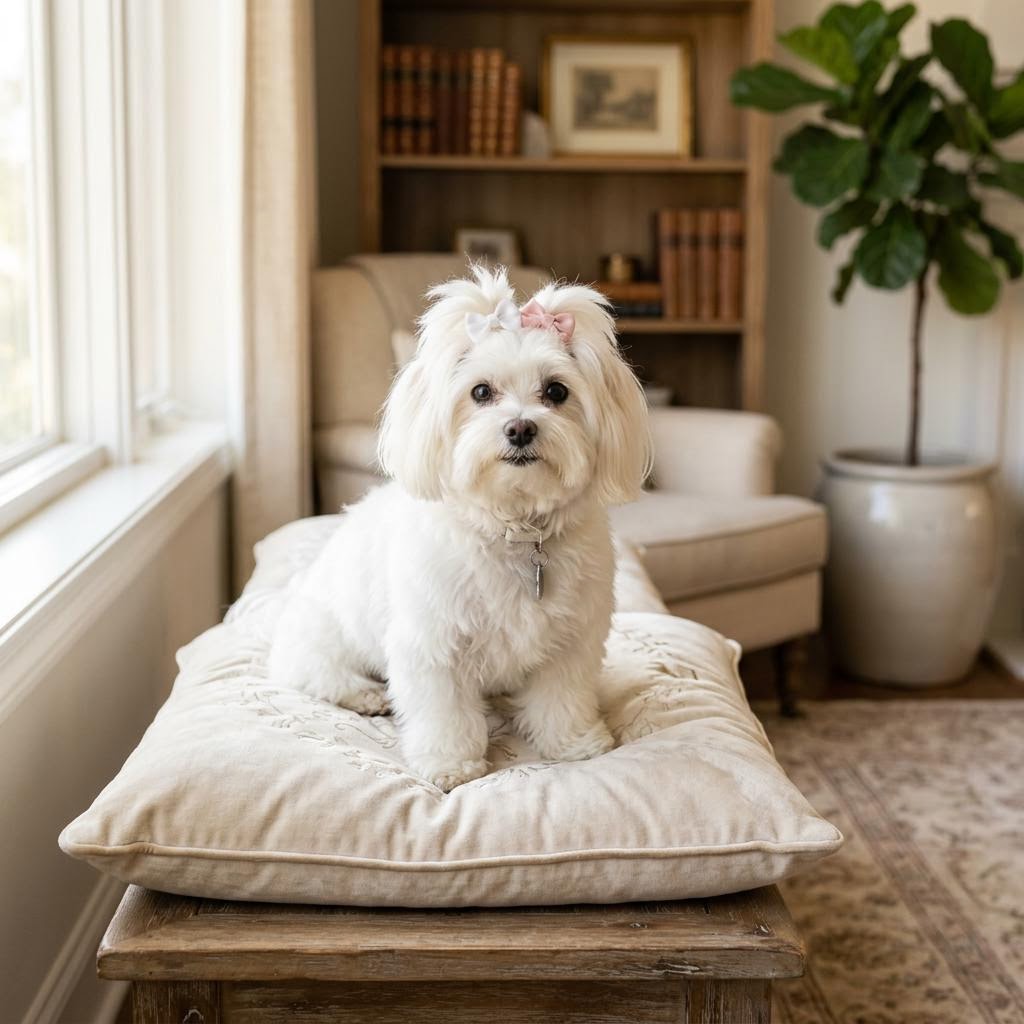
Why Malteses Get Anxious
The Maltese is one of the oldest companion breeds in recorded history, depicted in Ancient Greek pottery and mentioned by Aristotle. For more than two millennia, their only job has been to be close to a human. That singular breeding purpose has produced a dog whose entire wellbeing is structured around human presence.
Unlike working breeds where anxiety stems from frustrated purpose, Maltese anxiety is pure attachment-based distress. They do not need a job — they need a person. When that person leaves, the Maltese experiences genuine emotional pain, not boredom.
Their tiny size and gentle nature mean anxiety often presents subtly. Owners frequently miss early signs — slight trembling, reduced appetite, excessive grooming — until the behaviour escalates to barking, house-soiling, or physical symptoms like vomiting from stress.
🚨 Signs of Anxiety in Malteses
- Whimpering or crying during any separation, even brief
- House-soiling despite being house-trained — a common stress response
- Excessive face-licking or paw-licking
- Refusal to eat when owner is absent
- Stress-induced vomiting or loose stools
- Velcro attachment — following owner room to room constantly
⚡ Top Anxiety Triggers
✅ Proven Management Strategies
Practice micro-separations daily — close a door between you and your Maltese for 30 seconds, build to 5 minutes, then longer. Repetition rewires the anxiety response.
Provide a safe, enclosed den space (covered crate with familiar bedding and a worn T-shirt) — scent proximity reduces cortisol significantly in companion breeds.
Establish a pre-departure routine that ends positively — a frozen Kong or lick mat placed just before you leave creates positive anticipation rather than dread.
Avoid punishing elimination accidents — they are anxiety symptoms, not disobedience, and punishment makes the underlying anxiety significantly worse.
Consider canine massage or TTouch — Maltese respond well to physical calming techniques, particularly during thunderstorms or fireworks.
Ask your vet about Sileo (dexmedetomidine oromucosal gel) for severe noise phobia — it is FDA-approved and non-sedating for event-based anxiety.
🛒 Recommended Product
KONG Classic stuffable toy — fill with peanut butter and freeze for pre-departure distraction
View on Amazon →