🐕 Yorkshire Terrier Anxiety
Big-dog personality in a tiny body — fierce on the outside, deeply anxious underneath.
Why Yorkshire Terriers Get Anxious
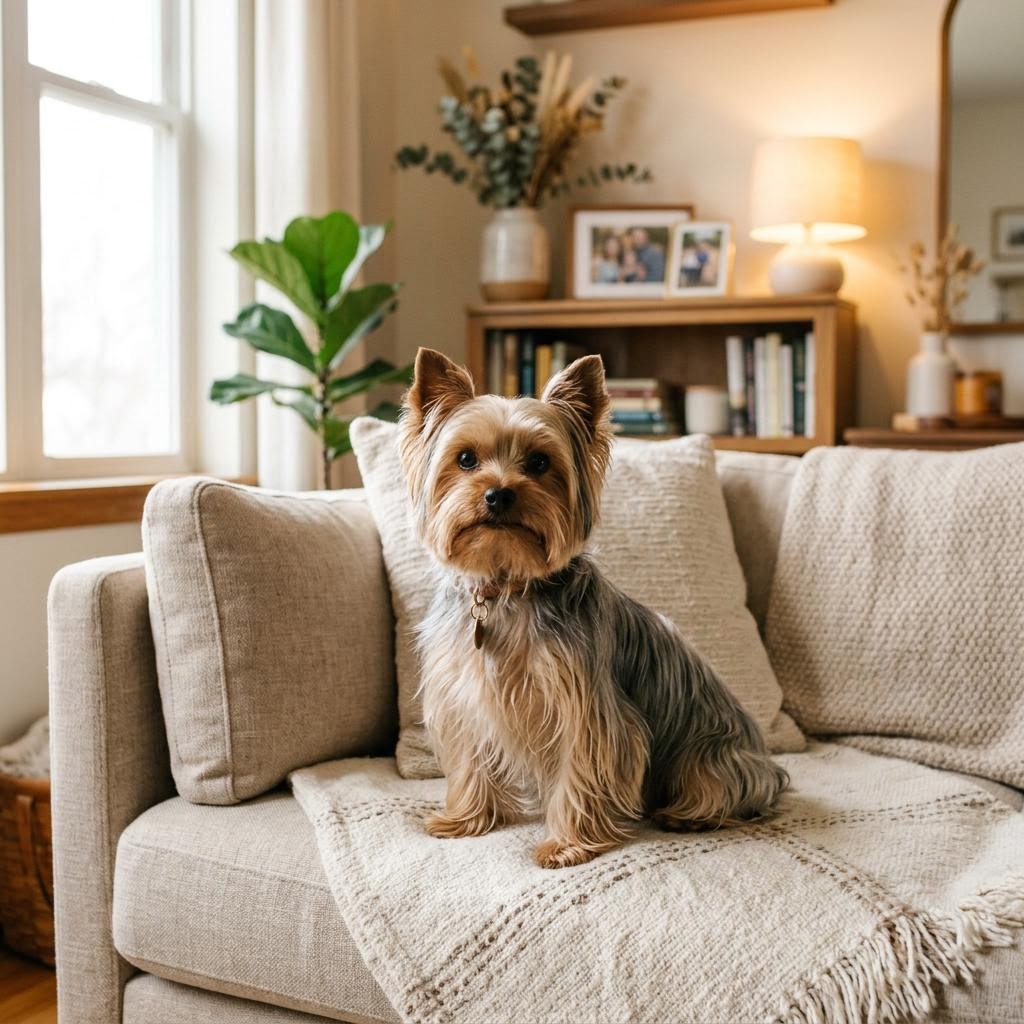
Yorkshire Terriers present a striking paradox: they are bold, bossy, and apparently fearless, yet rank among the most anxiety-prone small breeds. Their confidence is real — they were bred to hunt rats in tight spaces, requiring nerve and tenacity. But that same intense wiring makes them hypervigilant, reactive to stimulation, and deeply bonded to one person.
Yorkies frequently develop what behaviourists call 'velcro dog' syndrome — an attachment so tight that any physical separation feels threatening. Because of their tiny size, owners often inadvertently reinforce this by carrying them constantly and responding to every anxious signal, teaching the Yorkie that distress gets them picked up.
Their small size also means the world is genuinely more threatening to them. A Yorkie at shin-height is navigating a world of giant feet, loud machinery, and unpredictable large dogs. Their nervous system runs hot by design.
🚨 Signs of Anxiety in Yorkshire Terriers
- High-pitched yapping or barking triggered by almost anything
- Trembling or shaking not related to cold
- Clinging to owner — following every step, whining if a door closes between you
- Snapping or growling at strangers or other pets when anxious
- Hiding under furniture during storms or loud events
- Compulsive licking of owner or self
⚡ Top Anxiety Triggers
✅ Proven Management Strategies
Resist the urge to constantly pick them up when anxious — it reinforces that distress produces comfort, maintaining the anxiety cycle.
Teach a solid 'place' or mat behaviour — a specific safe spot builds independence and gives the Yorkie somewhere to go rather than following you.
Desensitise to loud noises early using recorded sounds at low volume paired with high-value treats — Yorkies respond well to counter-conditioning.
Socialise with calm, well-matched dogs — positive interactions with appropriate-sized dogs reduce the hypervigilance that underlies reactive anxiety.
Keep departures and returns low-key — theatrical goodbyes and excited greetings elevate the emotional stakes of your absence.
Ask your vet about Zylkene (casein supplement) — evidence supports its use in small-breed separation anxiety with no sedation side effects.
🛒 Recommended Product
Calming dog bed with raised rim — creates the enclosed safe-den feel Yorkies crave
View on Amazon →