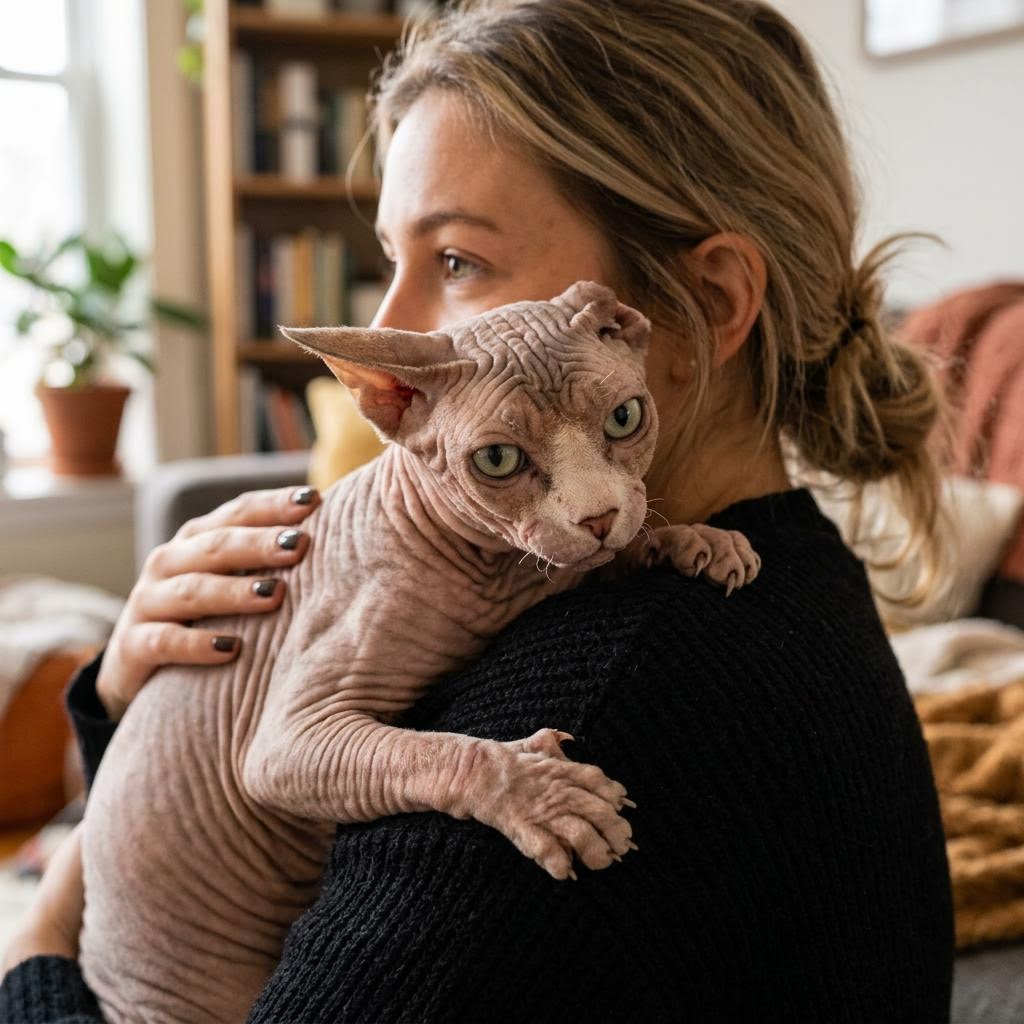
Why Sphynx Cats Get Anxious
Despite — or perhaps because of — their alien appearance, Sphynx cats are among the most affectionate, social, and emotionally needy cats in existence. Without fur as insulation, they run permanently warm and are drawn to any available body heat: your lap, your face, under your covers. This physical closeness is a thermoregulation strategy that has evolved into profound social bonding.
Sphynx cats do not tolerate solitude. They were bred as companion cats and take the role seriously — sometimes too seriously. A Sphynx left alone for extended periods frequently develops anxiety, and their lack of coat means stress over-grooming doesn't look the same as in furred cats — instead watch for skin picking, excessive scratching, and small skin wounds.
🚨 Signs of Anxiety
- •Velcro behaviour — literally draping on owner at all times
- •Skin picking or scratching without fleas (anxiety grooming)
- •Vocalisation when cold or alone
- •Seeking body heat obsessively (under blankets, on warm electronics)
- •Increased neediness before owner travel (anticipatory anxiety)
- •Aggression when overstimulated by too much handling
⚡ Top Anxiety Triggers
✅ Proven Management Strategies
- 1Never leave a Sphynx alone long-term without a companion. A second cat — ideally another Sphynx — is practically a welfare requirement.
- 2Maintain household temperature above 68°F. Cold Sphynx are stressed Sphynx.
- 3Self-heating cat beds and blanket nests allow independent thermoregulation.
- 4Weekly baths are non-negotiable — oil build-up on skin causes irritation that worsens anxiety through discomfort.
- 5Play therapy daily — interactive sessions exhaust their social need and reduce anxiety.
- 6Cat onesies and sweaters during cold periods maintain comfort and reduce cold-triggered anxiety.
🛒 Recommended for Sphynx Cats
View Sphynx Cat Calming Products on AmazonAs an Amazon Associate, we earn from qualifying purchases.