🐈 Devon Rex Anxiety
The pixie cat — mischievous, social, and easily under-stimulated in a quiet home.
Why Devon Rexs Get Anxious
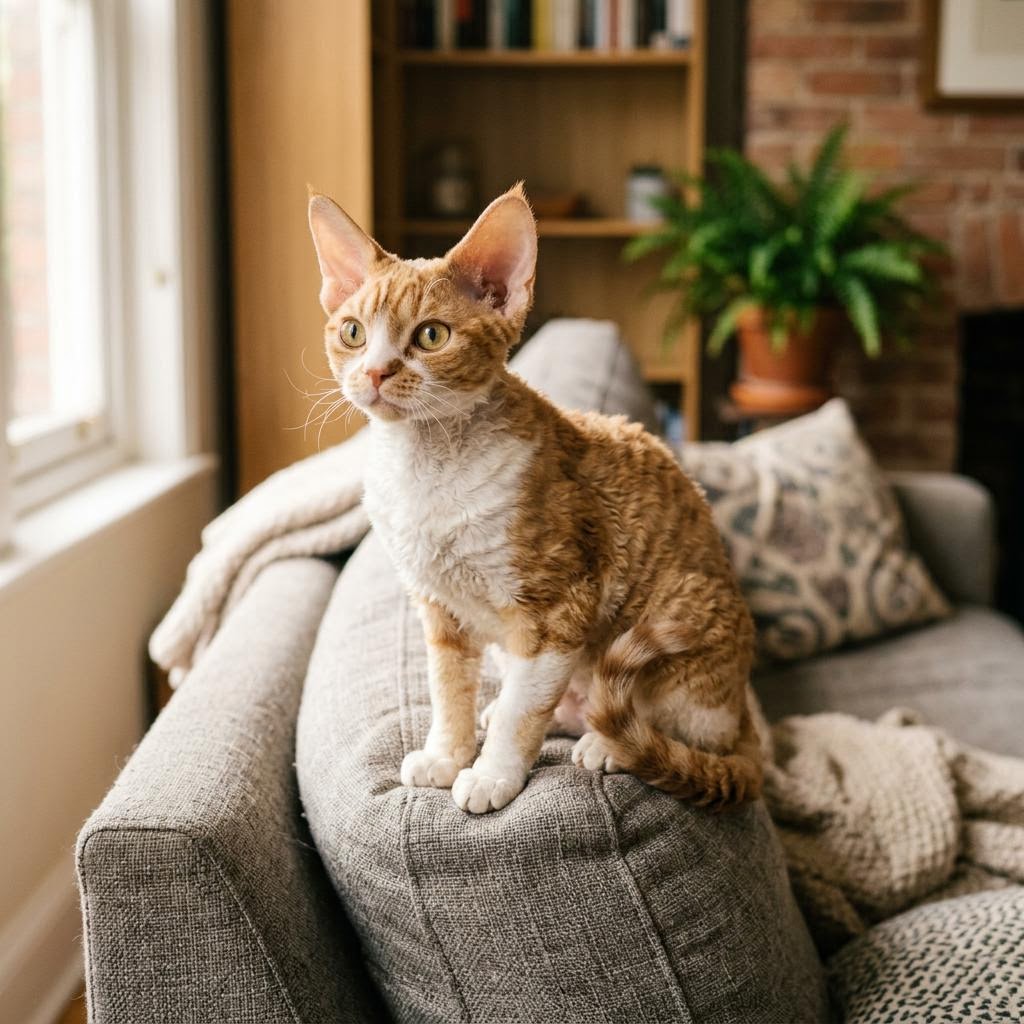
Devon Rex cats are famously described as part cat, part dog, part monkey. They are acrobatic, highly social, intensely curious, and relentlessly interactive. Their large bat-like ears, enormous eyes, and curly coat give them an otherworldly appearance that matches their personality.
Devon Rex anxiety is almost entirely stimulation-based rather than separation-based. They do not typically display the dramatic distress of Siamese or Burmese when alone, but they need a rich, stimulating environment and regular social interaction to stay psychologically balanced. A Devon Rex in a quiet, empty home for long periods becomes restless, destructive, and increasingly anxious.
Their unique coat — sparse, soft, and curly — provides very little thermal insulation. Devon Rex cats are sensitive to cold, and physical chilling creates genuine discomfort that amplifies emotional distress. A cold Devon Rex is a stressed Devon Rex.
🚨 Signs of Anxiety in Devon Rexs
- Hyperactivity and frantic play behaviour in the evenings (zoomies driven by under-stimulation)
- Getting into dangerous places — high shelves, inside appliances — from boredom
- Chirping, trilling, or demanding vocalisations when bored
- Excessive shoulder-sitting or head-rubbing — attention-seeking from anxiety
- Compulsive wool-sucking or fabric-chewing (an OCD behaviour linked to anxiety)
- Trembling in cool rooms — physical discomfort that resembles anxiety
⚡ Top Anxiety Triggers
✅ Proven Management Strategies
Keep the home warm — a Devon Rex below 18°C (65°F) is physically uncomfortable, and physical discomfort amplifies every anxiety trigger.
Provide maximum vertical space — tall cat trees, wall-mounted shelves, and accessible high spots satisfy their climbing drive and reduce restlessness.
Interactive sessions twice daily are more effective than toys left out — Devon Rex bond to play-with-you experiences more than independent toy play.
Rotate toys weekly — they habituate quickly and need novelty. A new crinkle ball on Monday is more engaging than the same feather toy they have ignored for a week.
Address wool-sucking early — if your Devon Rex is chewing fabric, it indicates chronic under-stimulation or anxiety. Increase enrichment before it becomes a compulsion.
Consider a cat TV setup or bird feeder outside a window — passive enrichment fills gaps in the day when you cannot engage them interactively.
🛒 Recommended Product
Cat window perch and bird feeder combo — passive enrichment that keeps Devon Rex mentally occupied throughout the day
View on Amazon →