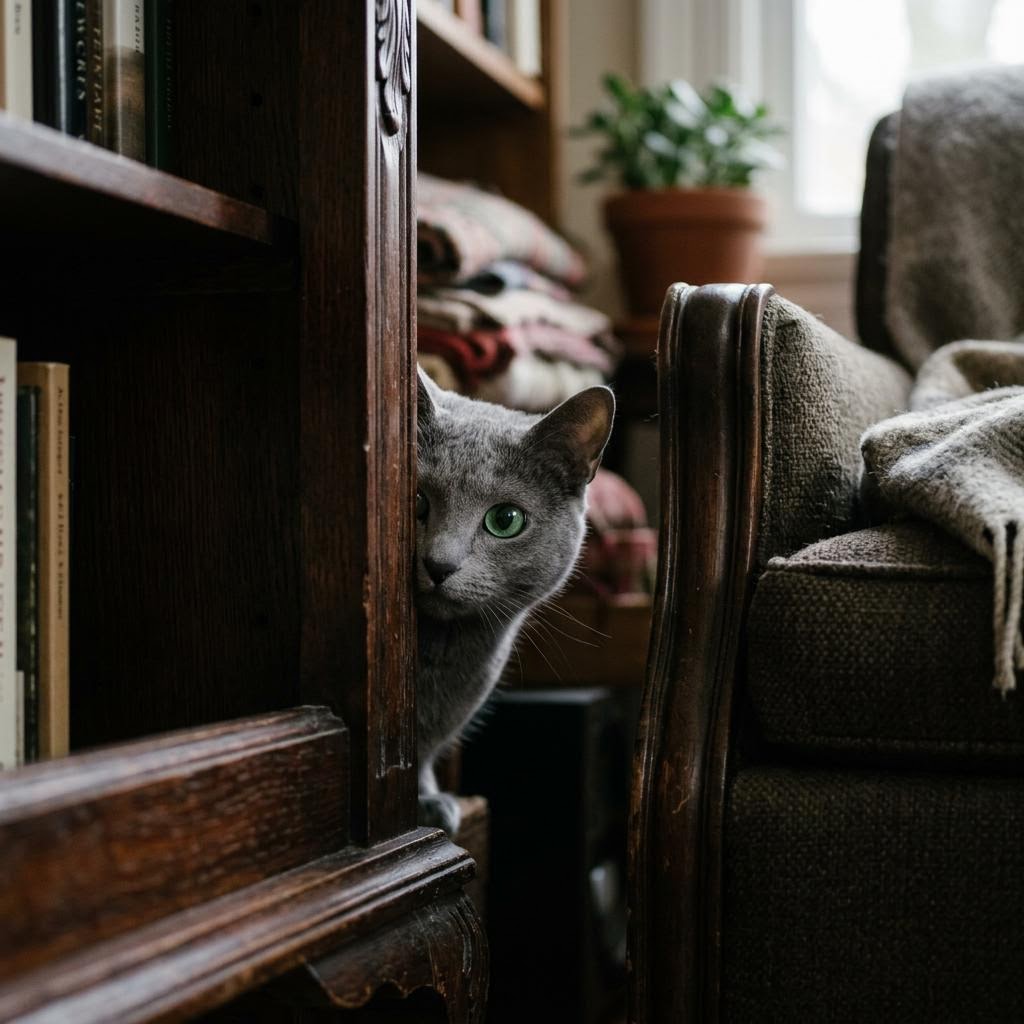
Why Russian Blue Cats Get Anxious
Russian Blues are often described as 'one-person cats' — deeply loyal to their chosen human, profoundly suspicious of everyone else. This selective attachment creates a unique anxiety profile: they're calm and confident with familiar people, but visibly stressed by strangers, visitors, or new environments.
Their sensitivity is often masked by their reserved nature. A Russian Blue who is anxious rarely vocalises — they vanish. Owners frequently don't realise how stressed their cat is because the cat simply disappears into a cupboard until the threat is gone. This stoic hiding means anxiety can persist undetected and worsen over time.
🚨 Signs of Anxiety
- •Prolonged hiding when strangers visit
- •Refusal to eat in the presence of unfamiliar people
- •Freezing or slinking low to the ground
- •Excessive blinking or half-closed eyes (stress signal)
- •Dilated pupils in normal lighting
- •Slow, deliberate retreat rather than flight
⚡ Top Anxiety Triggers
⚡ Strangers and visitors to the home⚡ New pets in the household⚡ Loud noise or unpredictable activity⚡ Changes in bonded owner's schedule⚡ Moving or significant rearrangement⚡ Veterinary visits
✅ Proven Management Strategies
- 1Create and protect hiding zones. A Russian Blue needs to know they can always escape — blocked retreats spike anxiety massively.
- 2Introduce visitors slowly and on the cat's terms. No forced interaction; ask guests to ignore the cat and let it approach.
- 3Feliway Optimum (the newer multi-pheromone formula) is particularly effective for this breed's social anxiety.
- 4Keep the home routine unchanged. Russian Blues create detailed mental maps of their environment; disruption is genuinely distressing.
- 5Gentle play is bonding and confidence-building. Daily wand-toy sessions with the bonded owner reduce generalised anxiety.
- 6For vet visits: transport in familiar bedding and request a quiet waiting area or first-appointment slot.
🛒 Recommended for Russian Blue Cats
View Russian Blue Cat Calming Products on AmazonAs an Amazon Associate, we earn from qualifying purchases.