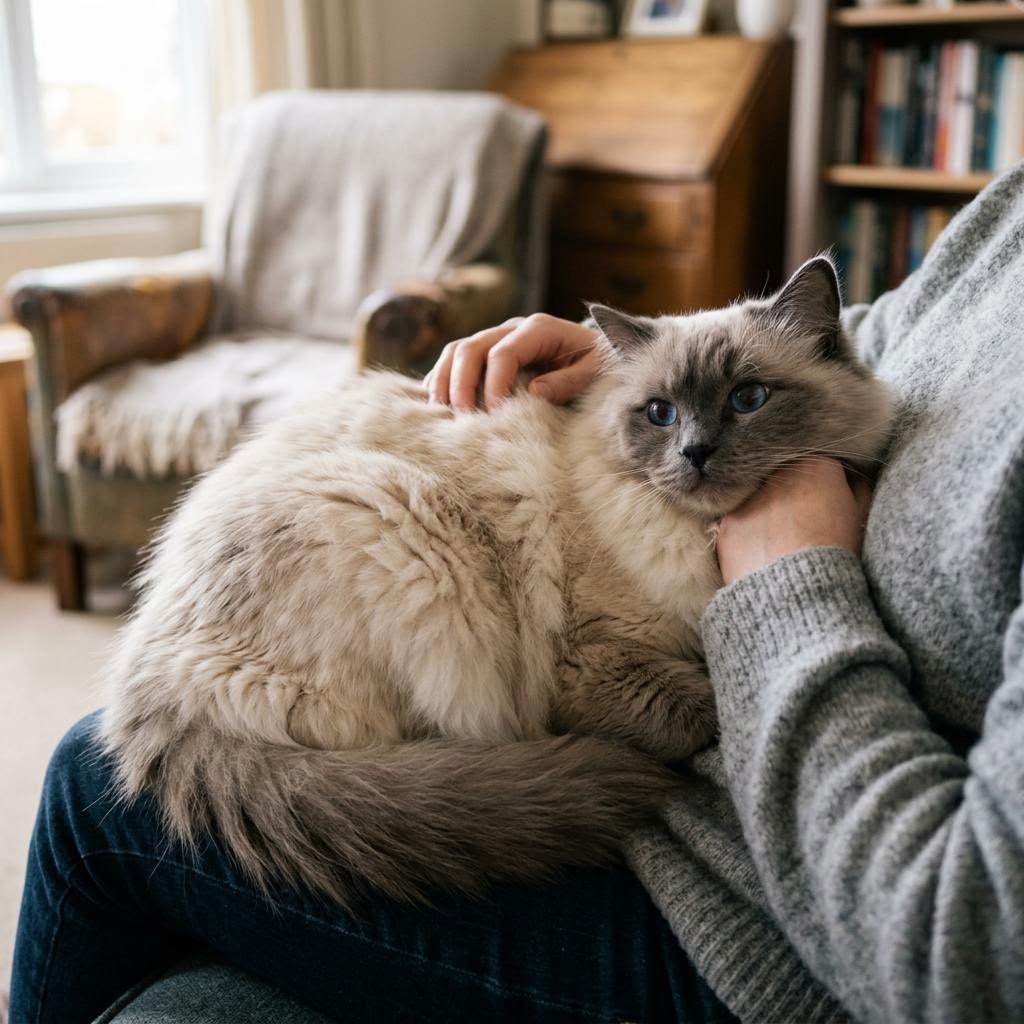
Why Ragdoll Cats Get Anxious
Ragdolls are named for their habit of going limp when picked up — a phenotype that reflects their unusually relaxed, low-reactivity temperament. They're generally the least anxious of the cat breeds covered here, but 'low anxiety' doesn't mean 'no anxiety.'
Ragdolls form genuine, dog-like attachments to their owners and are surprisingly poor at self-entertaining. They'll follow you from room to room and greet you at the door. When that bond is suddenly absent — through a schedule change, owner travel, or loss — Ragdolls can develop quiet but significant separation anxiety that manifests as appetite loss and lethargy rather than dramatic behaviour.
🚨 Signs of Anxiety
- •Appetite loss when owner is absent
- •Lethargy and reduced activity (easy to miss)
- •Sleeping more than usual
- •Going limp more than usual when handled (stress response)
- •Mild over-grooming on chest or belly
- •Seeking warm spots compulsively (comfort-seeking)
⚡ Top Anxiety Triggers
⚡ Owner travel or significant schedule change⚡ Loss of bonded person or pet companion⚡ Rehoming (Ragdolls struggle more than most breeds)⚡ New pets invading their space⚡ Over-handling by children⚡ Changes to preferred sleeping spots or furniture
✅ Proven Management Strategies
- 1Plan for owner absence carefully. A trusted familiar pet-sitter in the home is far better than a cattery for Ragdolls.
- 2Adopt in pairs. Ragdolls with a feline companion are more resilient to owner absence.
- 3Maintain feeding and play routines exactly — predictability is their primary emotional anchor.
- 4Never over-stimulate play sessions. Ragdolls can become overstimulated quickly — watch for tail flicking and redirect.
- 5Heated cat beds provide comfort-seeking satisfaction and reduce stress-driven warmth-seeking.
- 6Monitor weight and appetite during changes — a Ragdoll who stops eating for 24+ hours during stress needs vet attention.
🛒 Recommended for Ragdoll Cats
View Ragdoll Cat Calming Products on AmazonAs an Amazon Associate, we earn from qualifying purchases.