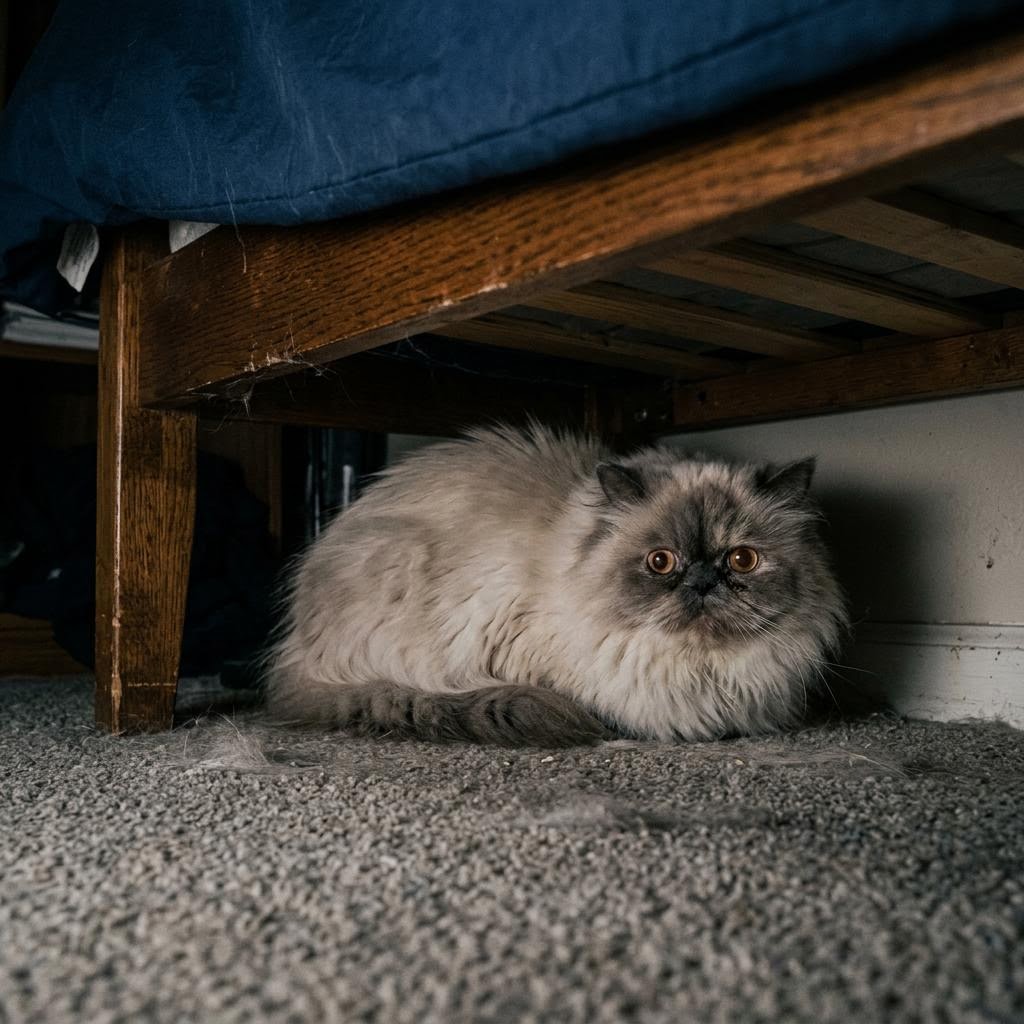
Why Persian Cats Get Anxious
Persian cats are the definition of a 'routine-sensitive' breed. They thrive in calm, predictable environments and are profoundly unsettled by change. Unlike high-energy breeds where anxiety explodes outward, Persian anxiety typically implodes — they hide, stop eating, and withdraw rather than vocalise or destroy.
Their brachycephalic anatomy creates a breathing-anxiety overlap similar to French Bulldogs in dogs: difficulty breathing causes stress responses, and stress worsens breathing. Their flat faces also make them prone to dental pain, eye irritation, and skin fold infections — all pain sources that manifest as behavioural anxiety before obvious physical signs appear.
🚨 Signs of Anxiety
- •Hiding for extended periods (under beds, in closets)
- •Refusing food during stressful periods
- •Excessive eye discharge or paw-at-face (may be pain-anxiety)
- •Hissing at normally accepted people
- •Reduced grooming (leading to matting)
- •Litter box avoidance during stress
⚡ Top Anxiety Triggers
✅ Proven Management Strategies
- 1Eliminate pain sources first. Dental checks, eye cleaning, skin fold inspection — pain is the most common hidden anxiety trigger in Persians.
- 2Minimise change where possible. Same furniture arrangement, same feeding schedule, same litter type.
- 3Provide multiple hiding spots at different heights — a Persian who can retreat to safety feels safer overall.
- 4Daily grooming as bonding. Gentle brushing sessions, done consistently, reduce stress AND prevent the painful matting that triggers anxiety.
- 5Feliway Classic diffuser during any anticipated disruption (guests coming, renovation, moving).
- 6Never force interaction with strangers — let Persians choose when and if to engage.
🛒 Recommended for Persian Cats
View Persian Cat Calming Products on AmazonAs an Amazon Associate, we earn from qualifying purchases.