🐕 Vizsla Anxiety
The gentle Velcro dog — physically and emotionally inseparable from their person by design.
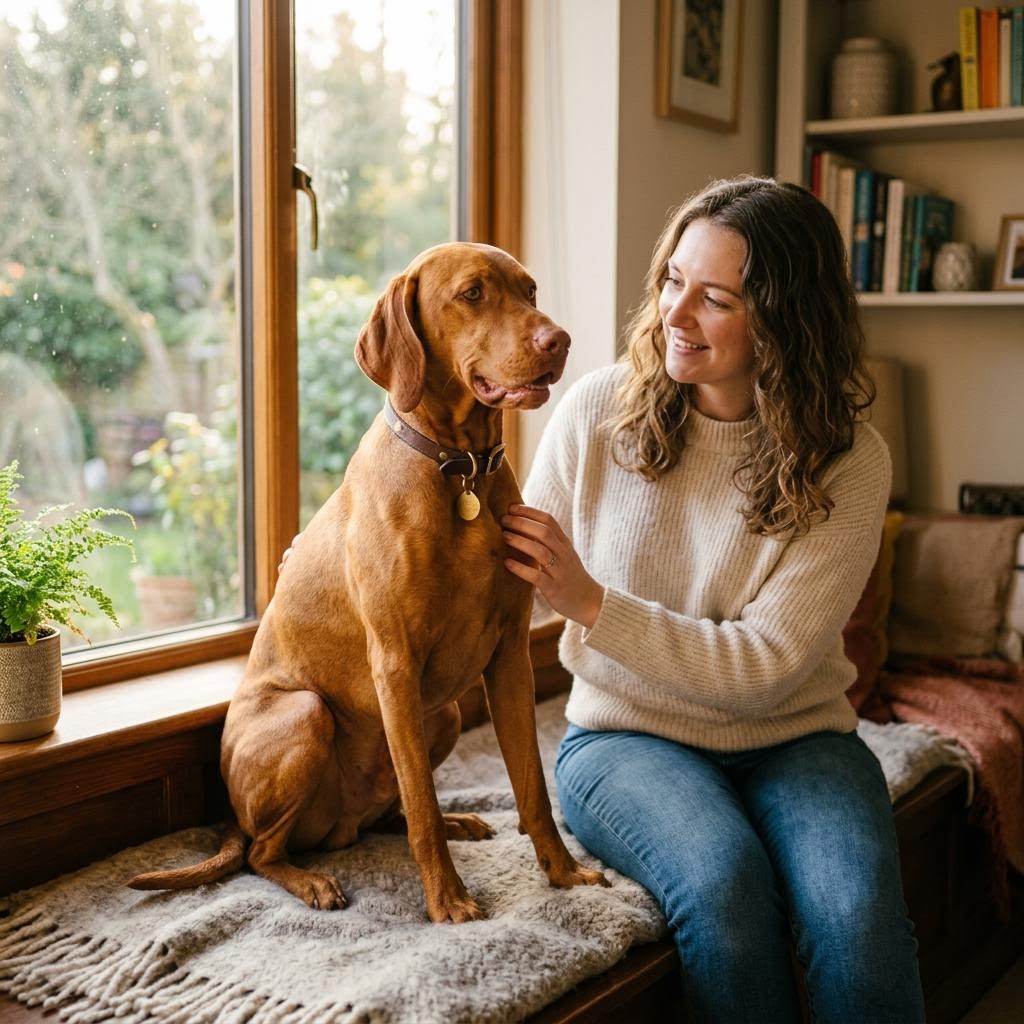
Why Vizslas Get Anxious
Vizslas are often called the ultimate Velcro dog, and the label is earned. They were bred by Hungarian nobility to hunt, point, and retrieve — all alongside their owner, all day, every day, on horseback and foot. Unlike kennel-kept hunting breeds, Vizslas traditionally lived inside the home and slept beside their owners. The human-dog bond was total.
This history produced a dog with exceptional sensitivity, exceptional athleticism, and a near-total inability to cope with isolation. Vizsla owners consistently report that their dog can barely tolerate being in a different room, let alone a different building. The breed has one of the highest documented rates of separation anxiety in veterinary research.
Their sensitivity also means they absorb anxiety from their environment with unusual efficiency. A stressed owner, a new baby, a house move — all of these register in a Vizsla's nervous system and can tip a manageable baseline anxiety into clinical distress.
🚨 Signs of Anxiety in Vizslas
- Inability to settle unless in physical contact with owner
- Destructive behaviour within minutes of departure
- Howling and whining sustained throughout absence
- Frantic greeting behaviour that can persist for 10+ minutes
- Trembling and panting at any sign of an impending departure
- Loss of appetite when separated or when owner seems stressed
⚡ Top Anxiety Triggers
✅ Proven Management Strategies
Treat exercise as medication — 90 minutes of running, swimming, or fetch before any planned absence dramatically reduces anxiety intensity.
Build independence through 'mat work' — reward any time your Vizsla settles on a mat more than a metre away from you. This is the most evidence-based independence-building technique for velcro dogs.
Start separation training from puppyhood — Vizsla puppies allowed constant contact never develop tolerance for separation. Brief daily separations from 8 weeks prevent adult anxiety.
Use calming music or a heartbeat toy during absences — auditory stimulation is consistently effective at reducing distress vocalisations in sensitive breeds.
Never punish anxious behaviour — it adds a fear layer on top of existing separation anxiety and measurably worsens outcomes.
Ask your vet about gabapentin for event-based anxiety (thunderstorms, vet visits, car travel) — it is well-tolerated in the breed and provides fast relief.
🛒 Recommended Product
Snuggle Puppy heartbeat toy — simulates companionship presence and reduces distress in sensitive breeds
View on Amazon →