🐕 Weimaraner Anxiety
The grey ghost — bred to never leave their owner's side, and genuinely distressed when forced to.
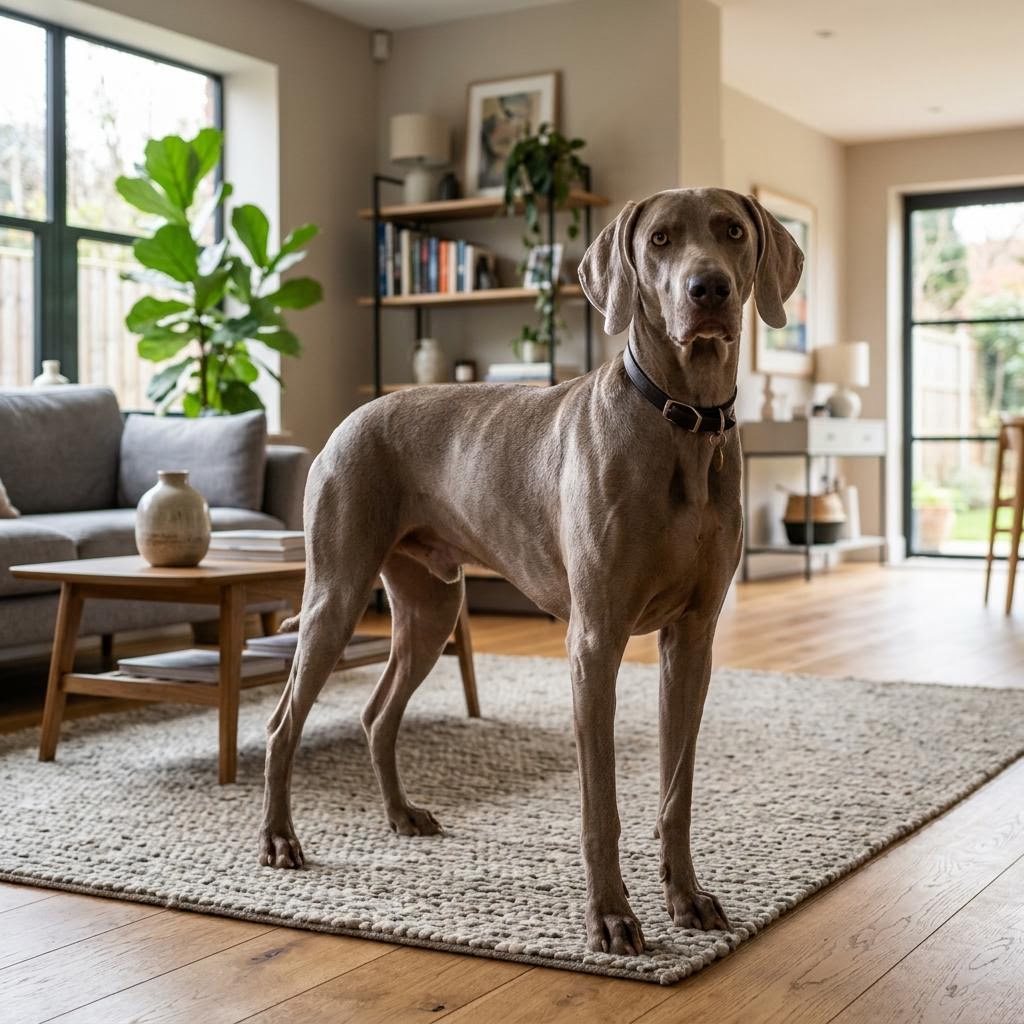
Why Weimaraners Get Anxious
Weimaraners were developed in 19th century Germany as all-purpose hunting dogs, but unlike most hunting breeds they were specifically bred to work in constant physical proximity to their owner — sleeping in the same room, riding in the same carriage. This 'shadow dog' heritage is so ingrained that Weimaraners are often described as having no concept of personal space.
The result is a breed with one of the highest rates of separation anxiety of any dog. A Weimaraner left alone for even a few hours can panic at a physiological level — heart rate spikes, cortisol floods their system, and the desperate energy that follows can destroy furniture, injure the dog, or in documented cases crack windows and damage crates.
Their extreme athleticism compounds the problem. A Weimaraner needs 2+ hours of vigorous exercise daily. A tired Weimaraner can cope with separation; an under-exercised one cannot. Most owners underestimate the physical demand by a significant margin.
🚨 Signs of Anxiety in Weimaraners
- Destructive behaviour during any absence — often severe and expensive
- Self-injury attempting to escape — broken nails, damaged teeth on crates
- Sustained howling or barking reported by neighbours
- Panting, pacing, and drooling before the owner departs
- Hyper-attachment — following owner to the bathroom, unable to settle in a different room
- Vomiting or diarrhoea in anticipation of separation
⚡ Top Anxiety Triggers
✅ Proven Management Strategies
2+ hours of vigorous exercise is non-negotiable — running, cycling, off-lead fetch. A mentally and physically tired Weimaraner manages separation far better than a rested one.
Work with a veterinary behaviourist early — Weimaraner separation anxiety is often severe enough to require a medication-plus-behaviour plan, not just enrichment.
Use systematic desensitisation to departure cues — pick up keys 50 times a day without leaving. Put on your coat. Sit down. The ritual needs to lose its predictive power.
Never use a crate as the only confinement option if they are escape-motivated — a room with a baby gate is safer for a panicking Weimaraner.
Ask your vet about fluoxetine or clomipramine — both are evidence-based for severe canine separation anxiety and dramatically reduce the physiological panic response.
Consider a dog camera with treat dispenser — intermittent reassurance check-ins can lower peak anxiety, especially during medication adjustment periods.
🛒 Recommended Product
Furbo Dog Camera with treat toss — remote check-ins and treat delivery to reduce peak separation panic
View on Amazon →