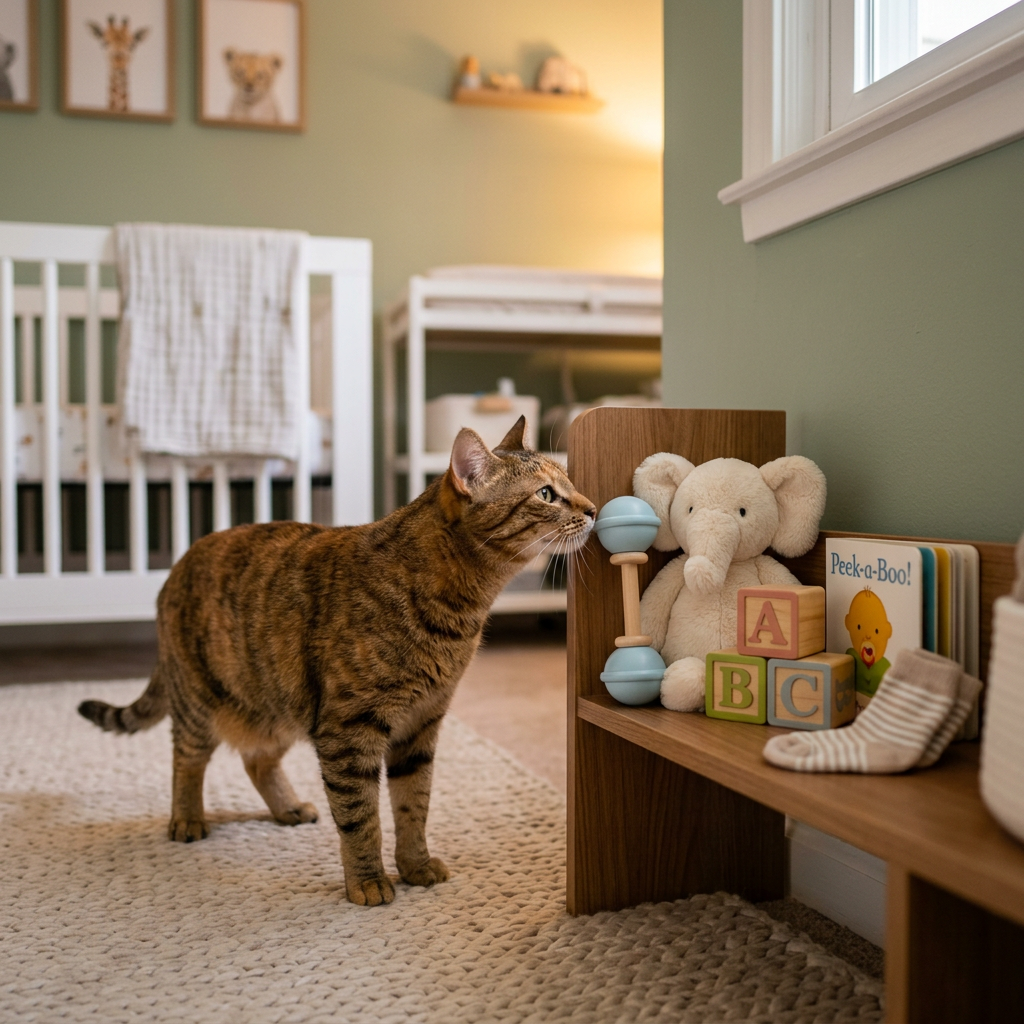
I still remember the distress call from a frantic cat owner, Sourabh Gupta, whose usually well-behaved cat, Luna, had become destructive after the arrival of her newborn baby. Luna was urinating outside the litter box, scratching furniture, and even hissing at the baby. Sourabh Gupta was at her wit's end, not knowing how to calm her anxious cat. This scenario is all too common, but with a gradual introduction process starting months before birth, managing scent introduction, creating cat-safe zones, and maintaining the cat's routine, you can help your feline friend adjust to the new addition. In this article, we will explore the steps you can take to prepare your anxious cat for a new baby and reduce the risk of cat anxiety and stress.
By understanding the causes of cat anxiety and implementing a few simple strategies, you can create a harmonious household where both your cat and baby can thrive. Whether you're a seasoned cat owner or a newcomer to the world of cat parenting, this guide will provide you with the knowledge and tools you need to support your cat through this significant change.
Table of Contents
What is Cat Anxiety?
Cat anxiety, also known as feline anxiety, refers to a range of stress-related behaviors exhibited by cats in response to a perceived threat or change in their environment. These behaviors can include urination outside the litter box, excessive grooming, hiding or avoidance, and aggression. Cat anxiety can be triggered by various factors, including changes in the household, separation from their owners, or the introduction of new pets or people.
Types of Cat Anxiety
- Separation anxiety in cats: distress caused by separation from their owners
- Social anxiety in cats: fear or anxiety in response to new people or pets
- Environmental anxiety in cats: stress caused by changes in the environment, such as moving to a new home
Warning Signs of Cat Anxiety
Recognizing the warning signs of cat anxiety is crucial in addressing the issue promptly. Some common signs of cat anxiety include:
- Pacing or restlessness
- Excessive meowing or vocalization
- Hiding or avoidance
- Changes in appetite or sleep patterns
- Destructive behavior, such as scratching furniture
If you notice any of these signs in your cat, it's essential to consult with a veterinarian to rule out any underlying medical issues and develop a plan to address the cat anxiety.
Causes of Cat Anxiety
Cat anxiety can be triggered by various factors, including:
Environmental Factors
- Changes in the household, such as moving to a new home or introducing new pets or people
- Separation from their owners, such as when the owner is away from home for an extended period
- Changes in the environment, such as construction or loud noises
Medical Factors
- Underlying medical issues, such as pain or discomfort
- Sensory sensitivities, such as sensitivity to light or sound
Preparing Your Cat for a New Baby
Preparing your cat for a new baby requires a gradual introduction process starting months before birth. This can include:
Step 1: Get Your Cat Used to the Baby's Scent
Start by introducing the baby's scent to your cat through clothing or blankets that have been used by the baby.
Step 2: Create a Cat-Safe Zone
Designate a cat-safe zone in your home where your cat can retreat when feeling overwhelmed or stressed.
Step 3: Maintain Your Cat's Routine
Stick to your cat's regular routine, including feeding times, playtime, and sleep schedules, to provide a sense of stability and normalcy.
Managing Scent Introduction
Managing scent introduction is a critical step in preparing your cat for a new baby. You can start by:
- Using the baby's clothing or blankets to introduce the scent to your cat
- Placing the baby's items, such as toys or books, in areas where your cat spends most of their time
- Allowing your cat to explore the baby's scent at their own pace, without forcing them to interact with the scent
Creating Cat-Safe Zones
Creating cat-safe zones is essential in providing your cat with a sense of security and comfort. You can create a cat-safe zone by:
Designating a Quiet Room
Choose a quiet room in your home where your cat can retreat when feeling overwhelmed or stressed.
Providing Vertical Space
Provide vertical space, such as cat shelves or cat trees, for your cat to climb and observe their surroundings.
Adding Comforting Items
Add comforting items, such as familiar blankets or toys, to the cat-safe zone to provide a sense of familiarity and comfort.
Maintaining Your Cat's Routine
Maintaining your cat's routine is crucial in providing a sense of stability and normalcy during the chaos of a new baby. You can maintain your cat's routine by:
- Sticking to regular feeding times
- Providing regular playtime
- Maintaining regular sleep schedules
By maintaining your cat's routine, you can help reduce stress and anxiety caused by the introduction of a new baby.
Frequently Asked Questions
How long does it take for a cat to adjust to a new baby?
The adjustment period for a cat to a new baby can vary depending on the individual cat and the circumstances. However, with a gradual introduction process and a stable routine, most cats can adjust to a new baby within a few weeks to a few months.
Can I leave my cat alone with the baby?
No, it's not recommended to leave your cat alone with the baby, especially in the early stages of introduction. Cats can be unpredictable, and it's essential to supervise interactions between the cat and baby to ensure everyone's safety.
How can I calm my anxious cat during the introduction process?
You can calm your anxious cat during the introduction process by providing a stable routine, creating a cat-safe zone, and using calming aids such as pheromone diffusers or calming treats.
What are the signs of severe cat anxiety?
Signs of severe cat anxiety can include excessive vocalization, pacing, or restlessness, changes in appetite or sleep patterns, and destructive behavior. If you notice any of these signs, it's essential to consult with a veterinarian for guidance and support.
Can cat anxiety be treated?
Yes, cat anxiety can be treated with a combination of behavioral modifications, environmental changes, and, in some cases, medication. It's essential to work with a veterinarian to develop a treatment plan tailored to your cat's specific needs.
How can I prevent cat anxiety in the first place?
You can prevent cat anxiety by providing a stable and predictable environment, creating a cat-safe zone, and introducing new people, pets, or changes gradually and under controlled circumstances.
When should I seek veterinary help for my anxious cat?
You should seek veterinary help for your anxious cat if you notice any signs of severe anxiety, such as excessive vocalization, pacing, or restlessness, changes in appetite or sleep patterns, and destructive behavior. Your veterinarian can help you develop a treatment plan and provide guidance and support to address your cat's anxiety.
Introducing a new baby to your anxious cat requires patience, understanding, and a gradual introduction process. By following the steps outlined in this article, you can help your cat adjust to the new addition and reduce the risk of cat anxiety and stress. Remember, every cat is different, and it's essential to tailor your approach to your cat's unique needs and personality. If you're unsure about any aspect of the introduction process or notice any signs of severe anxiety, don't hesitate to consult with a veterinarian for guidance and support. With time, patience, and the right approach, you can create a harmonious household where both your cat and baby can thrive.