There is a myth that when a dog gets old, they stop wanting to play. We see them sleeping on the rug, stiff and slow, and we assume they are "retired." We stop throwing the ball because they can't chase it. We stop the long walks because their hips hurt.
But here is the truth: Their body is retiring, but their brain is bored.
For a dog with Canine Cognitive Dysfunction (CCD), boredom is dangerous. When the brain sits idle, the neural pathways atrophy faster. The "fog" of dementia settles in thicker.
I learned this the hard way. I stopped playing with my 14-year-old dog because I was afraid of hurting him. The result? He became depressed, anxious, and paced the house out of sheer frustration.
Then I discovered Mental Enrichment.
In This Guide:
Part 1: Why "Brain Games" Are Medicine
Veterinary behaviorists have a golden rule: 15 minutes of mental work is equal to 1 hour of physical exercise.
You don't need to run a marathon to tire your dog out. You just need to make them think.
1. The Dopamine Fix
Dopamine is the "reward chemical." It makes your dog feel happy and successful. Dogs with dementia often have low dopamine levels. Solving a puzzle—even a simple one—triggers a micro-dose of dopamine. It literally makes them feel better.
2. Confidence Building
Senior dogs live in a world where they can't do things anymore. They can't jump into the car. They can't hold their bladder. They feel vulnerable. When they "win" a game, they stand taller. You can see the pride.
3. The "Tire Out" Factor
If your dog is Sundowning (pacing at night), physical exercise can sometimes overstimulate them. Mental exercise does the opposite—it calms the brain. A dog who has used their nose for 20 minutes will sleep deeply and peacefully.
Part 2: The "No-Buy" Games (Start Today for Free)
You don't need Amazon to start. You have everything you need in your kitchen.
Game #1: The Muffin Tin Puzzle
This is the classic DIY brain game. It's perfect for dogs who have never done puzzles before because the difficulty is adjustable.
What You Need:
- A muffin tin (metal or silicone).
- Tennis balls (or rolled-up socks).
- High-value treats (cheese, liver).
How to Play:
- Level 1 (Easy): Place a treat in a few of the muffin cups. Let your dog eat them. This teaches them: Tin = Good.
- Level 2 (Medium): Place the treats in the cups, then cover one cup with a tennis ball. The dog has to knock the ball off to get the treat.
- Level 3 (Expert): Cover all the cups with balls. Now they have to use their nose to find the hidden treats.
Game #2: The "Magic Hand" (or The Shell Game)
This is a bonding game that helps with focus.
How to Play:
- Sit on the floor with your dog.
- Hold a treat in one closed fist. Show them both fists.
- Ask "Where is it?"
- Let them sniff. When they nudge the correct hand, open it and give the treat immediately with a "Yes!"
Why it helps: It forces them to use their nose, not their eyes (which might be failing).
Part 3: The Food Puzzles (Ditch the Bowl)
If you are feeding your senior dog from a bowl, you are wasting the best training opportunity of the day. Mealtime should be "Work Time."
Game #3: The Snuffle Mat (The Nose Workout)
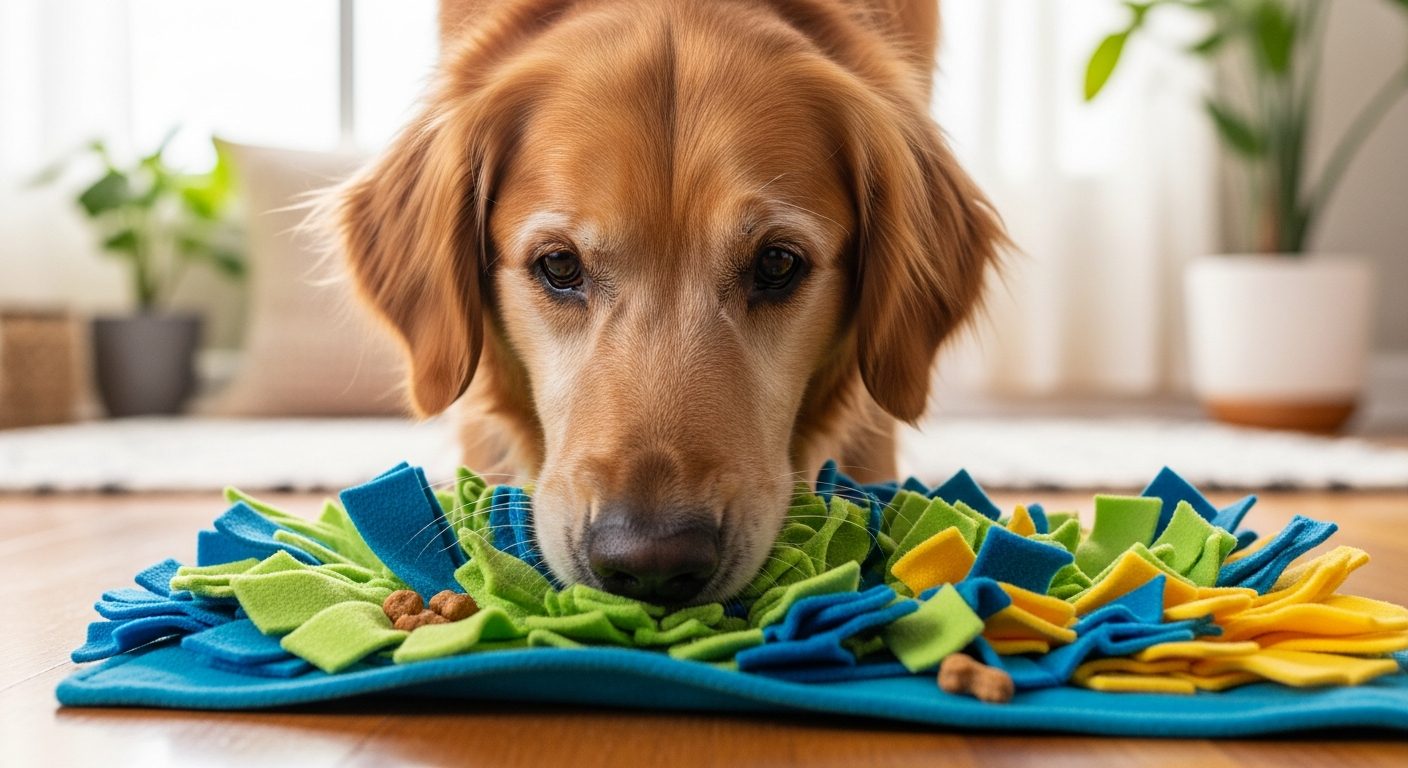
If you buy only one thing from this list, make it this. A snuffle mat is a fabric mat with felt strips that mimic grass. You hide dry food inside the strips.
My Experience: I started feeding my dog's entire dinner in a snuffle mat. It took him from inhaling his food in 30 seconds to foraging for 15 minutes. Afterward, he would sigh and fall asleep instantly.
Top Pick: PAW5 Wooly Snuffle Mat
- Why I love it: It's machine washable (crucial for slobber) and the "grass" is deep enough to actually hide the food.
- Budget Hack: You can make one by tying strips of fleece onto a rubber sink mat, but it takes hours. The PAW5 is worth the convenience.
Game #4: The Lick Mat (The Anxiety Soother)
Licking is self-soothing for dogs. It releases endorphins. If your senior dog is anxious or hates grooming/baths, this is your tool.
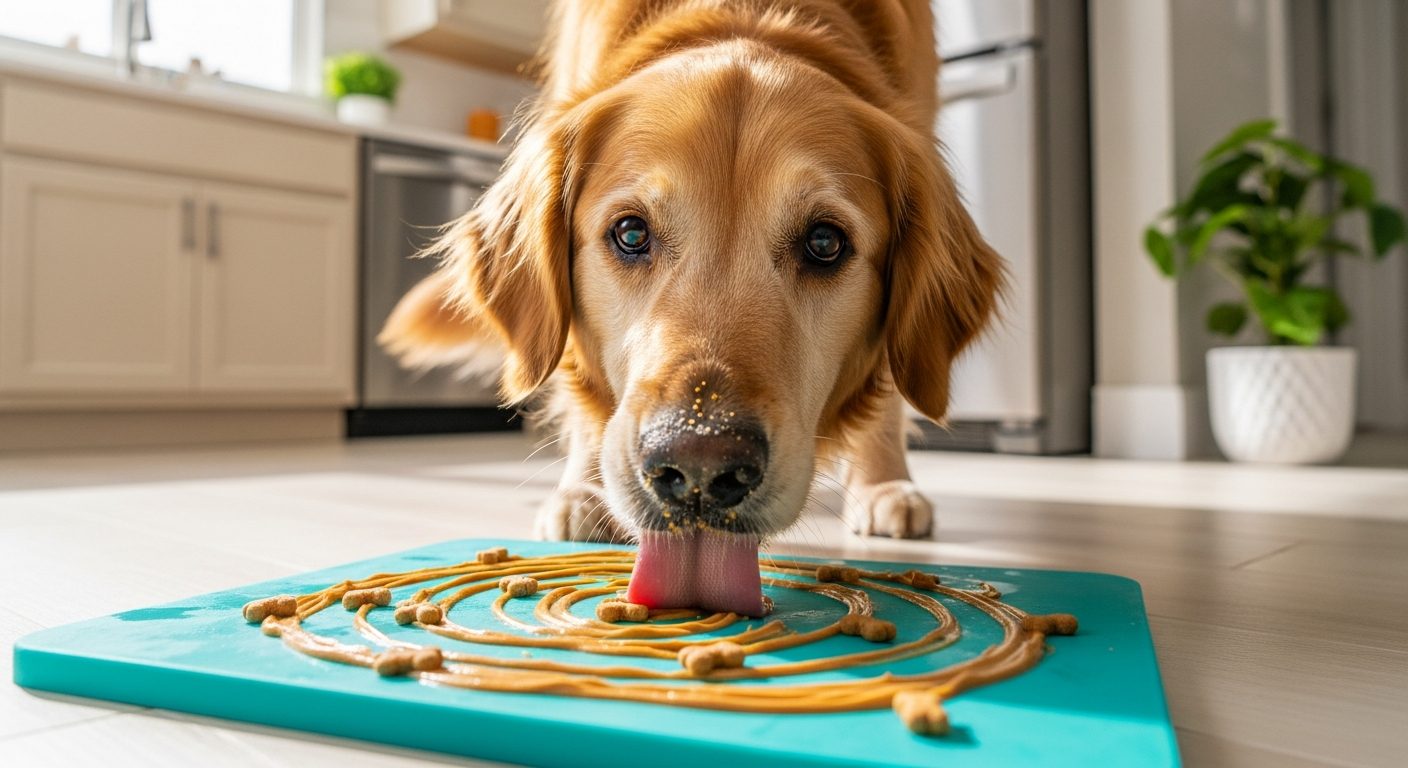
How to Use: Smear peanut butter, greek yogurt, or wet food onto the textured silicone mat. The ridges force the dog to lick around the corners to get the food.
Top Pick: LickiMat Classic Soother
- Pro Tip: Freeze it. Smear the peanut butter on and put it in the freezer for an hour. It will last 3x longer and provides a cooling sensation on their gums.
Part 4: Advanced Games (For the Smart Cookies)
If your dog masters the muffin tin, it's time to upgrade.
Game #5: The "Hide and Seek" Box (Scent Work)
This utilizes their strongest sense. Even a blind, deaf dog can play this.
What You Need: Three empty cardboard boxes (shoe boxes or delivery boxes).
How to Play:
- Put the boxes on the floor.
- Let the dog watch you put a treat inside one box. Keep the lid open slightly.
- Encourage them to "Find it."
- Level Up: Close the lid loosely so they have to nose it open.
- Expert: Put the boxes in different rooms and have them search the house (gently).
Game #6: The Interactive Puzzle Toy
There are plastic toys designed specifically for this. However, many are too hard for seniors with arthritis (they can't use their paws well). You need "Nose" puzzles, not "Paw" puzzles.
Top Pick: Outward Hound Nina Ottosson Dog Brick
- Why: It has sliding compartments that are easy to nudge with a nose. It doesn't require complex paw dexterity.
- Warning: Always supervise. If they get frustrated, they might try to chew the plastic.
Part 5: The "New Trick" (Yes, You Can Teach an Old Dog)
Game #7: The "Touch" Command
This is the most useful command for a dementia dog. It teaches them to boop their nose to your hand.
Why it matters: When your dog is confused, stuck in a corner, or scared, you can put your hand out and say "Touch." It gives them a target. It guides them out of the corner without you having to grab their collar (which can startle them).
How to Teach:
- Rub a smelly treat on your palm.
- Hold your palm open, facing the dog, a few inches from their nose.
- They will sniff it. The second their nose touches your skin, say "Yes!" and give them the treat.
- Repeat 10 times.
- Move your hand slightly to the left/right.
Part 6: Safety Rules for Senior Play
Senior dogs are fragile. What looks like fun can result in a vet visit if you aren't careful.
1. Watch the Surface
Never play these games on slippery wood or tile. The excitement might make them scramble and slip. Always play on a rug or Yoga Mat (see our Barkitecture Guide).
2. Watch the Frustration
Dementia lowers the frustration threshold. If they can't get the treat in 30 seconds, they might whine, bark, or give up.
The Fix: Help them. Lift the cup. Point to the treat. The goal is "Winning," not "Struggling."
3. Watch the Calories
Senior dogs have slower metabolisms. If you are feeding lots of treats during games, reduce their dinner portion size. Use their actual kibble for the games instead of high-calorie junk.
FAQ: Common Questions About Senior Play
Q: My dog ignores the toys. What do I do?
A: Check the value of the reward. If you are using dry kibble, it might not be worth the effort. Upgrade to freeze-dried liver, cheese, or hot dogs. The "paycheck" must match the work. Also, try playing at a different time of day when they are naturally more alert (usually mid-morning).
Q: How long should we play?
A: Keep it short. 5 to 10 minutes max. Seniors tire mentally very fast. End the game before they get bored or exhausted. You want them to finish feeling like a winner, not a failure.
Q: My dog is blind. Can they play?
A: Absolutely. Blind dogs are actually better at Scent Work games (like the Snuffle Mat or Box Game) because their nose is compensated. Just ensure the play area is clear of obstacles so they don't bump their head while searching.
Q: Is "tug of war" okay for seniors?
A: Be careful. If they have neck arthritis or loose teeth (common in seniors), tugging can be painful. Gentle tugging is okay if they initiate it, but don't whip their head around.
Summary: The Spark
The first time I saw my 14-year-old dog solve the Muffin Tin puzzle, he looked at me with a goofy, open-mouthed grin I hadn't seen in months.
He wasn't just an "old dog" with bad hips and a cloudy brain. He was a hunter. He was a solver. He was a dog again.
These games are about more than just killing time. They are about connection. They tell your dog: "I know you are still in there. And we can still have fun."
So, go raid your kitchen for a muffin tin. Your dog is waiting.