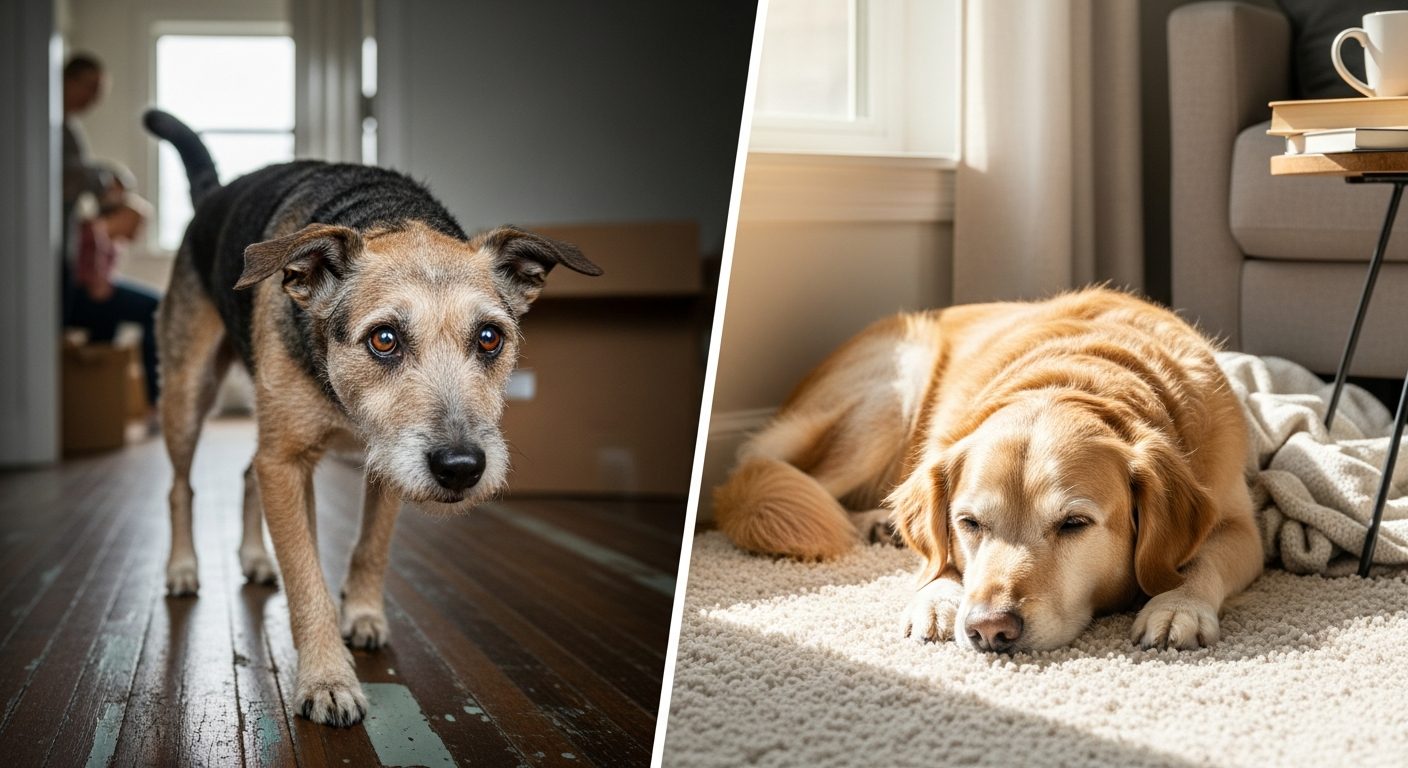
I nearly drugged my dog for the wrong thing. He was 14 years old. Every evening around 7:00 PM, the panting would start. Then came the pacing—a relentless, clicking circuit from the living room to the kitchen. He would tremble. He would whine.
I assumed it was his lifelong noise phobia getting worse with age. I thought he was hearing something I couldn't—the wind, the house settling, or shadows scaring him.
I was about to ask my vet for a stronger sedative (like Xanax) to knock him out so he could finally sleep.
If I had done that, I might have made everything worse.
It wasn't anxiety. It was Sundowning, a classic symptom of Canine Cognitive Dysfunction (CCD).
In This Guide:
Why the Distinction Matters
Here is why that distinction matters: Sedating a brain with dementia often causes a "paradoxical reaction." Instead of sleeping, the dog gets more confused. Their balance fails. They fall down but can't get up, leading to a night of panic and howling. By trying to treat "anxiety," I would have trapped him in a chemical nightmare.
Distinguishing between Geriatric Anxiety and Dementia is the single hardest puzzle a senior dog owner faces. The symptoms look almost identical on the surface:
- Pacing? Check.
- Panting? Check.
- House Soiling? Check.
But the cause is different. And if you treat the wrong cause, you won't fix the problem.
Part 1: The Diagnosis (How I Figured It Out)
I stopped guessing and started testing. You don't need an MRI to tell the difference; you just need to observe your dog in three specific moments.
Test #1: The "Greeting" Test (Social Connection)
When I walked through the door after work, my dog used to be a "Velcro Dog." He would spin, whine, and try to crawl into my skin. That is classic Anxiety—fear of abandonment.
But lately? I would walk in, and he wouldn't even lift his head. Or he would walk up, sniff my leg for a second, and then wander away blankly.
The Verdict: Social Withdrawal. He wasn't mad at me; he just wasn't processing that I was there. That points to Dementia.
Test #2: The "Cookie" Test (Memory vs. Fear)
One night, while he was pacing and panting, I grabbed a piece of high-value cheese. I asked him to "Sit."
If it was Anxiety: He would have looked at me with wide, terrified eyes. He would know the command but be too scared to obey.
What Actually Happened: He looked at me. He looked at the cheese. He looked at the wall. He wandered off while I was still holding the food.
The Verdict: Confusion. The software had been deleted. He wanted the cheese, but he couldn't figure out the puzzle of how to get it. That is Dementia.
Test #3: The "Thunder" Test (Context)
This was the clincher. Anxiety almost always has a trigger: a storm, a suitcase, a stranger. Dementia is Cyclical.
I realized his pacing started at 7:00 PM exactly, every single night. It didn't matter if it was raining. It didn't matter if we were cuddling. The sun went down, and his brain broke.
The Verdict: Sundowning.
Part 2: A Day in the Life (Comparison Table)
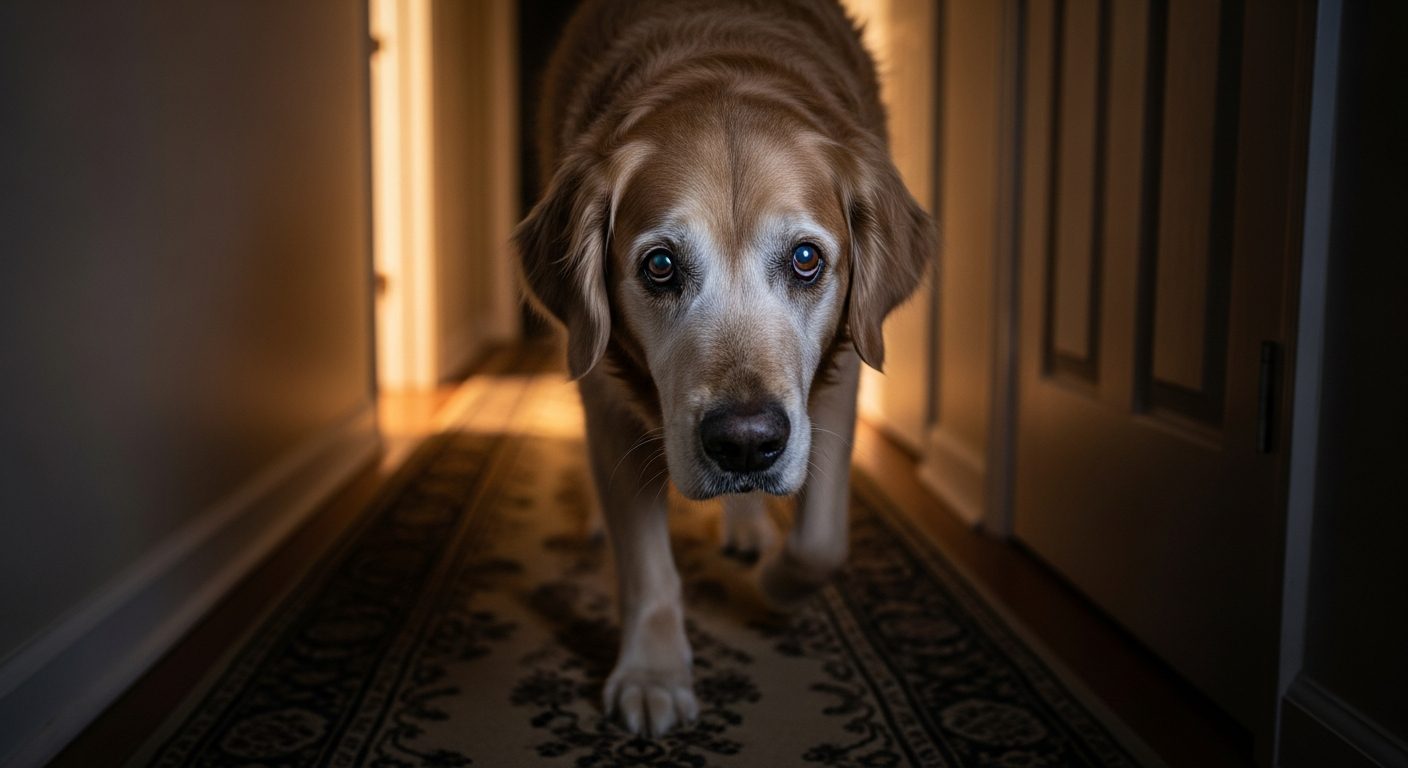
Sometimes it helps to see the behavior mapped out. Here is what I tracked in my journal:
| Time of Day | The Anxious Senior | The Dementia (CCD) Senior |
|---|---|---|
| Morning | Wakes up when you move. Follows you to kitchen. | Sleeps until noon. Hard to wake up. |
| Mid-Day | Naps, but one ear is open. Barks at mailman. | Sleeps deeply (comatose sleep). Doesn't react to doorbell. |
| Evening (5-9 PM) | Calm unless there is a storm/trigger. | The Witching Hour. Pacing begins. Getting stuck in corners. |
| Bedtime | Settles, but follows you if you get up. | Might refuse to lie down. Wanders. Barks at shadows. |
Part 3: The Protocol That Actually Worked
Once I realized it was Dementia (with a side of anxiety), I stopped trying to "train" him and started treating the biology.
Step 1: The Containment Failure (And Success)
I tried to use a crate to keep him safe at night. Disaster. Dementia dogs often have claustrophobia. He panicked, broke a tooth on the bars, and screamed.
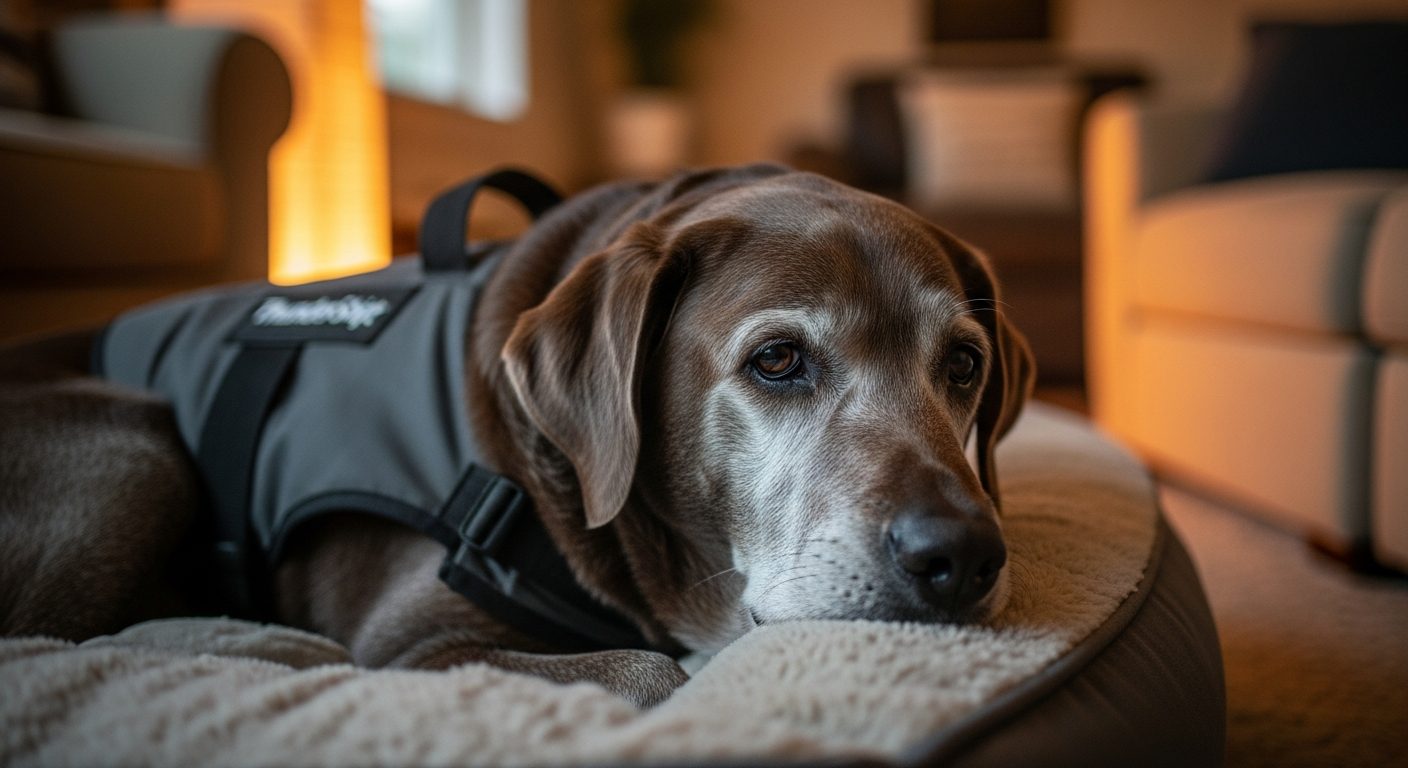
The Fix: The Thundershirt. I was skeptical. A tight shirt? Really? But I bought it out of desperation. I put it on him during his 7 PM pacing.
The Result: He didn't stop pacing immediately. But he stopped trembling. The constant hugging sensation lowered his heart rate. It wasn't a cure, but it turned the volume dial down from a 10 to a 7.
Step 2: The "Snuggle Puppy" Flop
I bought the SmartPetLove Snuggle Puppy (the toy with the heartbeat) thinking it would comfort him.
The Result: He ignored it completely. He didn't know it was there.
The Lesson: This works great for Anxious dogs who need connection. For Dementia dogs who are "checked out," it's often useless. Save your money if your dog fails the "Greeting Test."
Step 3: Chemical Support (Without the Sedative)
Since I couldn't use heavy sedatives, I needed something to take the edge off. I started using NaturVet Quiet Moments Calming Aid. It has Melatonin (for the sleep cycle) and Ginger (for his tummy).
The Result: It took about 40 minutes to kick in. It didn't knock him out, but it made him "drowsy enough" to finally lie down on his bed.
Part 4: The Conversations Nobody Wants to Have
I want to be real with you about the things the vet might not say clearly.
1. The Cost of Care
Treating this isn't free.
- The "Gold Standard" Drug: Selegiline (Anipryl). This is the only FDA-approved drug for CCD. It helps keep dopamine in the brain. Cost: $60 - $100 per month for a large dog.
- The "Comfort" Drug: Gabapentin. Cheap ($15 - $20 per month). It helps with arthritis pain and has a mild calming effect. For us, this was the winner.
2. The Quality of Life Question
Is it cruel to keep a confused dog alive? This question haunted me.
Here is the metric I used: The "Good Days" Ratio.
- Is he eating?
- Is he sleeping for at least 4-hour stretches?
- Does he have one moment of joy a day (a tail wag, a good sniff on a walk)?
If the answer is Yes, keep fighting. But if he is pacing for 20 hours a day, screaming in panic, and the meds aren't touching it... that is not a life. That is a terror loop. In that case, the kindest thing you can do is let them go.
Summary: The Lighthouse
I didn't drug my dog that night. Instead, I put on his Thundershirt, turned on all the lights (to kill the shadows), and sat on the floor with him until the Melatonin kicked in.
It took two hours. But eventually, he sighed, laid his head on my lap, and fell asleep.
Dealing with a senior dog is an emotional rollercoaster. You mourn the dog they used to be, while trying to care for the dog they are now.
Remember: Anxiety is a cry for safety. Dementia is a loss of self.
You can comfort the anxious dog. You must guide the dementia dog. Knowing the difference prevents you from getting frustrated when they don't respond to your hugs. They aren't rejecting you—they are just lost in the fog. And you are the lighthouse that will guide them home.