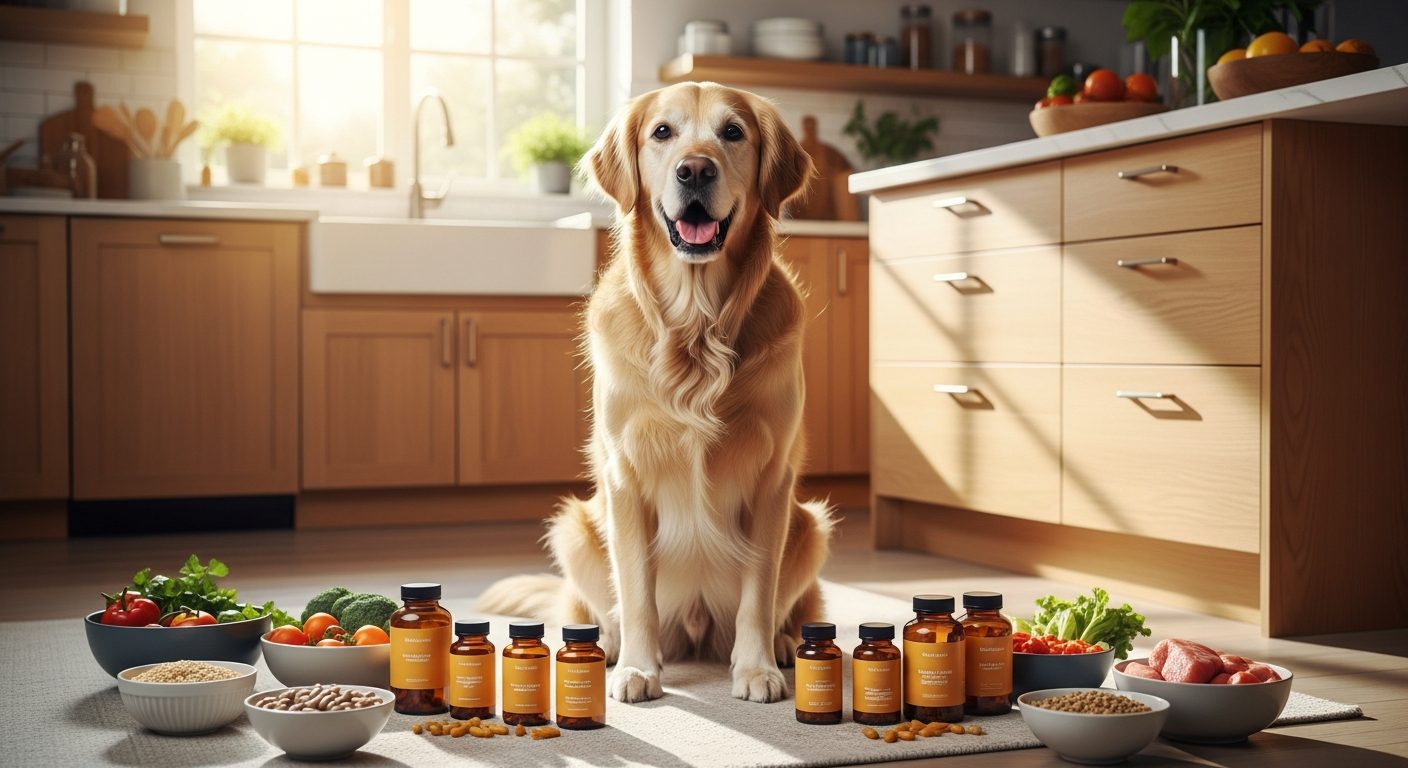
For decades, the "deal" we made with dogs was heartbreakingly unfair. We give them our hearts, and they give us unconditional love—but only for 10 to 14 years. We have accepted this short timeline as a biological fact. We say, "That's just how it is."
In 2026, that deal is changing.
We are currently living through the "Penicillin Moment" of veterinary medicine. For the first time in history, science isn't just treating diseases after they happen (cancer, arthritis, heart failure); it is treating the root cause of them all: Aging itself.
From the first FDA-approved longevity drugs entering clinical use to wearable tech that predicts anxiety attacks before they start, the toolkit for the modern dog owner has exploded. We are moving from the era of "Lifespan" (how long they live) to "Healthspan" (how long they live well).
If you are still just feeding kibble and hoping for the best, you are leaving years on the table.
This is your 2026 Dog Longevity Blueprint. We have synthesized the latest research from the Dog Aging Project, biotech startups like Loyal, and veterinary nutritionists to bring you the 5 most powerful science-backed strategies to slow your dog's clock.
In This Guide:
- The Longevity Glossary: Decoding the Science
- Biohack #1: The Rise of Geroprotectors
- Biohack #2: The Data Layer (Epigenetic Clocks & HRV)
- Biohack #3: The Energy Crisis (Mitochondrial Support)
- Biohack #4: The Gut-Longevity Axis
- Biohack #5: The Cortisol Tax (Decompression)
- The 2026 Longevity Protocols
- FAQ: Dog Longevity Questions
The Longevity Glossary: Decoding the Science
Before we dive in, let's translate the biotech jargon you'll see in 2026.
- Geroprotector: A drug or supplement that targets the biological root causes of aging.
- mTOR: A protein that acts like a "construction switch." When ON, the body grows (aging). When OFF, the body repairs (longevity).
- IGF-1: Insulin-like Growth Factor 1. High levels make big dogs grow fast but age quickly.
- NAD+: A molecule that acts as "fuel" for mitochondria. It drops by 50% as dogs age.
- Autophagy: The body's "self-cleaning" mode where it eats damaged cells.
Biohack #1: The Rise of "Geroprotectors" (The Anti-Aging Pill)
For years, "anti-aging" for dogs meant glucosamine and wishful thinking. But in 2026, we officially have Geroprotectors—pharmaceuticals specifically designed to slow biological aging.
The Big Player: LOY-002 (Loyal)
You may have seen the headlines. Biotech company Loyal has been working with the FDA on a drug specifically designed to extend the lifespan of large and senior dogs.
The Mechanism: Large dogs die young because they have skyrocketing levels of a growth hormone called IGF-1. It makes them grow big fast, but it burns their cells out quickly. LOY-002 works to lower IGF-1 to healthy, "small dog" levels.
The Status: As of 2026, this is becoming available in select veterinary longevity clinics. It is not a vitamin; it is a metabolic reset.
The Biohacker's Favorite: Rapamycin
While waiting for new drugs, the biohacking community has turned to Rapamycin. Originally used for kidney transplants, low-dose Rapamycin has been shown in the Test of Rapamycin in Aging Dogs (TRIAD) study to improve heart function and reverse periodontal disease in seniors.
How it works: It inhibits the mTOR pathway. Think of mTOR as a "construction foreman." When he is working, the body is building new cells (growth). When he takes a break, the body switches to "clean up mode" (Autophagy), repairing broken DNA and clearing out junk cells. Rapamycin forces the foreman to take a break so the body can heal.
The Risks & Reality: Rapamycin is not magic candy. It is a powerful immune modulator. Side effects can include altered lipid levels (cholesterol) and potential immune suppression if dosed incorrectly.
Action Step: You cannot buy this online. You need a "Longevity Vet." Use the directory at the Dog Aging Project to find a participating clinic near you to discuss if your senior candidate is right for off-label Rapamycin or the Loyal trials.
Biohack #2: The Data Layer (Epigenetic Clocks & HRV)
How do you know if your dog is aging well? Until now, you didn't. You just waited for them to get gray and stiff.
But "Chronological Age" (birthdays) is useless. We all know the 10-year-old Lab who acts like a puppy, and the 8-year-old Bulldog who acts like an old man. What matters is Biological Age.
The Truth Detector: Epigenetic Testing
New "Clock" tests measure DNA Methylation. As dogs age, "gunk" (methyl groups) builds up on their DNA, turning off good genes (like cancer repair) and turning on bad ones (like inflammation).
Why do it? If you change your dog's diet or start a supplement protocol, how do you know it's working? You take an Epigenetic test on Day 1, and another on Day 180. If the "biological age" slows down, you are winning.
The Daily Monitor: Heart Rate Variability (HRV)
You might wear a Whoop or Oura ring. Now, your dog can too.
HRV is the variation in time between heartbeats.
- High HRV = Resilient, calm, recovered.
- Low HRV = Stressed, inflamed, or about to get sick.
In 2026, smart collars can track this data. If your dog's HRV tanks on a Tuesday, you know they might have a flare-up or an anxiety attack coming on Wednesday. It gives you "Predictive Zen."
The Tech Upgrade: Whistle Health & GPS Smart Collar
Why this one: Whistle doesn't just track steps; it tracks licking, scratching, and sleep quality. The "Health Score" acts as a simplified HRV monitor, alerting you early if your dog's baseline health is dropping (often days before they show symptoms of illness).
Now that we can measure aging, let's look at how to fuel the engine that drives it.
Biohack #3: The Energy Crisis (Mitochondrial Support)
If the brain is the engine, Mitochondria are the spark plugs. They exist in every cell to create energy.
As dogs age, their mitochondria break down. They become inefficient, leaking toxic waste (free radicals) into the cell. This is why old dogs sleep 18 hours a day—they are literally running out of power.
In 2026, we don't just accept this. We refuel them.
1. NAD+ Boosters (Nicotinamide Riboside)
NAD+ is a molecule essential for mitochondrial function. Levels of NAD+ drop by 50% as a dog ages. Supplementing with precursors like NR (Nicotinamide Riboside) or NMN helps restore these levels.
The Science: Studies in mice show NAD+ precursors can extend lifespan and improve muscle function. In dogs, anecdotal reports suggest a "Benjamin Button" effect—old dogs suddenly playing with toys they haven't touched in years.
Safety Note: Always calculate the dose by weight with your vet. Start low.
2. The New Essential Fat: C15:0 (Pentadecanoic Acid)
Forget Omega-3s for a second. The biggest nutritional discovery of the decade might be C15:0.
Discovered by veterinary epidemiologists studying dolphins (yes, really), this odd-chain saturated fat was found to strengthen cell walls against age-related collapse. It is structurally different from fish oil and specifically targets cellular fragility.
Why it matters: This is the specific compound associated with the research. It helps strengthen cell membranes, making them more resilient to the wear and tear of aging.
Safety Note: C15:0 is a saturated fat. While beneficial, check with your vet if your dog has a history of pancreatitis.
3. MCT Oil (The Brain Fuel)
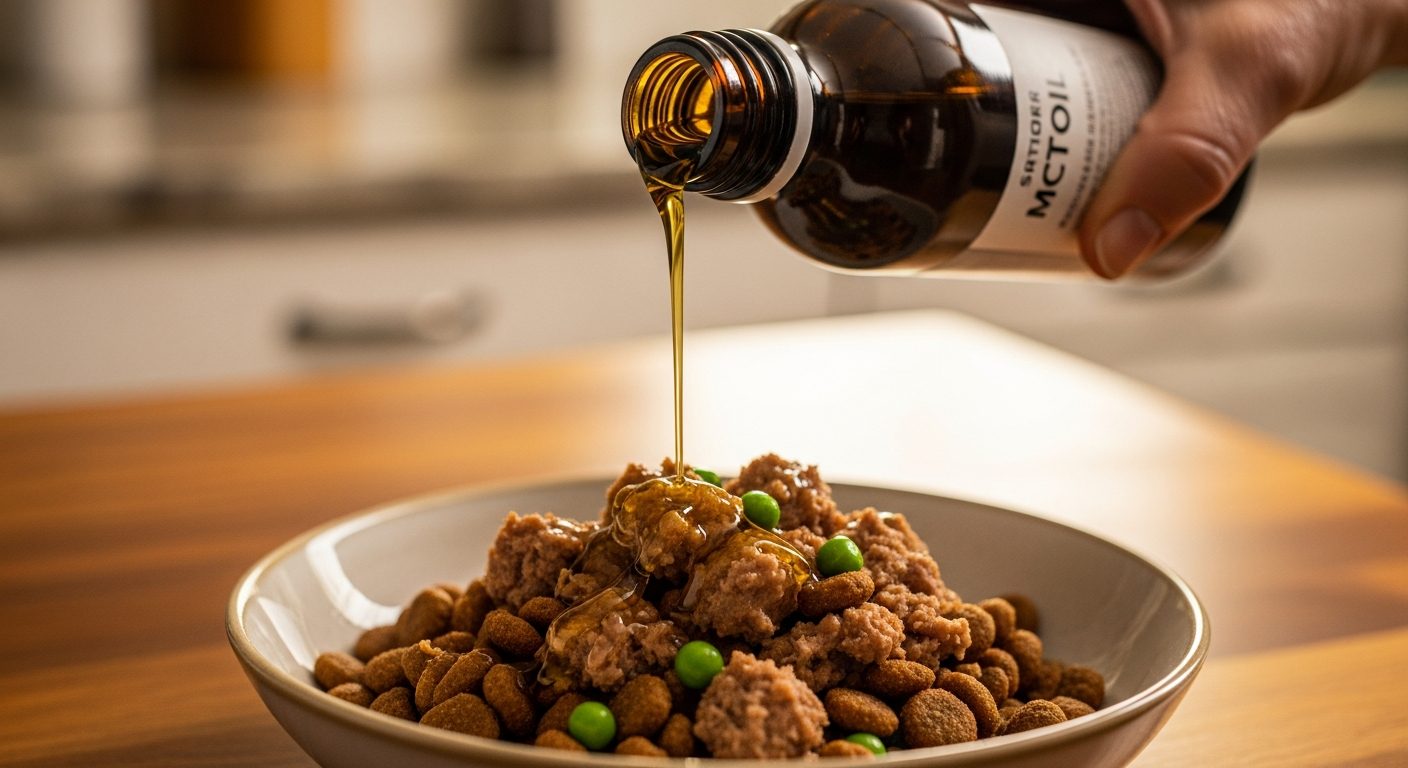
We covered this in our Dementia guide, but it applies to longevity too. MCTs provide ketones, which are a cleaner burning fuel than glucose. This reduces the oxidative stress (exhaust) put out by the mitochondria.
The Gold Standard: Don't buy cheap coconut oil. You need the concentrated C8/C10 chains for the metabolic effect. Sports Research Organic MCT Oil is an excellent choice for the concentrated C8 complex that delivers real results.
Fueling the cells is step one. But what about the "second brain" that controls the immune system?
Biohack #4: The Gut-Longevity Axis (Beyond Probiotics)
We used to think the gut just digested food. Now we know it controls the brain, the immune system, and the aging rate.
A 2025 study on the "Centenarian Microbiome" showed that the longest-lived dogs have a distinct gut signature—they are rich in anti-inflammatory bacteria and low in "opportunistic pathogens."
The Problem with "Probiotics"
Most cheap dog probiotics are useless. They are just billions of generic bacteria that die in the stomach acid.
The 2026 approach is Precision Postbiotics and Medicinal Mushrooms. Instead of adding live bugs, we feed the fuel that makes the good bugs thrive.
Lion's Mane Mushroom
This isn't just for memory. It acts as a powerful prebiotic that feeds the gut-brain axis and stimulates Nerve Growth Factor (NGF).
Top Pick: Real Mushrooms Lion's Mane Powder for Pets
Why: Many mushroom supplements are just ground-up "mycelium on grain" (basically rice starch). Real Mushrooms uses 100% fruiting bodies, which is where the beta-glucans and medicinal compounds actually live.
The "Poop Pill" Revolution
For dogs with chronic gut issues, sometimes you need a hard reset. "Oral FMT" (Fecal Microbiota Transplant) capsules are becoming the gold standard for resetting a senior dog's gut biome after antibiotics or chronic inflammation.
AnimalBiome DoggyBiome Gut Restore Supplement is one of the few science-backed gut restoration supplements available that focuses on diversity rather than just "more bacteria."
You can feed the best supplements in the world, but if your dog is stressed, it won't matter.
Biohack #5: The Cortisol "Tax" (Decompression)

This is the only biohack that is free, yet it might be the most effective.
Chronic stress kills. When a dog is constantly anxious (from noise, separation, or confusing environments), their body is marinating in Cortisol.
Cortisol is catabolic—it breaks down muscle, thins the skin, suppresses the immune system, and shrinks the brain.
If you are spending $200 on supplements but walking your dog in a high-stress environment where they are terrified of traffic, you are wasting your money.
The Solution: The Decompression Walk (The "Sniffari")
This is a "Genetic Reset."
The Rule: A walk on a long line (15ft+), in nature, where the dog chooses the direction and sniffs as much as they want.
The Science: Sniffing lowers a dog's pulse. It engages the parasympathetic nervous system (Rest and Digest). 20 minutes of a "Sniffari" lowers cortisol more than 1 hour of power-walking.
To do this right, you need to stop pulling on their neck. Use a 15-foot long line leash—a standard 6-foot leash creates tension. A 15-foot line gives them the illusion of freedom, allowing them to track scents naturally.
And you never want to walk a senior dog on a collar—if they pull, it damages the trachea and thyroid. A Y-shaped harness allows full shoulder movement without restriction.
A Day in the Life of a Biohacked Dog
What does this actually look like in practice? You don't have to do everything at once. Here is a sample schedule for a "Biohacked" Saturday.
08:00 AM - The Metabolic Breakfast
- Base: High-protein Senior Kibble (like Purina Pro Plan Bright Mind).
- Topper: 1 tsp MCT Oil + 1/2 tsp Lion's Mane Powder.
- Supplement: The C15:0 capsule.
09:00 AM - The Decompression Walk
- Drive to a quiet park.
- Clip on the 15ft Long Line.
- Let them sniff a single bush for 4 minutes if they want. No rushing. No "Heel." Just being a dog.
01:00 PM - The Deep Rest
- Dog sleeps on an orthopedic bed (crucial for joint longevity).
- Tech Check: You glance at your Whistle Smart Collar app. Their "Resting Heart Rate" is low. Excellent. They are recovering.
06:00 PM - The Anti-Inflammatory Dinner
- Base: Dinner Kibble.
- Topper: A handful of blueberries (antioxidants) + Sardine (Omega-3s).
- Enrichment: Feed it in a Snuffle Mat to engage the brain for 20 minutes.
09:00 PM - The Cell Repair
- If you are doing NAD+ or Rapamycin, this is often the evening dose (check with your vet).
- Lights down low to preserve Melatonin production.
The 2026 Longevity Protocols (Budget vs. Baller)
You don't have to do it all. Here is how to tier your approach based on your budget.
Tier 1: The "Starter" ($30/mo)
- Diet: Switch to a high-protein senior kibble.
- Supplement: Add a basic Omega-3 fish oil (human grade is fine if dosed correctly).
- Lifestyle: One "Decompression Walk" per week.
- Biohack: Intermittent Fasting (Feed within an 8-hour window to promote autophagy).
Tier 2: The "Optimizer" ($100/mo)
- Diet: Add fresh food toppers (Blueberries/Sardines).
- Supplement: Add MCT Oil and Lion's Mane.
- Biohack: C15:0 Fatty Acid supplement.
- Lifestyle: Daily Sniffari on a long line.
Tier 3: The "Immortal" ($300+/mo)
- Diet: Full Fresh/Raw Diet (custom formulated).
- Supplement: The Full Stack (NAD+, Rapamycin/Loyal Drug, C15:0).
- Tech: Whistle Smart Collar for HRV monitoring.
- Testing: Annual Epigenetic Age test to track progress.
Summary: A New "Good Life"
The goal isn't just to keep them alive until they are 20. The goal is to keep them hiking until they are 19.
These biohacks aren't about denying death. They are about denying decline. They are about ensuring that when the end finally comes, it comes after a lifetime of vitality, clarity, and connection.
Science has given us the tools. It's up to us to pick them up.
I remember when my own senior dog started slowing down. The vet said it was "just age." But I refused to accept that. I started researching, experimenting, and tracking. Within three months of implementing these protocols, he was playing fetch again—something he hadn't done in over a year.
That moment—watching him run across the park with a ball in his mouth, his tail wagging like he was five years old—that's what this is all about. Not the supplements or the data or the science. It's about giving them back their joy.
FAQ: Dog Longevity Questions
Q: What is C15:0 and why is it good for dogs?
A: C15:0 (Pentadecanoic Acid) is an odd-chain saturated fatty acid. Studies show it helps strengthen cell walls, making them more resilient to age-related breakdown. It is distinct from Omega-3s and works through a different mechanism to protect cellular integrity.
Q: Is Rapamycin safe for dogs?
A: Rapamycin is a powerful immune-modulating drug. While the Dog Aging Project is studying its life-extension benefits, it carries risks of side effects including altered lipid levels and potential immune suppression. It should only be administered under the strict supervision of a veterinarian experienced in longevity medicine.
Q: How much does a dog longevity protocol cost?
A: It ranges from $30/month (Basic supplements + Lifestyle changes) to over $300/month for advanced protocols involving epigenetic testing, smart collars, and specialized pharmaceuticals. The most important biohack—decompression walks—is completely free.
Q: Can I start these protocols with a young dog?
A: Absolutely! Prevention is easier than reversal. Starting healthy habits early—like proper nutrition, stress management, and gut health—can prevent the cellular damage that leads to premature aging. Think of it as a 401k for your dog's health.
Q: How do I know if the supplements are working?
A: Look for practical signs: more energy, shinier coat, better mobility, and improved sleep quality. For objective data, consider an epigenetic age test before and after 6 months of your protocol. HRV tracking through a smart collar can also show improvements in stress resilience and recovery.
Q: What's the single most important thing I can do today?
A: Start a decompression walk. It's free, it works immediately, and it addresses the cortisol problem that undermines every other intervention. Find a quiet trail, get a long line, and let your dog lead. Their nose knows the way to a longer, healthier life.