
In 2025, you couldn't scroll social media without seeing dramatic human weight-loss transformations powered by Ozempic, Wegovy, and Mounjaro. Now, in 2026, the "skinny shot" trend has officially jumped species. Pet parents are asking the question that veterinarians saw coming: Can my dog take Ozempic?
The short answer is no—human GLP-1 drugs are not approved for pets and carry serious risks. But the longer answer is more interesting.
Veterinary pharmaceutical companies have been racing to develop pet-specific GLP-1 receptor agonists, and 2026 marks a turning point. We now have clinical trials underway, new delivery methods designed specifically for cats and dogs, and emerging research suggesting these drugs may do more than just melt fat—they may protect the heart.
This article is your comprehensive, science-backed guide to the new landscape of veterinary weight-loss medications. We will cover what's actually available, what's in development, the surprising heart health connection, and the very real risks that come with this class of drugs.
In This Guide:
Part 1: The New Landscape of Pet Weight-Loss Drugs
Pet obesity is an epidemic. According to the Association for Pet Obesity Prevention, over 59% of dogs and 61% of cats in the United States are classified as overweight or obese. This isn't just a cosmetic issue—excess weight shortens lifespans, accelerates arthritis, increases cancer risk, and strains the cardiovascular system.
For years, the only "approved" weight-loss drug for dogs was Slentrol (dirlotapide), which worked by blocking fat absorption. It was discontinued in 2014 due to poor sales and side effects. Since then, veterinarians have relied on diet modification and exercise—which works, but requires extreme owner compliance.
Enter the GLP-1 era.
What Are GLP-1 Receptor Agonists?
GLP-1 stands for Glucagon-Like Peptide-1. It is a hormone naturally produced in the gut after eating. When you consume food, GLP-1 tells your brain: "We're full. Stop eating."
GLP-1 receptor agonist drugs mimic this hormone, creating a powerful appetite-suppressing signal. In humans, brands like Ozempic (semaglutide), Wegovy, and Mounjaro (tirzepatide) have shown remarkable weight-loss results—often 15-20% of body weight over a year.
The question for veterinary medicine: Do these mechanisms work the same way in cats and dogs?
The answer appears to be yes—but with important differences in dosing, delivery, and safety profiles.
Okava's OKV-119: The Implant for Cats
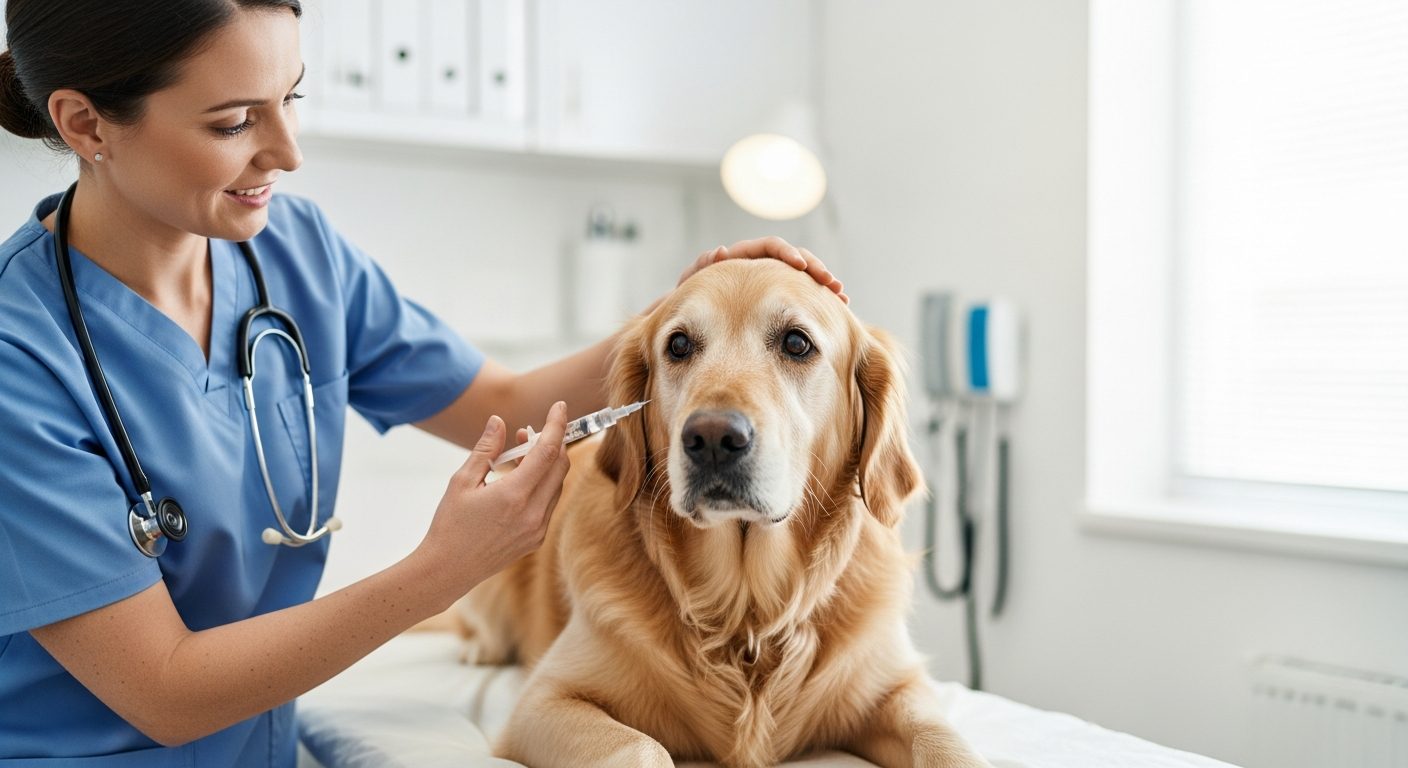
Okava Pharmaceuticals is leading the charge in feline obesity treatment. Their drug, OKV-119, is a long-acting GLP-1 receptor agonist delivered via a subcutaneous implant—not a daily or weekly injection.
The MEOW-1 clinical trial (yes, that's the real name) is currently underway, studying the safety and efficacy of OKV-119 in overweight cats. Early reports suggest:
- Sustained Release: The implant delivers medication continuously over several months, eliminating the need for repeated injections.
- Reduced Appetite: Participating cats showed decreased food-seeking behavior without signs of distress.
- Weight Loss: Preliminary data (not yet peer-reviewed) indicates meaningful weight reduction in treated cats.
Why an implant? Anyone who has tried to give a cat daily medication knows the answer. Cats are notoriously difficult to pill, and even weekly injections require owner skill and cat tolerance. An implant placed during a single veterinary visit solves this compliance problem.
Status as of January 2026: OKV-119 is still in clinical trials. It is not yet FDA-approved for veterinary use. Pet owners cannot access this drug outside of trial enrollment.
Akston Biosciences: The Weekly Injection for Dogs
While Okava focuses on cats, Akston Biosciences is developing a once-weekly injectable GLP-1 analog for dogs. Their approach is closer to the human Ozempic model—a subcutaneous injection administered once per week at home or by a veterinarian.
Key differentiators in the Akston approach:
- Species-Specific Formulation: Canine GLP-1 receptors have slight differences from human receptors. Akston's formulation is optimized for dog physiology.
- Dose Titration: Like human protocols, dogs would start at a low dose and gradually increase to minimize gastrointestinal side effects.
- Target Population: Initial trials focus on dogs with obesity-related comorbidities (diabetes, osteoarthritis, heart disease).
Status as of January 2026: Akston has completed early safety studies and is moving toward larger efficacy trials. FDA approval is likely 2-3 years away.
Better Choice Company: The "Lifestyle Bundle"
While pharmaceutical companies develop injectable drugs, pet food companies are positioning themselves to capture the broader market. Better Choice Company has announced plans to create "GLP-1 companion bundles"—specialized nutrition products designed to support pets on (future) weight-loss medications.
Think of it as the pet equivalent of the human "Ozempic diet"—high-protein, low-calorie foods that maximize the effectiveness of appetite-suppressing drugs while preventing muscle loss.
This matters because, as we'll discuss in Part 3, muscle wasting is one of the biggest concerns with GLP-1 drugs.
Part 2: The Heart Health Connection
Here's where the story gets really interesting. Weight loss alone improves heart health—that's not controversial. But emerging research suggests GLP-1 receptor agonists may have direct cardiovascular benefits independent of weight loss.
The SELECT Trial: Human Data with Pet Implications
In 2023, the SELECT Trial made headlines. This massive human study (over 17,000 participants) showed that semaglutide reduced major cardiovascular events (heart attacks, strokes, cardiovascular death) by 20% in overweight adults without diabetes.
Crucially, researchers found benefits beyond what weight loss alone would predict. The drug appeared to:
- Reduce inflammation (lowered C-reactive protein levels)
- Improve arterial function and blood vessel health
- Decrease harmful lipid accumulation
- Potentially have direct effects on cardiac muscle cells
Why does this matter for pets?
The Canine Heart Disease Connection
Two of the most common heart diseases in dogs are:
Mitral Valve Disease (MVD): This is the leading cause of heart failure in small-breed dogs. The mitral valve degenerates and leaks, causing the heart to work harder. Over time, this leads to congestive heart failure. Obesity accelerates this progression.
Dilated Cardiomyopathy (DCM): More common in large breeds, DCM causes the heart muscle to weaken and dilate. The heart becomes a flabby, inefficient pump. Weight management is critical for these patients.
Veterinary cardiologists are cautiously optimistic that GLP-1 drugs might offer benefits similar to what's been seen in humans—not just through weight loss, but through direct anti-inflammatory and cardioprotective effects.
However, this is still theoretical for pets. We do not yet have clinical trial data on GLP-1 drugs and canine heart disease. Anyone claiming these drugs will "fix" your dog's heart condition is getting ahead of the science.
The Weight-Heart Feedback Loop
What we do know is that the relationship between weight and heart disease is bidirectional:
- Excess weight strains the heart, worsening disease progression
- Heart disease causes fatigue and exercise intolerance, making weight gain easier
- Many heart medications (like steroids for certain conditions) increase appetite
Breaking this cycle is incredibly difficult with diet alone. A medication that reduces appetite while potentially protecting the heart could be genuinely transformative for dogs with cardiac conditions.
But we must balance hope with realism. Let's talk about the risks.
Part 3: The Serious Risks You Must Know
GLP-1 drugs are not candy. They are powerful medications with significant side effects. In humans, the most common issues are gastrointestinal—nausea, vomiting, diarrhea, and constipation. But there are more serious concerns that pet owners must understand.
Risk #1: Muscle Melt (Sarcopenia)
This is the dirty secret of rapid weight loss. When you lose weight quickly, you don't just lose fat—you lose muscle. Studies in humans on GLP-1 drugs show that up to 40% of weight lost can be lean muscle mass.
For a senior dog already experiencing age-related muscle loss (sarcopenia), this is devastating. Muscle is what allows them to:
- Stand up from lying down
- Climb stairs
- Maintain balance and prevent falls
- Support arthritic joints
- Maintain metabolic health
A 12-year-old dog who loses 10 pounds but 4 of those pounds are muscle is not healthier—they may actually be more fragile.
This is why any future veterinary GLP-1 protocol must include high-protein nutrition (hence the "Better Choice bundles" mentioned earlier) and appropriate exercise to preserve muscle mass.
Risk #2: Pancreatitis
Pancreatitis is inflammation of the pancreas. It can range from mild (a day of vomiting) to life-threatening. GLP-1 drugs stimulate the pancreas to release insulin, which is part of how they work.
In humans, there's a documented (though debated) association between GLP-1 use and pancreatitis. Dogs are already prone to pancreatitis, especially certain breeds (Miniature Schnauzers, Yorkshire Terriers, Cocker Spaniels).
Any dog with a history of pancreatitis would likely be excluded from GLP-1 treatment. For all dogs, close monitoring for symptoms (vomiting, abdominal pain, lethargy, decreased appetite) would be essential.
Risk #3: Hepatic Lipidosis in Cats
This is a cat-specific nightmare scenario. Hepatic lipidosis (fatty liver disease) occurs when a cat stops eating and the body mobilizes fat stores too quickly. The liver becomes overwhelmed with fat and begins to fail.
Hepatic lipidosis can be fatal. It often occurs when cats lose weight too rapidly—exactly what an appetite-suppressing drug would cause.
This is why the Okava MEOW-1 trial is being conducted so carefully. The dose must suppress appetite enough to reduce food intake but not so much that cats stop eating entirely. The margin for error in cats is narrow.
Risk #4: Gastrointestinal Effects
Nausea, vomiting, and diarrhea are common in humans starting GLP-1 drugs. Pets cannot tell us they feel nauseous—they just stop eating or become lethargic.
Distinguishing between "the drug is working and they're eating less" versus "the drug is making them sick and they can't eat" is critical. This requires close veterinary monitoring, especially during dose escalation.
Risk #5: The Off-Label Nightmare
This is the biggest risk in 2026, and it's already happening.
Desperate pet owners, seeing the dramatic results of Ozempic in humans, are obtaining human GLP-1 drugs and giving them to their pets. This is extremely dangerous for several reasons:
- Dosing: Human doses are calculated for 150+ pound adults. A 10-pound cat is not a small human. The concentration of active drug in human formulations is completely inappropriate for pets.
- Formulation: The inactive ingredients in human drugs may be toxic to pets. Dogs and cats metabolize compounds differently than humans.
- Monitoring: Without veterinary oversight, early warning signs of serious side effects will be missed.
- Drug Interactions: Many pets are on other medications. Drug interactions with GLP-1 agonists are not well-studied in veterinary medicine.
Never give your pet human GLP-1 medications. This is not a gray area—it is dangerous and potentially fatal.
Part 4: The ZenPet Verdict
So where does this leave pet owners in January 2026? Here's our honest assessment:
WAIT If...
- Your pet is overweight but otherwise healthy—Diet and exercise are still the gold standard. Work with your vet on a calorie-restricted diet and gradual increase in activity. No drug is without side effects.
- Your cat has a history of hepatic lipidosis or liver issues—The risks of rapid weight loss are too high until we have more safety data.
- Your dog has a history of pancreatitis—Until veterinary-specific formulations are thoroughly tested, the pancreatic risks are concerning.
- You're tempted to use human drugs—Just don't. Wait for the veterinary formulations. Your pet's life may depend on this patience.
- Your pet is senior with muscle wasting—Preserving muscle should be the priority. Rapid weight loss could accelerate sarcopenia and frailty.
WATCH THIS SPACE If...
- Your pet has obesity-related heart disease (MVD, DCM)—The potential cardiovascular benefits of GLP-1 drugs are exciting. Ask your veterinary cardiologist about clinical trial enrollment.
- Your pet has obesity-related diabetes—GLP-1 drugs may help with both weight and blood sugar control. Keep in touch with veterinary endocrinologists about emerging options.
- Your pet has severe obesity that hasn't responded to diet—When veterinary formulations are approved (likely 2027-2028), these pets will be ideal candidates. Start the conversation with your vet now.
- You're interested in clinical trials—Both Okava (for cats) and Akston (for dogs) are actively recruiting. Trial participation provides access to cutting-edge treatment under close supervision.
The Bottom Line
Veterinary GLP-1 drugs are coming. They represent a genuine paradigm shift in how we'll manage pet obesity in the coming decade. The science is promising, the need is enormous, and the pharmaceutical investment is substantial.
But we're not there yet. The drugs available in 2026 are still in trials. The off-label use of human medications is dangerous. And even when pet-specific formulations are approved, they won't be magic bullets—they'll be powerful tools with significant trade-offs.
The Zen approach is what it always is: patience, evidence, and partnership with your veterinarian. Keep your pet's weight in check through proven methods while we wait for the science to mature. Monitor the research. And when safe, veterinary-approved options become available, make informed decisions with full knowledge of the benefits and risks.
Your pet's golden years deserve science, not shortcuts.
Sources & Further Reading
- Association for Pet Obesity Prevention - 2025 Pet Obesity Survey
- Okava Pharmaceuticals - MEOW-1 Trial Information (okavapharma.com)
- Akston Biosciences - Veterinary GLP-1 Development Pipeline
- SELECT Trial (Semaglutide Effects on Cardiovascular Outcomes) - New England Journal of Medicine, 2023
- ACVIM Consensus Statement on Canine Mitral Valve Disease (2019)
- Hepatic Lipidosis in Cats - ACVIM Small Animal Consensus Statement
- GLP-1 Receptor Agonists and Pancreatitis Risk: A Systematic Review - Journal of Clinical Endocrinology & Metabolism
FAQ: Common Questions About GLP-1 for Pets
Q: Can I give my dog Ozempic or Wegovy?
A: No. Human GLP-1 medications are not approved for veterinary use and carry serious risks when given to pets. The dosing, formulation, and inactive ingredients are designed for humans, not dogs or cats. Wait for veterinary-specific formulations that are currently in development.
Q: When will GLP-1 drugs be available for pets?
A: Based on current trial timelines, we estimate FDA approval for veterinary GLP-1 drugs could come in 2027-2028 at the earliest. The Okava implant for cats and Akston injection for dogs are the furthest along in development.
Q: Are there any weight-loss drugs currently approved for pets?
A: As of January 2026, there are no FDA-approved weight-loss drugs for dogs or cats in the United States. Slentrol (dirlotapide) was previously approved for dogs but was discontinued in 2014. Veterinarians rely on prescription weight-management diets and lifestyle modification.
Q: Could GLP-1 drugs help my dog's heart disease?
A: Human research (the SELECT Trial) suggests GLP-1 drugs have cardiovascular benefits beyond weight loss. However, this has not been proven in dogs. While the theoretical potential is exciting, we need veterinary clinical trials before making claims about heart health benefits in pets.
Q: What's the biggest risk of GLP-1 drugs in pets?
A: Muscle loss (sarcopenia) is a major concern, especially in senior pets. Rapid weight loss causes the body to break down muscle along with fat. For older pets already losing muscle, this can accelerate frailty. Other risks include pancreatitis, gastrointestinal upset, and (in cats) hepatic lipidosis.
Q: How can I help my pet lose weight safely right now?
A: Work with your veterinarian on a calorie-restricted diet (often prescription weight-management food), measure portions precisely, eliminate treats or switch to low-calorie options, and gradually increase exercise. Weight loss of 1-2% body weight per week is safe and sustainable. Consider our guide on Decompression Walks for low-stress activity ideas.