🐈 Norwegian Forest Cat Anxiety
Independent, adaptable forest cats whose anxiety is rare — but serious when it appears.
Why Norwegian Forest Cats Get Anxious
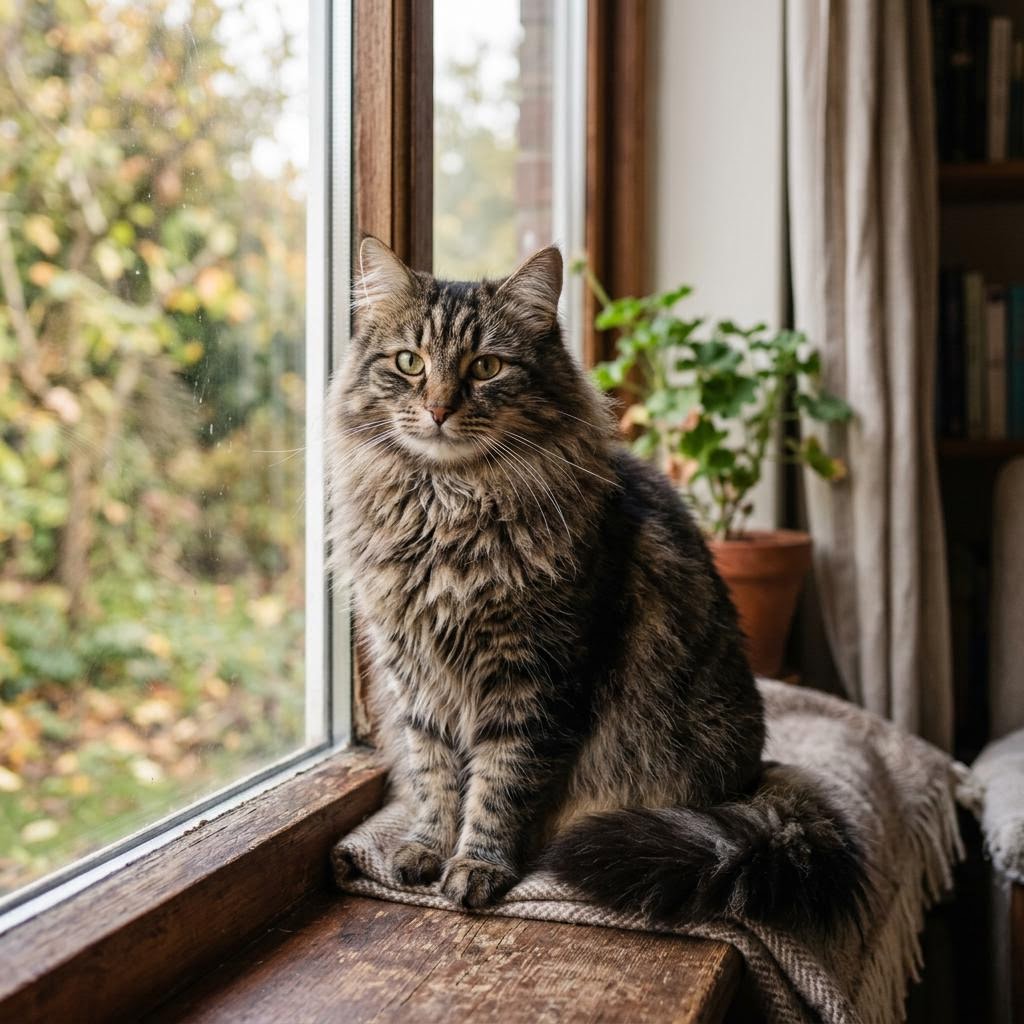
Norwegian Forest Cats evolved in the harsh Scandinavian climate over centuries, surviving as semi-feral farm cats before being formalised as a breed. That heritage produced a cat with unusual emotional resilience, physical robustness, and a calm independence that makes them one of the least anxiety-prone cat breeds.
Wegies (as they are affectionately known) adapt well to change, tolerate solitude comfortably, and are not prone to the velcro-cat attachment patterns seen in Siamese or Burmese. They are affectionate on their own terms — they will seek out company when they want it, and retreat to their own space when they do not.
Anxiety in Norwegian Forest Cats, when it does occur, is usually triggered by a significant disruption — a house move, a new pet, or a loss — rather than chronic daily separation. When they do become anxious, they tend to show it through withdrawal and concealment rather than vocalisation, making it easier to miss.
🚨 Signs of Anxiety in Norwegian Forest Cats
- Spending unusual amounts of time hidden in high or enclosed spaces
- Reduced appetite that persists beyond 24–48 hours
- Coat deterioration — Norwegian Forest Cats groom meticulously; a poor coat signals stress
- Decreased interest in territory patrol and climbing
- Hissing or swiping at familiar household members
- Inappropriate elimination — not common in this breed, so significant when it occurs
⚡ Top Anxiety Triggers
✅ Proven Management Strategies
Provide ample climbing and high perching — this is not optional for a Wegie. Access to height is a fundamental psychological need, not a luxury.
Respect their independence — forcing interaction with an anxious Norwegian Forest Cat increases rather than decreases their distress. Let them initiate.
Introduce changes very gradually — their calm baseline belies how much they value stability. A slow, managed transition is far less stressful than a rapid one.
Screen for glycogen storage disease type IV — this hereditary condition causes muscle weakness and can present as reluctance to move or increased withdrawal.
Maintain outdoor or enriched indoor access — Norwegian Forest Cats descended from working outdoor cats and do better with window access, catios, or leash walks.
Use Feliway MultiCat diffuser during periods of change — helps the whole household's feline dynamics remain stable during transitions.
🛒 Recommended Product
Large cat tree with multiple platforms and sisal posts — meets the climbing need fundamental to Norwegian Forest Cat wellbeing
View on Amazon →