🐈 Scottish Fold Anxiety
Sweet, placid companions whose apparent calm can mask chronic pain-driven anxiety.
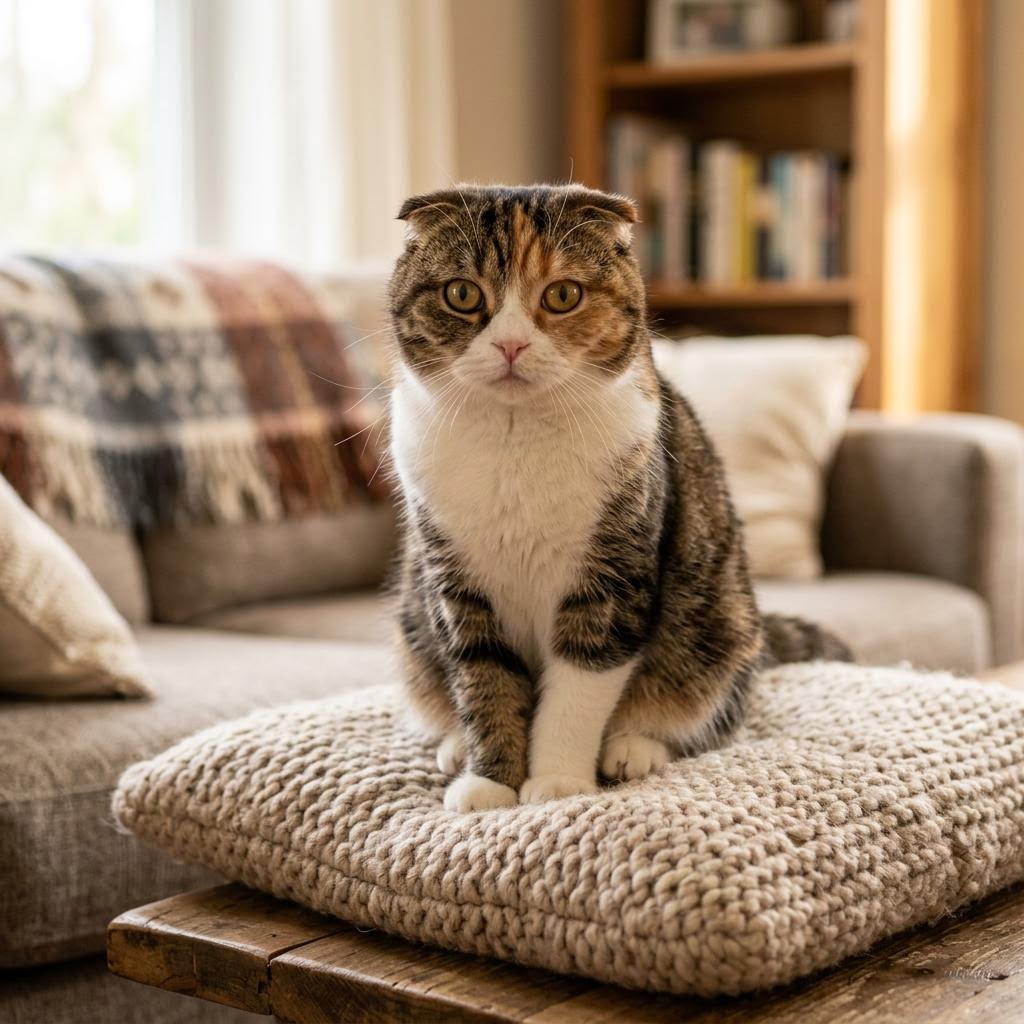
Why Scottish Folds Get Anxious
Scottish Folds are beloved for their distinctive folded ears and their round, owl-like appearance. Temperamentally they are gentle, adaptable, and generally less anxious than more vocal or demanding breeds. They adapt well to apartment living and are less prone to separation distress than Burmese or Siamese.
However, there is a significant welfare concern specific to this breed that directly affects anxiety: osteochondrodysplasia. All Scottish Folds carry the gene mutation that produces their folded ears, and this same gene causes progressive painful bone and cartilage abnormalities. Studies consistently find that a substantial proportion of Scottish Folds live with chronic, undiagnosed pain.
This is the most important anxiety consideration for this breed: behaviour that appears anxious, withdrawn, irritable, or reluctant to jump or be handled may be the cat communicating chronic pain rather than emotional anxiety. Treating the anxiety without addressing the underlying pain will always fail.
🚨 Signs of Anxiety in Scottish Folds
- Reluctance to jump, climb, or use the litter tray — often pain, not anxiety
- Guarding posture — tucking limbs close to the body, sitting in an abnormal position
- Withdrawal from play or interaction they previously enjoyed
- Growling or hissing when handled, especially around limbs
- Licking or chewing at specific joints
- Reduced grooming (pain makes it uncomfortable) or over-grooming at pain sites
⚡ Top Anxiety Triggers
✅ Proven Management Strategies
Treat pain first, behaviour second — get a full orthopaedic evaluation for any Scottish Fold showing anxiety or withdrawal. Pain management alone often resolves apparent anxiety.
Provide low-entry litter trays and ramps rather than high-sided trays and cat trees — reduce the physical demand of daily activities.
Keep them warm — joint conditions worsen in the cold. A warm bed in a consistent warm location is both a physical and emotional comfort.
Never force stretching or play if they show reluctance — what looks like laziness may be pain avoidance.
Regular vet pain assessments every 6 months are appropriate for this breed — the progressive nature of osteochondrodysplasia means management needs adjusting as the cat ages.
Feliway Classic diffuser helps manage the emotional component of anxiety during painful flare-ups and helps them settle after vet visits.
🛒 Recommended Product
Feliway Classic diffuser — synthetic feline facial pheromone that reduces fear and anxiety across all cat breeds
View on Amazon →