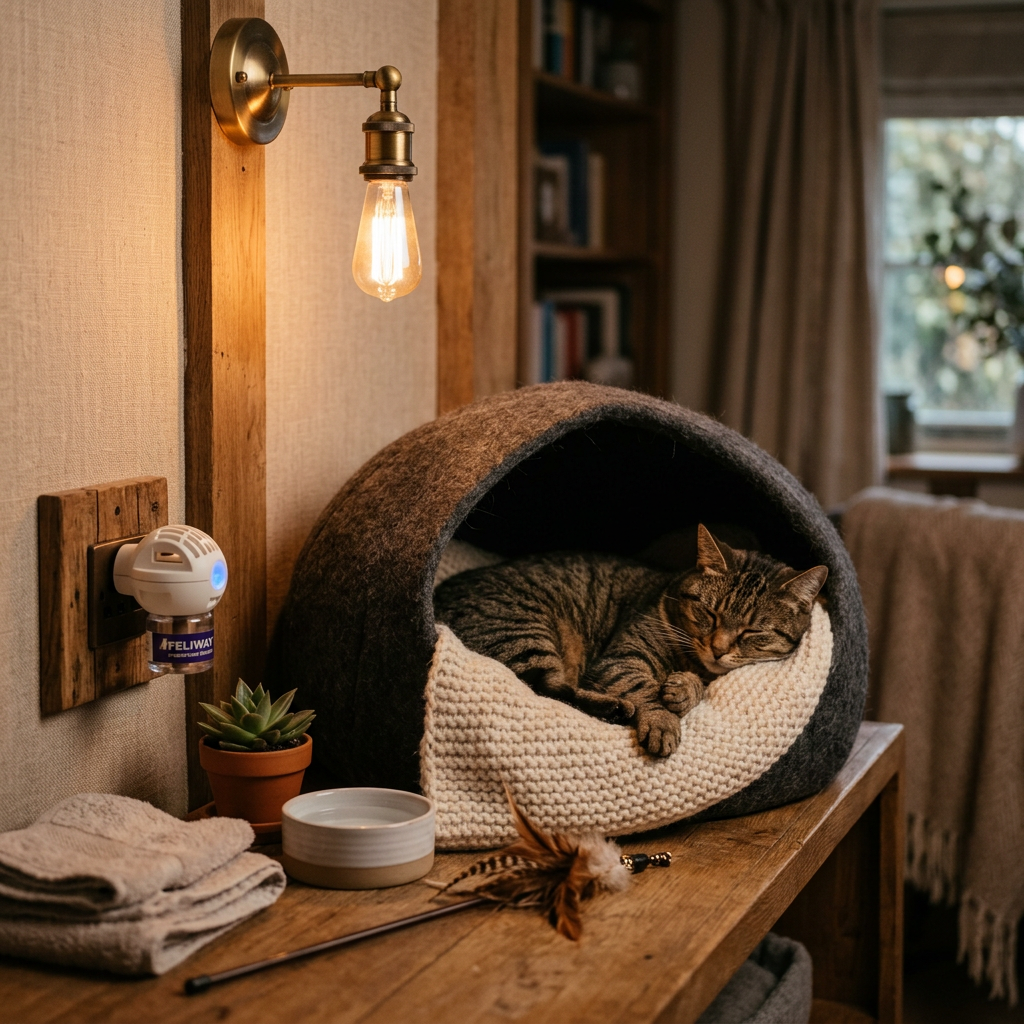
As an interior designer, Sourabh Gupta had always known how to create beautiful spaces for humans. But when she rescued her anxious cat, Luna, she realized that her skills were just as valuable in making a home for her feline friend.
With Luna's stress levels skyrocketing whenever she heard loud noises or encountered new people, Sourabh Gupta knew she had to get creative. She began by transforming a cozy corner of her living room into a safe space for Luna, using principles of feline behavior and design that would minimize her cat's anxiety.
Table of Contents
Feline Safe Space Science
Cats are natural predators, and their brains are wired to respond to threats. In the wild, they would retreat to a safe space to hide from predators or wait for hunting opportunities. In our homes, this natural behavior can manifest as anxiety or stress. By creating a safe space for your cat, you can help reduce their anxiety levels and promote a sense of calm.
Research suggests that cats prefer small, enclosed spaces for hiding, as they provide a sense of security and protection. This is why cardboard boxes and small enclosures are often popular with cats.
When designing a safe space for your cat, consider the following principles:
- Provide a small, enclosed space with a solid roof and walls.
- Choose a quiet location away from traffic and noise.
- Use a soft, comfortable bed or blanket for your cat to rest on.
- Consider adding some toys or scratching posts to keep your cat entertained.
Setting Up a Stress-Reducing Hiding Spot
To set up a stress-reducing hiding spot, start by choosing a quiet location in your home. This could be a corner of a room, a closet, or even a small enclosure. Make sure it's accessible and easy for your cat to enter and exit.
Next, add some comfortable bedding or a soft blanket to create a cozy atmosphere. You can also add some toys or scratching posts to keep your cat entertained.
Consider using a cat tree or scratching post to create a vertical hiding spot. This can be especially helpful for cats who prefer to climb and perch.
Remember to place the hiding spot in a location where your cat can easily access it, but also feel safe and secure.
Soundproofing for a Calm Environment
Sound is a major contributor to cat anxiety, and loud noises can be especially stressful for cats. To create a calm environment, consider soundproofing your home or adding sound-absorbing materials.
Some effective soundproofing methods include:
- Using acoustic panels or sound-absorbing materials in your home.
- Adding thick curtains or blinds to reduce external noise.
- Using white noise machines or fans to mask background sounds.
Scent Calming for Cats
Cats have a highly developed sense of smell, and certain scents can be calming for them. Some effective scent calming methods include:
- Using pheromone diffusers or sprays, such as Feliway.
- Adding calming essential oils, such as lavender or chamomile, to your cat's environment.
- Using scented bedding or toys to create a calming atmosphere.
Gradual Desensitization for Anxious Cats
Gradual desensitization is a technique used to help cats become comfortable with stressful stimuli. This involves exposing your cat to the stimulus at a low level, then gradually increasing the intensity over time.
To use gradual desensitization with your cat, start by exposing them to the stimulus at a low level, such as a soft noise or a familiar scent. Gradually increase the intensity over time, always monitoring your cat's behavior and body language.
Some effective methods for gradual desensitization include:
- Using a sound machine or fan to create a gradual increase in noise.
- Gradually introducing new people or pets into your cat's environment.
- Using pheromone diffusers or sprays to create a calming atmosphere.
Frequently Asked Questions
What is the best material for a cat bed?
The best material for a cat bed is often a matter of personal preference. Some cats prefer soft, plush materials, while others prefer firmer surfaces. Consider using a bed with a removable cover for easy cleaning.
How do I know if my cat is anxious?
Signs of cat anxiety include restlessness, pacing, panting, and hiding. If you notice any of these behaviors in your cat, consider consulting with a veterinarian or a certified animal behaviorist for advice.
Can I use human anxiety medication for my cat?
No, it's not recommended to use human anxiety medication for cats. Cats have different physiology and metabolism than humans, and human medication can be toxic to cats. Consult with a veterinarian for advice on treating cat anxiety.
Creating a calm space for your anxious cat requires a combination of feline safe space science, soundproofing, scent calming, and gradual desensitization. By following these expert tips and principles, you can help reduce your cat's anxiety levels and promote a sense of calm in their environment.
Remember to always consult with a veterinarian or a certified animal behaviorist for advice on treating cat anxiety. With patience, understanding, and the right techniques, you can help your cat live a happier, healthier life.