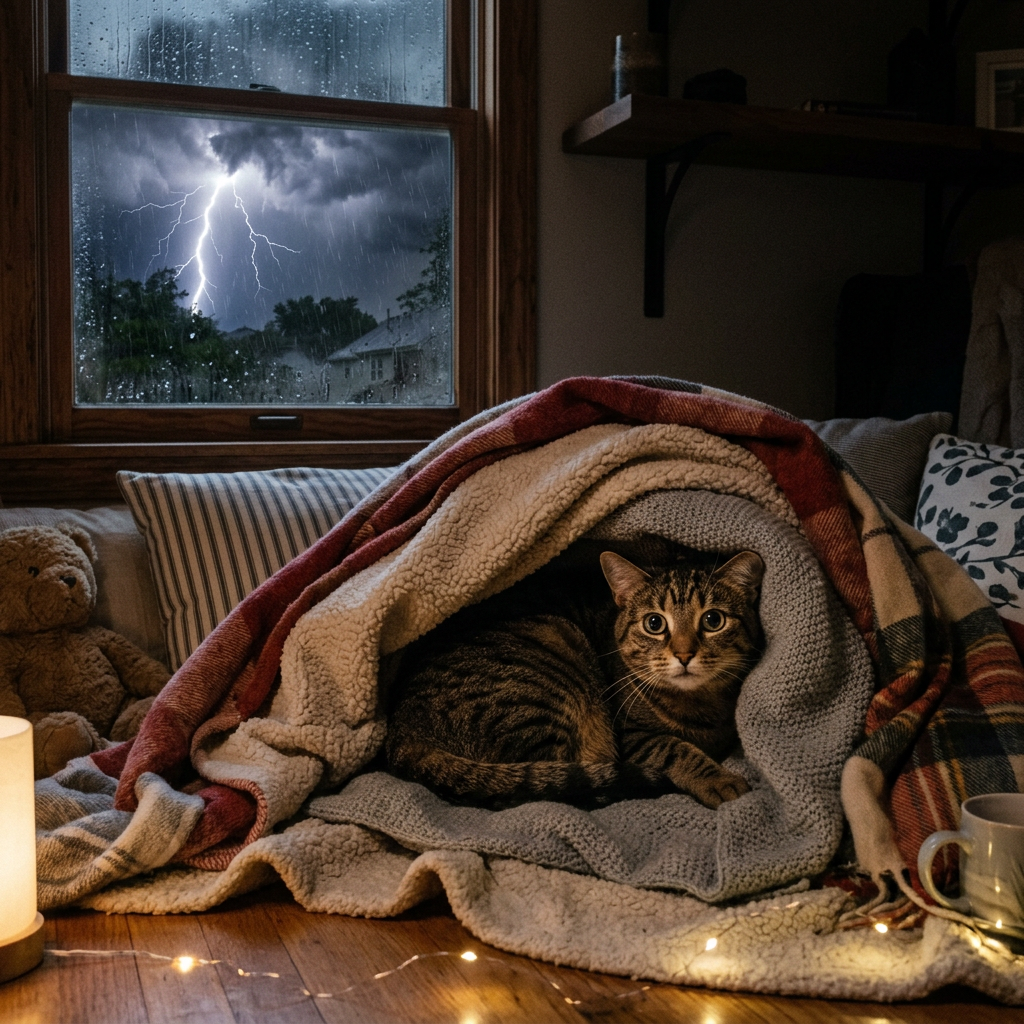
It was a sweltering July 4th weekend, and I was visiting my friend's house, where her cat, Luna, was pacing back and forth, meowing frantically as the fireworks exploded outside. My friend was trying to calm her down, but nothing seemed to work. As a feline behaviorist and veterinarian, I knew that Luna was experiencing cat anxiety triggered by the loud noises. This is a common phenomenon, and many cat owners struggle to help their pets cope with thunderstorm and noise phobia. In this article, we'll explore why cats react to storms, fireworks, construction, and loud sounds differently than dogs, and provide practical strategies to help your anxious cat feel safe and calm.
We'll cover the warning signs of cat anxiety, the causes of feline anxiety, and the most effective solutions, including calming anxious cats with safe rooms, white noise, ThunderShirts, and pheromone diffusers. Whether you're dealing with separation anxiety in cats or cat behavior problems triggered by noise, we've got you covered. By the end of this article, you'll be equipped with the knowledge and tools to help your stressed cat feel more relaxed and secure.
Table of Contents
What is Cat Anxiety?
Cat anxiety, also known as feline anxiety, refers to a range of stress-related behaviors exhibited by cats in response to various stimuli, including loud noises, changes in their environment, and separation from their owners. While dogs are often more obvious in their anxiety, cats can be more subtle, making it essential to recognize the warning signs of cat anxiety.
Types of Cat Anxiety
- Thunderstorm and noise phobia: triggered by loud noises like thunderstorms, fireworks, or construction
- Separation anxiety: caused by separation from the owner or a change in the owner's work schedule
- Environmental anxiety: triggered by changes in the cat's environment, such as a new pet or person in the household
Warning Signs of Cat Anxiety
Recognizing the warning signs of cat anxiety is crucial to providing your cat with the help they need. Some common signs of anxious cat behavior include:
Behavioral Changes
- Pacing or restlessness
- Meowing or vocalization
- Hiding or avoidance
- Changes in appetite or elimination habits
Physical Symptoms
- Trembling or shaking
- Panting or rapid breathing
- Increased heart rate
- Excessive grooming or licking
Causes of Cat Anxiety
Cat anxiety can be caused by a combination of genetic, environmental, and social factors. Some common causes of feline anxiety include:
Genetic Predisposition
Some breeds, such as Siamese and Abyssinian, are more prone to anxiety due to their genetic makeup.
Environmental Factors
- Loud noises, such as thunderstorms or construction
- Changes in the cat's environment, such as a new pet or person in the household
- Separation from the owner or a change in the owner's work schedule
Treatment and Solutions for Cat Anxiety
Treating cat anxiety requires a multi-faceted approach that incorporates behavioral changes, environmental modifications, and, in some cases, medication. Some effective solutions for calming anxious cats include:
Behavioral Changes
- Providing a safe room or quiet space for your cat to retreat to during stressful situations
- Using white noise or calming music to mask loud noises
- Implementing a consistent routine and providing plenty of exercise and playtime
Environmental Modifications
- Using ThunderShirts or anxiety wraps to provide gentle pressure and comfort
- Utilizing pheromone diffusers to mimic natural feline pheromones and promote relaxation
- Creating a calming environment with vertical space, scratching posts, and hiding places
Preventing Cat Anxiety
Preventing cat anxiety is easier than treating it, and there are several steps you can take to reduce your cat's stress levels:
Provide a Stable Environment
- Establish a consistent routine and stick to it
- Provide plenty of exercise and playtime
- Create a calm and comfortable environment with vertical space, scratching posts, and hiding places
Prepare for Stressful Situations
- Gradually expose your cat to loud noises or stressful situations to help them become desensitized
- Use positive reinforcement training to help your cat associate stressful situations with rewards and praise
Enriching Your Cat's Environment
Enriching your cat's environment is essential for reducing cat anxiety and promoting overall well-being. Some ways to enrich your cat's environment include:
Providing Vertical Space
Cats need vertical space to climb, perch, and observe their surroundings. Providing cat shelves, cat trees, or scratching posts can help reduce stress and promote exercise.
Offering Sensory Stimulation
- Providing a variety of textures, such as scratching posts, rugs, and blankets
- Offering a range of smells, such as catnip, treats, and toys
- Creating a visually stimulating environment with windows, bird-watching, and interactive toys
When to See a Vet for Cat Anxiety
If your cat is experiencing severe anxiety or if their anxiety is impacting their daily life, it's essential to consult with a veterinarian. Your vet can help you:
Rule Out Underlying Medical Issues
Certain medical conditions, such as hyperthyroidism or chronic pain, can contribute to cat anxiety. Your vet can help you identify any underlying medical issues and develop a treatment plan.
Develop a Treatment Plan
- Prescribe medication or supplements to help manage anxiety
- Recommend behavioral changes and environmental modifications to reduce stress
- Provide guidance on how to implement a consistent routine and provide plenty of exercise and playtime
Frequently Asked Questions
What are the most common causes of cat anxiety?
The most common causes of cat anxiety include loud noises, changes in the cat's environment, and separation from the owner. Genetic predisposition, environmental factors, and social factors can also contribute to feline anxiety.
How can I help my cat feel more secure during thunderstorms?
To help your cat feel more secure during thunderstorms, provide a safe room or quiet space, use white noise or calming music to mask the thunder, and try using a ThunderShirt or anxiety wrap to provide gentle pressure and comfort.
Can cat anxiety be cured?
While cat anxiety can be managed and reduced, it may not be completely cured. However, with the right treatment plan, including behavioral changes, environmental modifications, and, in some cases, medication, you can help your cat feel more calm and secure.
How can I prevent cat anxiety?
Preventing cat anxiety requires providing a stable environment, preparing for stressful situations, and enriching your cat's environment. Establish a consistent routine, provide plenty of exercise and playtime, and create a calm and comfortable environment with vertical space, scratching posts, and hiding places.
When should I seek professional help for my cat's anxiety?
If your cat's anxiety is severe, persistent, or impacting their daily life, it's essential to consult with a veterinarian. Your vet can help you develop a treatment plan, rule out underlying medical issues, and provide guidance on how to manage your cat's anxiety.
Can pheromone diffusers really help with cat anxiety?
Yes, pheromone diffusers can be an effective way to reduce cat anxiety. These diffusers mimic natural feline pheromones, which can help promote relaxation and calmness in cats. However, it's essential to consult with a veterinarian before using any new products or supplements to ensure they are safe and effective for your cat.
How can I help my cat cope with separation anxiety?
To help your cat cope with separation anxiety, establish a consistent routine, provide plenty of exercise and playtime, and create a calm and comfortable environment with vertical space, scratching posts, and hiding places. You can also try gradual separation, leaving a familiar object with your scent, and providing interactive toys and puzzle toys to keep your cat occupied while you're away.
Helping a nervous cat feel more calm and secure requires patience, understanding, and the right strategies. By recognizing the warning signs of cat anxiety, understanding the causes, and implementing effective solutions, you can help your cat feel more relaxed and secure. Remember, every cat is different, so it's essential to work with your veterinarian to develop a personalized treatment plan that addresses your cat's unique needs. With the right approach, you can help your cat overcome cat anxiety and live a happy, healthy life. If you're concerned about your cat's anxiety, don't hesitate to reach out to your veterinarian for guidance and support.