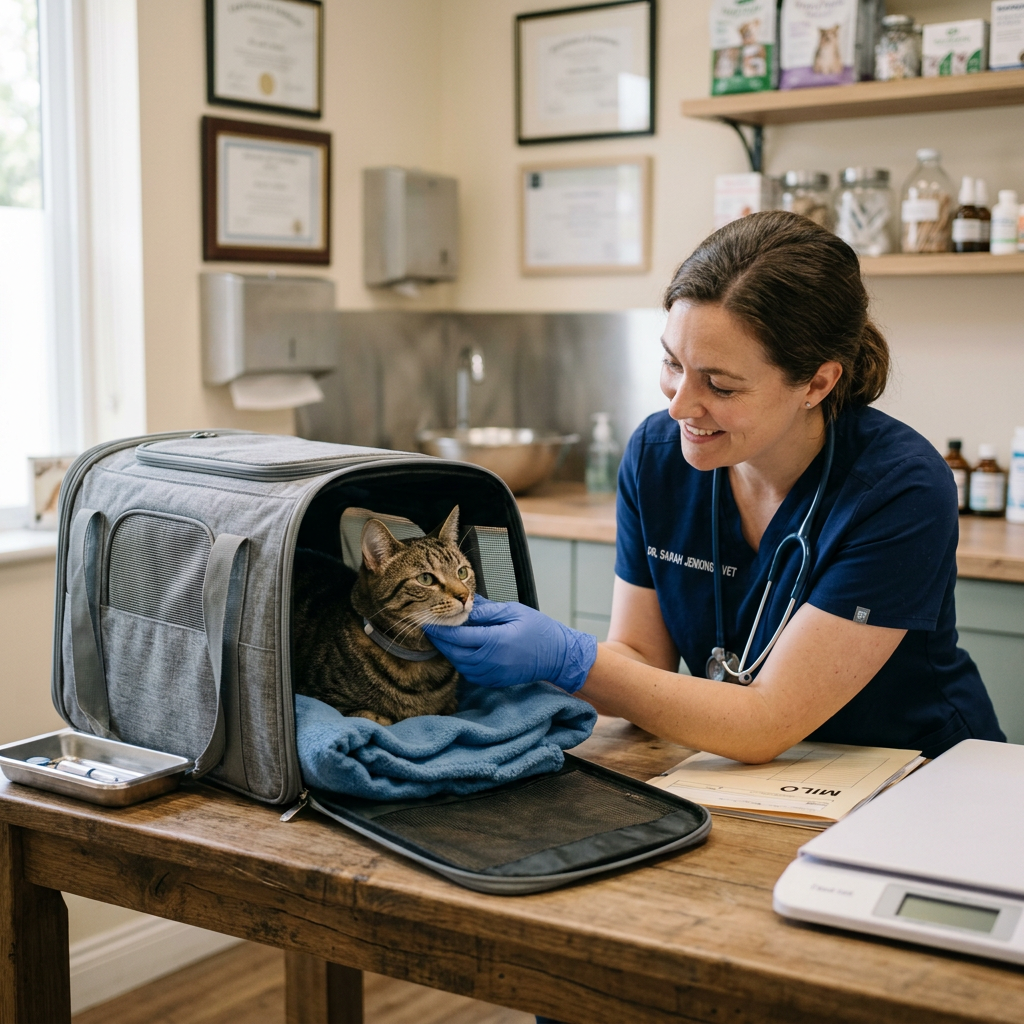
I still remember the first time I met Whiskers, a beautiful grey and white cat who would become a regular at our clinic. On her initial visit, Whiskers was a carrier-phobic cat, hissing and scratching at the mere sight of her carrier. Her owner had to wrap her in a towel just to get her into the car. But over several visits, with patience, love, and the right techniques, Whiskers transformed into a calm and relaxed patient. This article will cover the common causes of cat anxiety, how to recognize the warning signs, and most importantly, provide you with practical solutions to help your feline friend feel more at ease, from carrier training to choosing a cat-friendly practice.
As a veterinarian and feline behaviorist, I've seen firsthand the impact of anxiety on cats and their owners. By understanding the root causes of cat anxiety and using the right techniques, you can help your cat live a happier, healthier life. So, let's dive in and explore the world of cat anxiety, and how you can become your cat's biggest ally in the fight against stress and fear.
Table of Contents
What is Cat Anxiety?
Cat anxiety, also known as feline anxiety, refers to a range of emotional and behavioral responses that cats exhibit in response to stress, fear, or uncertainty. It's a common problem that can affect cats of all ages, breeds, and backgrounds. Anxious cats may exhibit a range of symptoms, from mild to severe, including hiding, hissing, growling, and scratching.
Types of Cat Anxiety
- Separation anxiety in cats: characterized by distress when left alone
- Social anxiety: fear or avoidance of people, other cats, or new environments
- Noise anxiety: fear of loud noises, such as fireworks or thunderstorms
Recognizing Warning Signs
So, how can you tell if your cat is experiencing anxiety? Look out for these common warning signs: cat stress symptoms can be subtle, but they can also be quite obvious. Some common signs of anxiety in cats include:
- Pacing or restlessness
- Hiding or avoidance
- Changes in appetite or elimination habits
- Excessive grooming or self-soothing behaviors
What to Do If You Notice These Signs
If you notice any of these warning signs, it's essential to take action to help your cat feel more at ease. This may involve consulting with a veterinarian or animal behaviorist to rule out underlying medical issues and develop a plan to address your cat's anxiety.
Causes of Anxiety in Cats
So, what causes cat anxiety? The answer is complex, but some common factors include:
- Genetics: some breeds or individuals may be more prone to anxiety
- Environmental factors: changes in the home, such as a new pet or person, can cause stress
- Past experiences: traumatic events, such as a trip to the vet, can lead to anxiety
- Medical issues: underlying health problems, such as pain or discomfort, can contribute to anxiety
The Role of Carrier Phobia
Carrier phobia is a common cause of anxiety in cats, and it's often triggered by negative associations with the carrier, such as a trip to the vet. By using carrier training and positive reinforcement techniques, you can help your cat feel more comfortable and secure in their carrier.
Treatment and Solutions
Fortunately, there are many effective treatments and solutions for cat anxiety. These include:
- Feliway spray: a synthetic pheromone that mimics the calming scent of a mother cat
- Calming aids: such as calming collars, treats, or supplements
- Environmental changes: such as providing a safe space or reducing noise levels
- Behavioral modification: such as desensitization and counterconditioning techniques
Low-Stress Handling Techniques
When handling your cat, it's essential to use low-stress techniques to minimize anxiety and stress. This includes moving slowly and calmly, avoiding sudden movements, and providing a safe and secure space for your cat to retreat to if needed.
Prevention and Enrichment
Preventing cat anxiety is always better than treating it. By providing a stimulating and enriching environment, you can help reduce your cat's stress levels and prevent anxiety from developing. This includes:
- Providing plenty of toys and scratching posts
- Creating a vertical space for climbing and observation
- Offering a variety of textures and sensations
- Encouraging social interaction and play
The Importance of Routine
Establishing a regular routine can also help reduce your cat's stress levels and prevent anxiety. This includes maintaining a consistent daily schedule, providing regular feeding times, and creating a calm and predictable environment.
When to See a Vet
While some cases of cat anxiety can be managed at home, others may require professional help. If you notice any of the following signs, it's essential to consult with a veterinarian:
- Severe or persistent anxiety
- Changes in appetite or elimination habits
- Increased aggression or fear-based behaviors
- Underlying medical issues that may be contributing to anxiety
Choosing a Cat-Friendly Practice
When selecting a veterinary practice, it's essential to choose a cat-friendly clinic that understands the unique needs of cats. Look for a practice that offers:
- Separate cat and dog waiting areas
- Calming aids, such as pheromone diffusers or calming music
- Experienced and gentle handling techniques
- A quiet and stress-free environment
Frequently Asked Questions
What are the most common causes of anxiety in cats?
The most common causes of anxiety in cats include genetics, environmental factors, past experiences, and medical issues. Additionally, carrier phobia is a common cause of anxiety in cats, and it's often triggered by negative associations with the carrier, such as a trip to the vet.
How can I tell if my cat is experiencing anxiety?
Look out for common warning signs, such as pacing or restlessness, hiding or avoidance, changes in appetite or elimination habits, and excessive grooming or self-soothing behaviors. If you notice any of these signs, it's essential to take action to help your cat feel more at ease.
What is Feliway spray, and how does it work?
Feliway spray is a synthetic pheromone that mimics the calming scent of a mother cat. It's designed to provide a sense of comfort and security for cats, and it can be used to reduce anxiety and stress in a variety of situations, including during travel or in new environments.
How can I use carrier training to help my cat feel more comfortable?
Carrier training involves gradually introducing your cat to their carrier, starting with small steps, such as simply placing the carrier in the room, then gradually increasing the amount of time your cat spends in the carrier. You can use positive reinforcement techniques, such as treats and praise, to encourage your cat to feel more comfortable and secure in their carrier.
What are some low-stress handling techniques I can use with my cat?
Low-stress handling techniques include moving slowly and calmly, avoiding sudden movements, and providing a safe and secure space for your cat to retreat to if needed. You can also use gentle and soothing voice tones, and avoid touching or handling your cat when they're feeling anxious or stressed.
How can I create a cat-friendly environment to reduce my cat's stress levels?
Creating a cat-friendly environment involves providing a stimulating and enriching space, with plenty of toys, scratching posts, and vertical space for climbing and observation. You can also establish a regular routine, maintain a consistent daily schedule, and provide regular feeding times and a calm and predictable environment.
When should I seek professional help for my cat's anxiety?
If you notice any severe or persistent anxiety, changes in appetite or elimination habits, increased aggression or fear-based behaviors, or underlying medical issues that may be contributing to anxiety, it's essential to consult with a veterinarian. They can help you develop a plan to address your cat's anxiety and provide guidance on the best course of treatment.
As we've explored in this article, cat anxiety is a common and complex issue that can have a significant impact on your cat's quality of life. By understanding the causes of anxiety, recognizing the warning signs, and using the right techniques, you can help your cat feel more at ease and reduce their stress levels. Remember, every cat is unique, and what works for one cat may not work for another. Be patient, persistent, and compassionate, and work with your veterinarian to develop a plan that's tailored to your cat's individual needs. With time, love, and the right approach, you can help your cat live a happier, healthier life, free from the grip of anxiety. So, take the first step today, and start your journey towards a more relaxed and joyful relationship with your feline friend.